

 Phoenix 24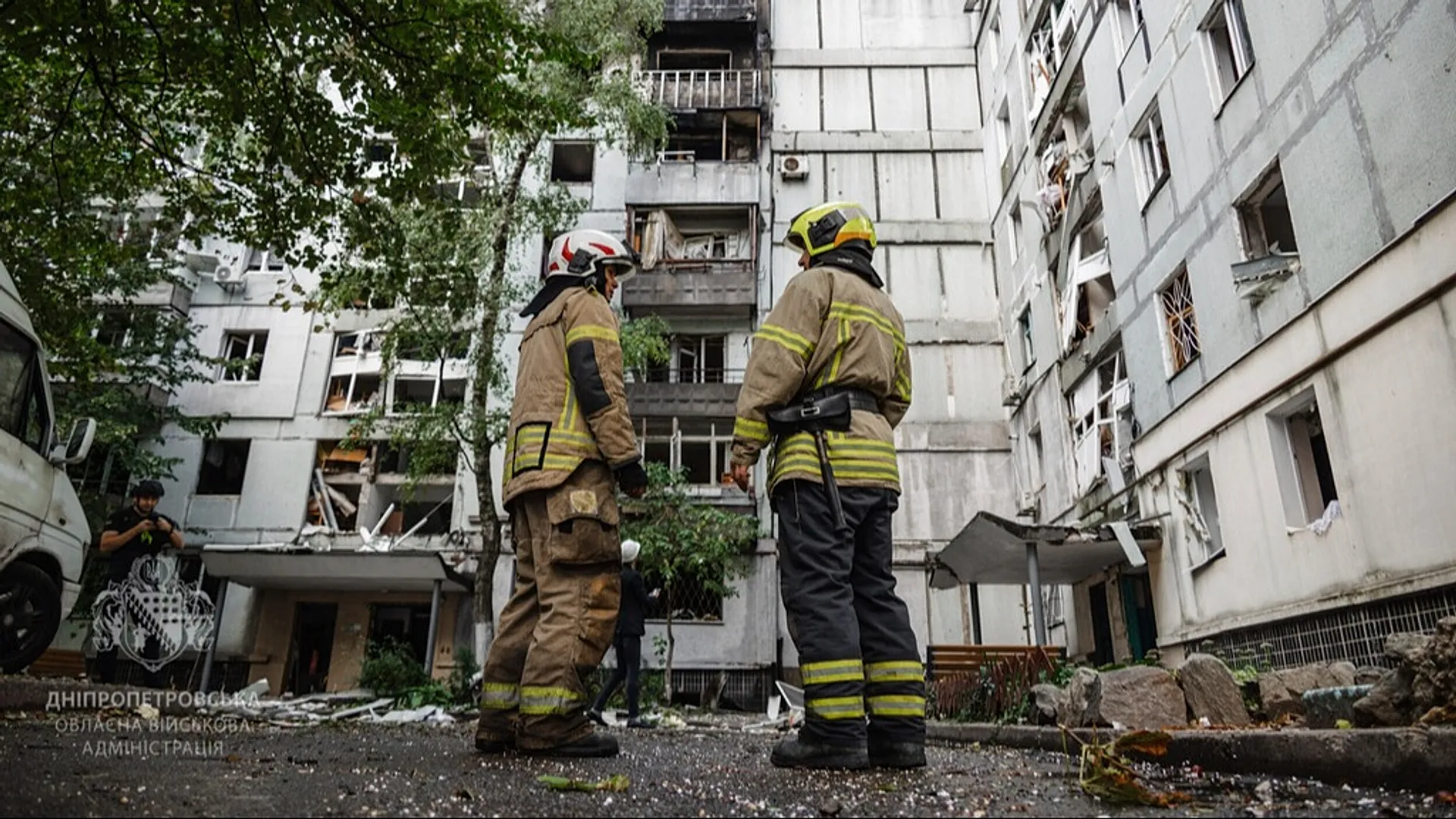
The Shahed drone offensive confirms Moscow’s strategy of exhausting Kyiv by targeting critical infrastructure and civilian populations simultaneously.
Kyiv, September 2025.
The latest wave of Russian strikes on Ukraine during the night left one dead and at least eight wounded in several regions, underscoring the escalation of the air war. According to Ukrainian military authorities, Russia launched 54 Iranian-made Shahed drones; thirty-three were intercepted, but twenty-one struck key targets, proving that despite international sanctions Moscow still sustains offensive capacity. The fatality occurred in Pokrovsk, in the Donetsk region, while in Zaporizhzhia three civilians were wounded after a strike that also damaged industrial facilities. In Chernihiv, projectiles hit energy infrastructure and triggered large fires that took hours to extinguish.
Analysts at the International Institute for Strategic Studies in London argue that the frequency of these night raids reflects a deliberate war of attrition, designed to break civilian morale while forcing Ukraine to expend large amounts of anti-air ammunition. The tactic mirrors earlier conflicts where industrial replenishment capacity became decisive. Meanwhile, the Stockholm International Peace Research Institute has noted that Russia’s reliance on Iranian drones reveals a deeper pattern of technological cooperation that extends beyond the Ukrainian battlefield into broader Middle Eastern supply chains.
In Washington, the Pentagon stressed that Ukraine’s air defenses remain relatively effective but warned that sustaining them is logistically unsustainable without a steady flow of international support. This assessment aligns with NATO warnings that Moscow’s escalating use of drones aims to prolong the war until Western political cohesion begins to fracture. European intelligence sources quoted by Le Monde have added that shell companies linked to banks in the Caucasus are facilitating the entry of electronic components for drones, effectively bypassing current embargo mechanisms.
President Volodymyr Zelensky publicly denounced the continued use of foreign-made parts in Russian drones and urged allies to tighten export controls to close the legal loopholes that keep Moscow’s production lines running. His claims are supported by findings from Citizen Lab in Toronto, which tracked Western components inside Shahed guidance systems. The Ukrainian leadership has thus shifted the narrative to highlight the lack of rigor in sanctions enforcement and the urgency of imposing stricter corrective measures.
The psychological dimension of the strikes is equally significant. According to reporting by Al Jazeera, the constant repetition of night bombings has created a collective fatigue across several Ukrainian cities, where residents spend entire nights in shelters. This strain adds to the physical destruction and constitutes part of a hybrid strategy in which the war is fought both materially and mentally. Still, observers from the United Nations note that civilian resilience remains a decisive factor preventing Moscow from achieving its demoralization objectives.
Taken together, international sources suggest the conflict has entered a harsher phase where technological superiority and external supply chains play an increasingly central role. While Ukraine seeks to accelerate the integration of advanced Western systems, Russia continues to flood the skies with relatively inexpensive drones that are difficult to intercept in full. The clash between these approaches defines a battlefield where attrition is measured not only in human casualties but also in the endurance of production chains, supply routes, and political unity.
The latest overnight offensive demonstrates that the war can no longer be read solely as a regional confrontation. It ties Iranian manufacturers, Caucasus-based financial intermediaries, and global logistics networks that extend well beyond Ukrainian borders. Each strike simultaneously exposes the fragility of sanction regimes and the interdependence of far-flung actors. Against this backdrop, Kyiv strives to project resistance both on the battlefield and in the symbolic realm, where every public denunciation aims to shield international support against the fatigue of prolonged conflict.
Phoenix24: journalism without borders.
Phoenix24: periodismo sin fronteras.