

 Phoenix 24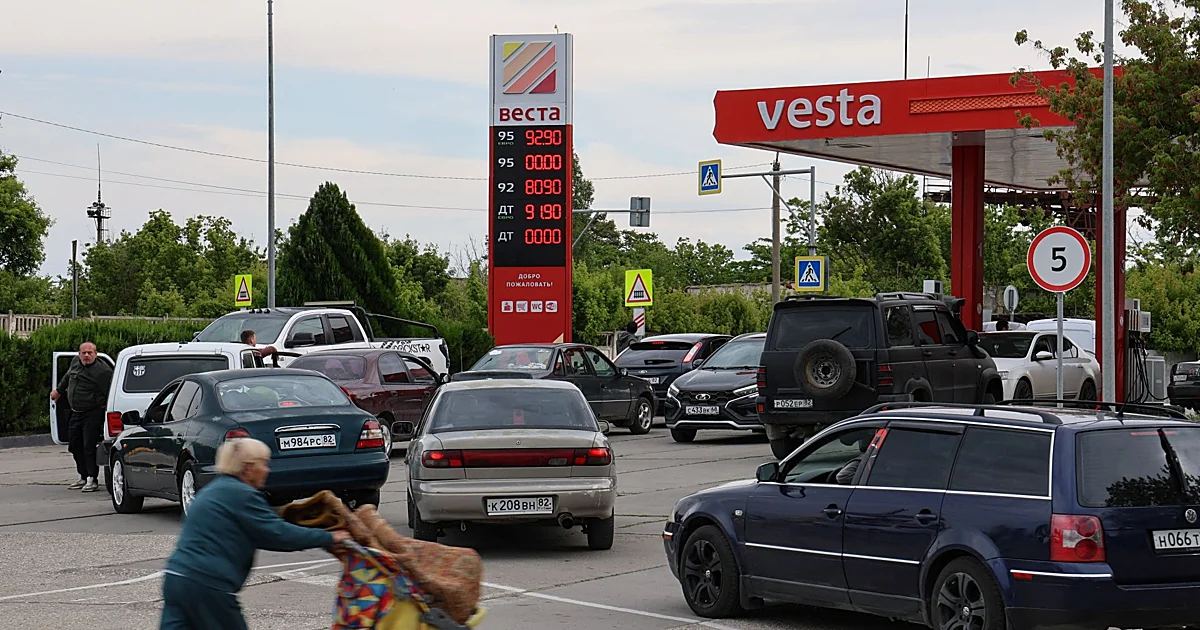
Fuel shortages deepen as Ukraine targets energy logistics.
SIMFEROPOL, Crimea | June 2026
Russian-backed authorities in occupied Crimea suspended gasoline sales to individuals and businesses on Sunday as the peninsula’s fuel crisis intensified. The restriction took effect at 9:00 a.m. on June 21 and applied to purchases made with cash, bank cards and fuel vouchers. Gasoline remained available only to state agencies considered essential to the operation and security of the territory. Long lines, limited supplies and growing public concern had already been reported at service stations.
Sergei Aksyonov, the Moscow-appointed head of Crimea, announced the measure and urged residents to remain calm. His statement indicated that available fuel would be redirected toward public institutions and services deemed strategically important. The suspension represents a significant escalation from earlier purchase limits and rationing measures. It also shows that the authorities can no longer guarantee normal civilian access to gasoline.
The immediate crisis follows a series of Ukrainian attacks against Russian energy infrastructure and supply routes connected to Crimea. Kyiv has increasingly targeted refineries, terminals, storage facilities and fuel transport vehicles in recent months. These operations are intended to reduce Russia’s ability to move petroleum products toward the peninsula and support military activity there. The cumulative effect has placed civilian distribution networks under increasing strain.
Ukrainian President Volodymyr Zelensky said forces had struck facilities on both sides of the Crimean Bridge. He referred to maritime logistics used to transport oil in Russia’s Krasnodar region and a fuel depot in Kerch. The attacks form part of a broader strategy aimed at disrupting the systems that connect occupied Crimea with mainland Russia. Kerch is particularly important because it functions as a major gateway for military and commercial supplies.

Ukraine’s defense minister, Mykhailo Fedorov, described the campaign as an effort to isolate Crimea through drone strikes and logistical disruption. He said transport connections were being cut and suggested that the peninsula could increasingly function like an island. The statement reflects Kyiv’s attempt to weaken Russian control without relying solely on direct ground operations. Energy infrastructure has become one of the principal targets in that strategy.
Crimea depends heavily on external supply routes because its local refining and storage capacity cannot fully meet demand. Fuel arrives through road, rail, maritime and pipeline connections that remain vulnerable to attack. When one route is damaged, the burden shifts to alternatives that may already be operating near capacity. Repeated disruptions can therefore create shortages even when Russia continues producing large quantities of fuel elsewhere.
The suspension will affect daily life across the peninsula. Private drivers may be unable to commute, transport goods or reach medical and administrative services without alternative arrangements. Small businesses that rely on vehicles could face delays and rising operating costs. Public transportation may also experience pressure if more residents abandon private cars.
Tourism, an important seasonal activity in Crimea, could be affected during the early summer period. Visitors require fuel for travel between coastal resorts, cities and transportation hubs. Shortages may discourage new arrivals or force hotels and tour operators to modify services. The restrictions could therefore create economic consequences beyond the immediate energy sector.
Agriculture and local distribution networks face similar risks. Farmers need fuel for machinery, transport and irrigation systems, while retailers depend on regular deliveries. Even if state agencies receive priority access, private suppliers may struggle to maintain normal operations. Food prices and availability could be affected if the crisis continues.
The decision to reserve fuel for government institutions also reveals the authorities’ hierarchy of priorities. Security services, emergency responders, administrative bodies and infrastructure operators are likely to receive protected supplies. Civilian consumers, meanwhile, must absorb the effects of reduced availability. Such prioritization is common during severe shortages, but it can increase frustration when official assurances conflict with conditions at service stations.
Images of vehicles waiting at gasoline stations have become a visible sign of the crisis. Queues often encourage panic buying, which can accelerate shortages even before physical supplies are exhausted. Drivers may attempt to fill additional containers or visit several stations in search of fuel. Authorities must therefore manage both the logistical problem and the public response to it.
The situation also demonstrates the growing role of drones in modern warfare. Ukraine has used long-range systems to attack targets far from the immediate front line. Oil facilities are especially vulnerable because even limited damage can disrupt storage, refining and transportation. Repeated strikes force Russia to increase air defenses around infrastructure that was once considered relatively secure.
Moscow has invested heavily in maintaining its connection to Crimea since annexing the peninsula in 2014. The Crimean Bridge became the central symbol of that integration, carrying road and rail traffic across the Kerch Strait. Ukraine has repeatedly targeted the bridge and related logistics because of their military importance. Fuel shortages suggest that pressure on these systems may be producing wider economic effects.
The gasoline suspension occurred as Russian attacks continued in eastern Ukraine. Local authorities reported three deaths and 22 injuries from strikes in the Dnipropetrovsk and Poltava regions. One person was killed and nine others were wounded in attacks across three districts of Dnipropetrovsk. Two businesses in Poltava were also hit, leaving two people dead and 13 injured.
These simultaneous developments illustrate the reciprocal pressure shaping the war. Russia continues striking Ukrainian cities, businesses and infrastructure, while Ukraine increasingly targets energy and logistics inside Russian-controlled territory. The battlefield now extends far beyond trenches and military positions. Civilian transport, industrial facilities and regional economies are directly affected.
For Russia, restoring normal gasoline supplies will require more than reopening service stations. Damaged depots and transport routes must be repaired, alternative deliveries organized and future attacks prevented. Each of those tasks consumes resources and creates new vulnerabilities. Persistent disruption could force authorities to maintain restrictions for an extended period.
For Ukraine, the fuel crisis may be presented as evidence that attacks on logistics can weaken Russia’s hold over Crimea. However, the immediate burden falls heavily on civilians living in the occupied territory. Shortages affect movement, employment and access to basic services regardless of political allegiance. The humanitarian consequences may grow if fuel remains unavailable.
The suspension marks one of the clearest signs that the war is reshaping daily life in Crimea. A territory promoted by Moscow as fully integrated and secure is now facing emergency controls over one of the most basic commodities. The lines at gasoline stations reveal how military pressure can move quickly into civilian routines. Crimea’s fuel crisis has become both a logistical problem and a measure of the peninsula’s increasing isolation.
Supply lines become strategic weaknesses when war reaches everyday life. / Las líneas de suministro se vuelven debilidades estratégicas cuando la guerra alcanza la vida cotidiana.