

 Phoenix 24
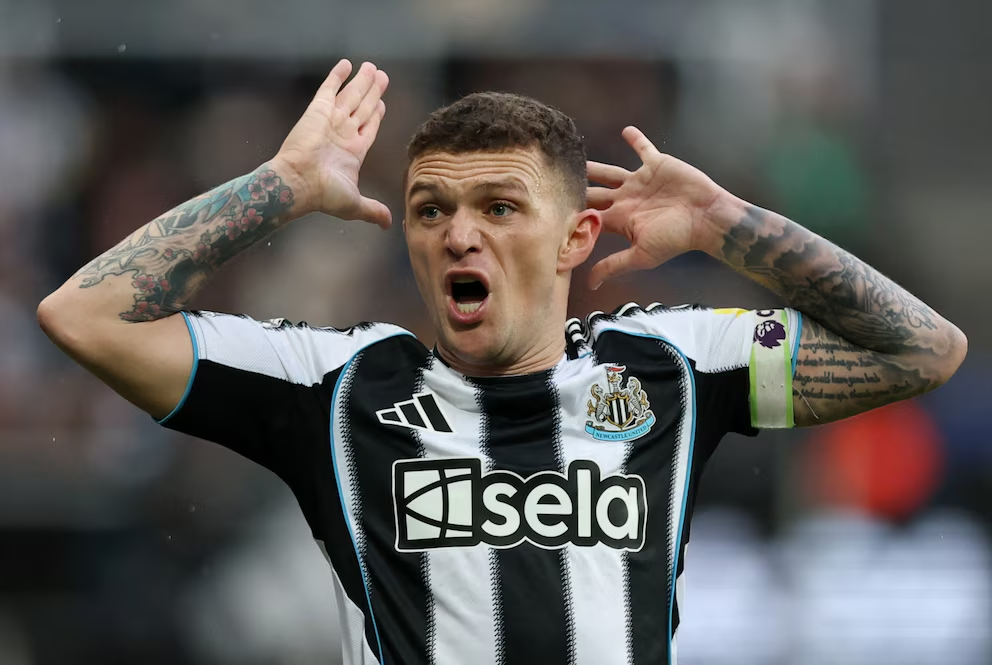
Visibility now travels faster than performance.
Newcastle, March 2026
The reported encounter between Newcastle defender Kieran Trippier and a younger OnlyFans model is being framed in celebrity terms, but the real significance lies elsewhere. This is not simply a story about a footballer’s dinner, a jacket in the rain or the age gap that fuels headlines. It is a story about how elite athletes now live inside a media ecosystem where private social moments are instantly converted into reputational events, then packaged as signals about identity, recovery, masculinity and post-divorce reinvention.
According to the coverage, Trippier was seen in Newcastle with Kehlani Webster, a 21 year old model and dancer, in what tabloids described as a late evening outing after dinner at a city restaurant. Witness details, including the gesture of lending his jacket as the group left, became central to the narrative, which is revealing in itself. Modern sports tabloid coverage increasingly depends on micro-gestures, not because they prove anything substantial, but because they create a visual script that audiences can interpret as intimacy, carelessness or emotional transition. The story is less about facts than about framing.
That framing matters because Trippier is not being discussed only as a person, but as a symbolic football figure navigating a post-separation public phase. Reports tie the episode to the player’s previously publicized marital breakdown, effectively turning a social encounter into a chapter in a wider “after divorce” storyline. This is a common media move in elite sport. Once an athlete’s private rupture enters the public record, nearly every subsequent appearance can be read as evidence of recovery, decline or controversy, even when the event itself remains socially ordinary.

The mention of OnlyFans in the headline architecture is equally strategic. It is not incidental identification. It functions as a reputational accelerant because it immediately activates moral judgment, curiosity and platform era anxieties around sex work, fame and digital monetization. In tabloid logic, labeling someone as an OnlyFans model does more than describe occupation. It places the athlete’s encounter inside a preloaded cultural frame designed to increase traffic, debate and insinuation without needing a concrete scandal. The platform name becomes a narrative shortcut for controversy.
This reveals a larger transformation in football media culture. The traditional tabloid economy once depended on nightclub photos, infidelity allegations and nightlife indiscretions framed through paparazzi exclusives. Today, those same mechanisms still exist, but they now operate inside a hybrid ecosystem shaped by creator platforms, influencer identities and audience driven amplification on social media. A footballer is no longer only photographed. He is inserted into a platform coded narrative where attention is monetized across multiple publics at once, from sports fans to celebrity gossip audiences to digital creator communities.
There is also a class and gender dimension embedded in how these stories are told. Male footballers are often framed as navigating freedom, temptation or lifestyle after relationship breakdowns, while women in creator economies are frequently reduced to a brand marker in the headline itself. The imbalance is subtle but persistent. One becomes the subject with a personal arc. The other becomes the symbolic trigger that makes the story “newsworthy.” This pattern matters because it shapes how audiences distribute judgment before they know anything meaningful about the interaction beyond a few quoted witness descriptions.
From the athlete’s perspective, this kind of exposure creates a difficult reputational equation. A player may be legally and personally free to rebuild his private life, yet every public appearance can still be folded back into performance narratives, locker room discourse and fan sentiment, especially in a club environment where scrutiny rises during uneven form or team pressure. The issue is not only privacy. It is timing. In elite football, off-field visibility rarely stays off-field once media ecosystems detect a frame that can be linked, however loosely, to leadership, focus or professionalism.

For Phoenix24, the key pattern is the fusion of sports celebrity coverage with platform age moral signaling. The headline is built to look like gossip, but structurally it reflects a deeper media shift: reputational value is now extracted from the intersection of athlete status, creator platform identity and public appetite for post-relationship narratives. What gets amplified is not necessarily misconduct or scandal, but interpretability. The image works because it can be read in multiple ways, and ambiguity is now one of the most monetizable assets in digital sports media.
In that sense, the story is not really about a dinner in Newcastle. It is about the industrialization of private optics in the attention economy of modern football. A brief encounter becomes a social referendum, a symbolic update and a monetized narrative unit within hours. The athlete remains the face of the story, but the real engine behind it is the media system itself, one that no longer waits for wrongdoing to generate controversy. It only needs visibility, a loaded label and a moment that can be made to travel.
La narrativa también es poder. / Narrative is power too.