

 Phoenix 24
Faith, colour and maritime memory fill an entire city.
VIANA DO CASTELO, PORTUGAL
Viana do Castelo concluded another vibrant edition of the Romaria de Nossa Senhora da Agonia, one of Portugal’s largest and most visually distinctive religious festivals. Streets, balconies and public squares became a living gallery of embroidered costumes, floral decorations, traditional jewellery and popular devotion. Thousands of residents, pilgrims and visitors participated in celebrations that combined solemn Catholic rituals with music, dancing, fireworks and ethnographic parades. The 2026 festivities extended from August 15 to 23.

The pilgrimage is deeply connected to the maritime identity of northern Portugal. Local devotion to Our Lady of Sorrows dates to 1744, when fishermen began seeking her protection against storms and dangerous seas. During the traditional maritime procession, men wearing checked shirts carried heavy religious statues toward the harbour, accompanied by women in regional dress and crowds lining the route. The ceremony expressed both gratitude and remembrance in a community whose history has long depended on the Atlantic.
Among the most photographed moments was the Mordomia Parade, in which women displayed the distinctive clothing and gold ornaments of the Minho region. The costumes represented different occupations, social roles and stages of local history, from agricultural workers and fish sellers to the elaborately dressed mordomas who serve as guardians of the celebration. Their jewellery, sometimes accumulated and inherited across generations, functioned as both personal adornment and visible family heritage. Embroidery, colour combinations and carefully arranged accessories turned each participant into a moving representation of regional identity.
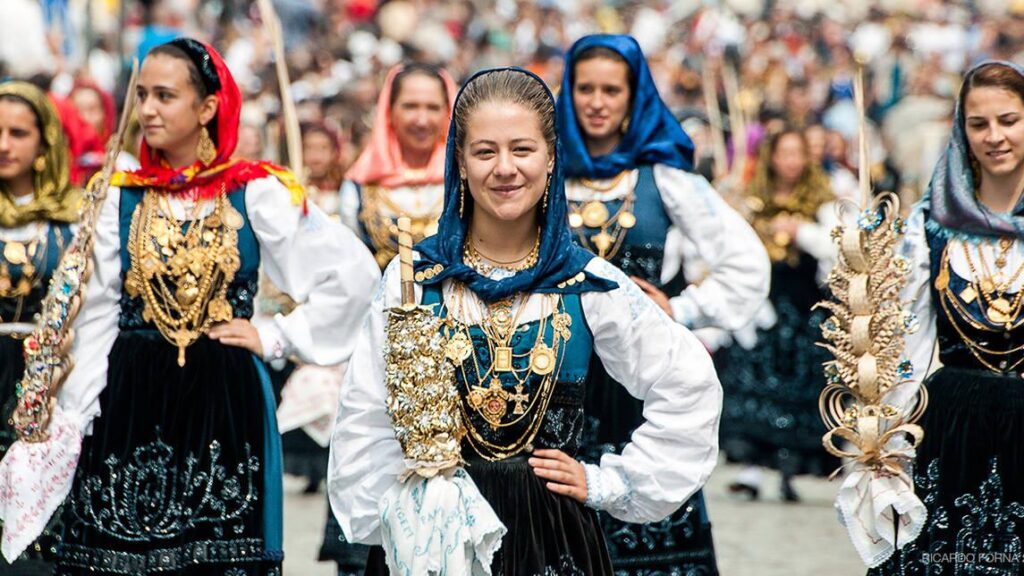
The Historical and Ethnographic Parade transformed the city into an open-air museum, bringing together more than 3,000 participants, numerous decorated floats and scenes inspired by rural work, fishing and domestic life. Giant figures, oversized heads, folk groups and traditional musicians added a playful dimension to the celebrations. Residents also decorated streets with intricate flower carpets, while quilts hanging from balconies framed the solemn religious procession. Fireworks over the Lima River completed the festival’s mixture of collective devotion and theatrical spectacle.
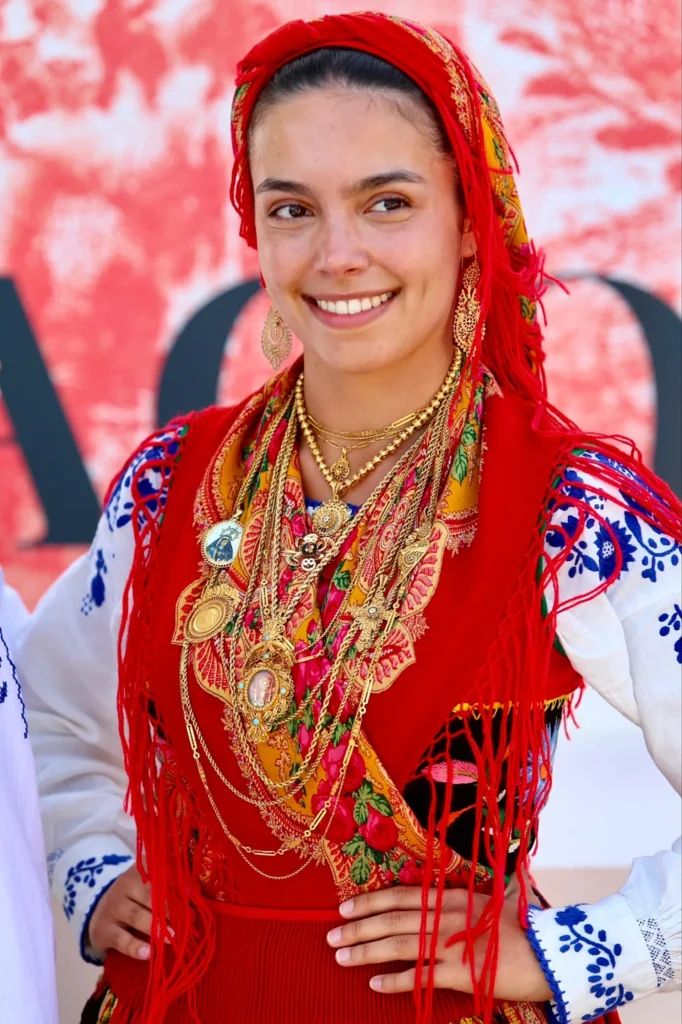
The Romaria da Senhora da Agonia has been officially celebrated since 1772, but its continuing strength lies in its ability to make tradition participatory rather than purely commemorative. Children, adults and older generations assume visible roles, allowing skills, clothing and rituals to survive through practice. For Viana do Castelo, the festival is simultaneously an expression of faith, a cultural inheritance and an international showcase. Its most memorable images demonstrate how an entire community can become both the creator and the subject of its own living history.
Tradition survives when memory becomes a shared celebration. / La tradición sobrevive cuando la memoria se convierte en una celebración compartida.