

 Phoenix 24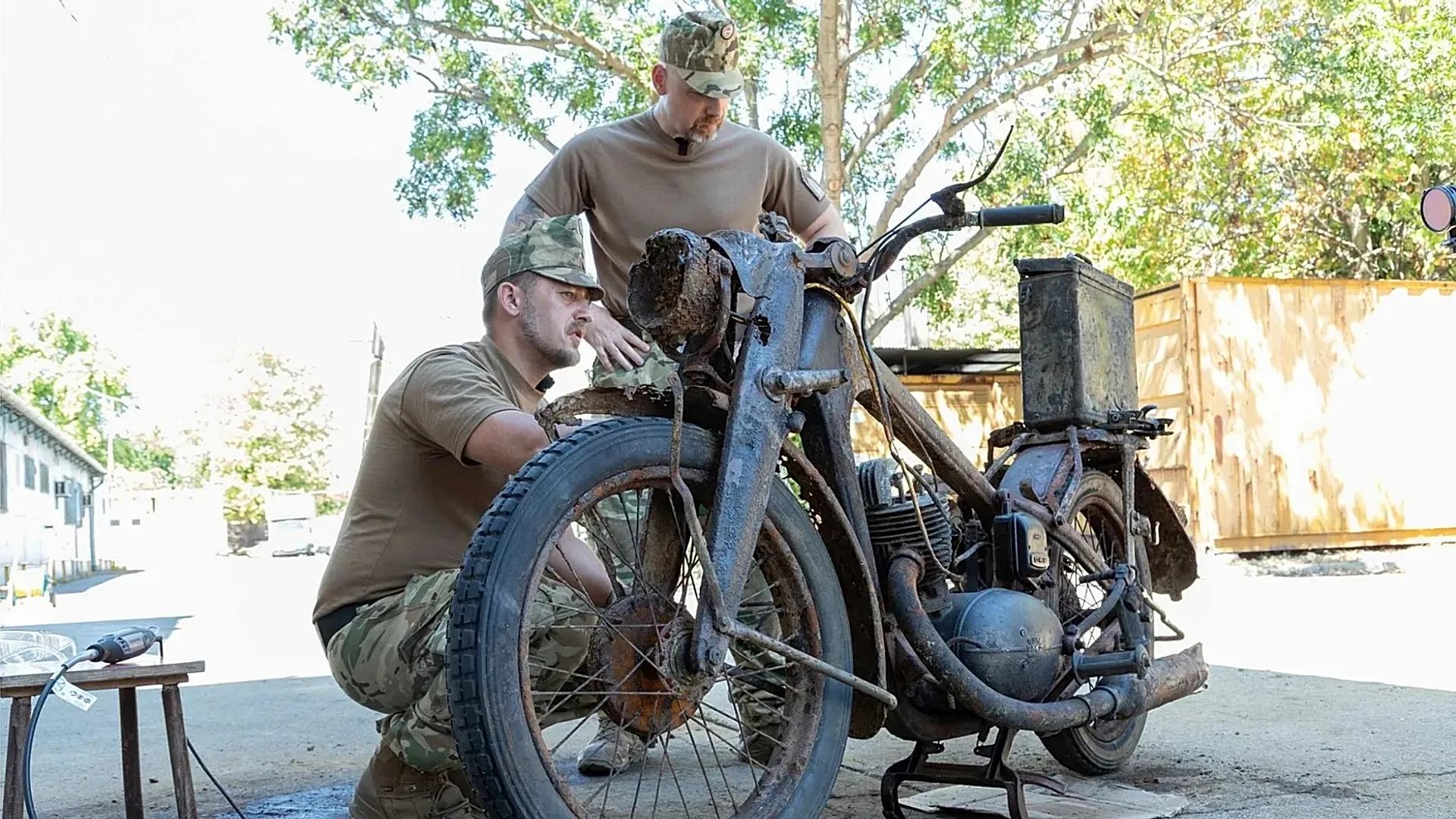
A rare machine revives Budapest’s most devastating battle.
BUDAPEST, HUNGARY
A remarkably preserved German military motorcycle recovered from the Danube has provided historians with a tangible connection to the brutal siege of Budapest. The DKW NZ 350-1 was discovered near Batthyány Square after exceptionally low water levels exposed part of the riverbed. Mud mixed with fuel and oil protected much of the machine from the deterioration normally caused by prolonged immersion. Experts consider the discovery exceptional because only a few dozen German-produced motorcycles of this model are believed to survive.
Military markings indicate that the motorcycle probably belonged to the Feldherrnhalle Armoured Division, one of the German formations encircled in Budapest during the final months of the Second World War. The vehicle may have entered the unit’s inventory in September 1944, shortly before its motorised pioneer battalion was reorganised. These motorcycles were commonly used for liaison missions, carrying messages and orders between positions. Approximately 12,000 units of this model were manufactured in 1944 and 1945, using cast-iron engine blocks because wartime shortages had restricted access to aluminium.
The machine’s exact route into the Danube remains uncertain. Its gearbox was found in second gear or locked in that position, while damage to the motorcycle indicates that it was involved in an accident approximately 81 years ago. Historians believe it may have been lost near the riverbank during a military mission and later pushed into the water during postwar debris-clearing operations. The possibility that it sank aboard a ferry during the siege is considered unlikely because the river was heavily frozen and the military situation would have made such a crossing extremely difficult.
Anti-tank mines, ammunition and the remains of two German soldiers were also recovered nearby. Identification tags suggest that one man may have served in the 22nd SS Volunteer Cavalry Division, while the other was probably a Wehrmacht soldier. Researchers have cautioned that neither soldier can yet be directly connected to the motorcycle. Their preserved identity discs may nevertheless allow specialists to establish their names and return their remains to surviving relatives for burial.
The discovery brings renewed attention to the siege of Budapest, fought between late December 1944 and February 1945. German and Hungarian forces resisted the advancing Soviet and Romanian armies in a battle that devastated the capital and caused enormous military and civilian losses. Budapest’s remaining Jewish population also endured killings and terror committed by Hungary’s fascist Arrow Cross movement during the siege. The recovered motorcycle is therefore more than a rare technological artefact: it is a physical witness to a conflict in which military strategy, ideological violence and civilian suffering became inseparable.
Rivers conceal history, but they never erase its consequences. / Los ríos ocultan la historia, pero nunca borran sus consecuencias.