

 Phoenix 24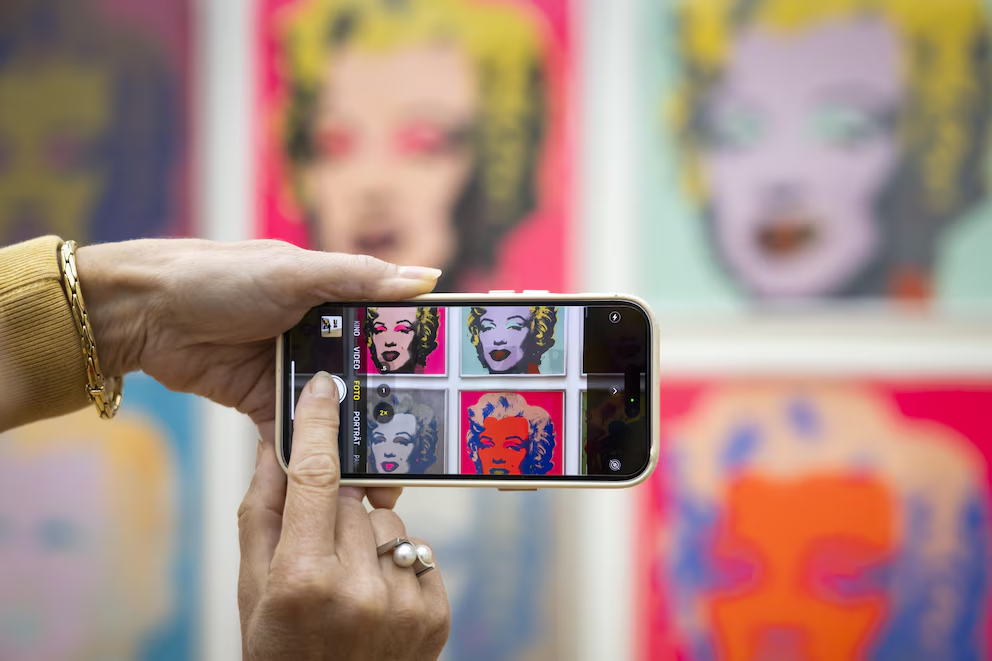
When everyday images became the language of art.
London, United Kingdom.
Pop Art, one of the most influential artistic movements of the twentieth century, originated not in the United States but in postwar Britain, where a group of artists began questioning the boundaries between fine art and mass culture. A historical examination published on September 18 revisits the movement’s emergence in London in 1952 and its subsequent transformation into a global cultural phenomenon. Advertising, comic strips, cinema and commercial products became legitimate artistic materials, challenging traditional distinctions between cultural prestige and everyday consumption. More than seven decades later, its influence remains visible in digital imagery, branding and contemporary visual communication.
Scottish artist Eduardo Paolozzi played a foundational role in this transformation. During his time in Paris between 1947 and 1949, he assembled collages using American advertisements, magazine illustrations and popular entertainment imagery, eventually developing the series BUNK! In April 1952, he presented these experiments to London’s Independent Group at the Institute of Contemporary Arts. The presentation helped establish a new artistic conversation in which industrial reproduction and consumer imagery could become subjects of serious cultural investigation.
Richard Hamilton and other members of the Independent Group expanded these ideas through the landmark 1956 exhibition This Is Tomorrow at London’s Whitechapel Gallery. The exhibition combined futuristic imagery, entertainment references and commercial aesthetics, reflecting Britain’s fascination with American consumer culture. Its historical context was significant: Britain was still recovering from wartime destruction and economic restrictions. American abundance therefore appeared simultaneously as an object of fascination and a subject for critical examination.
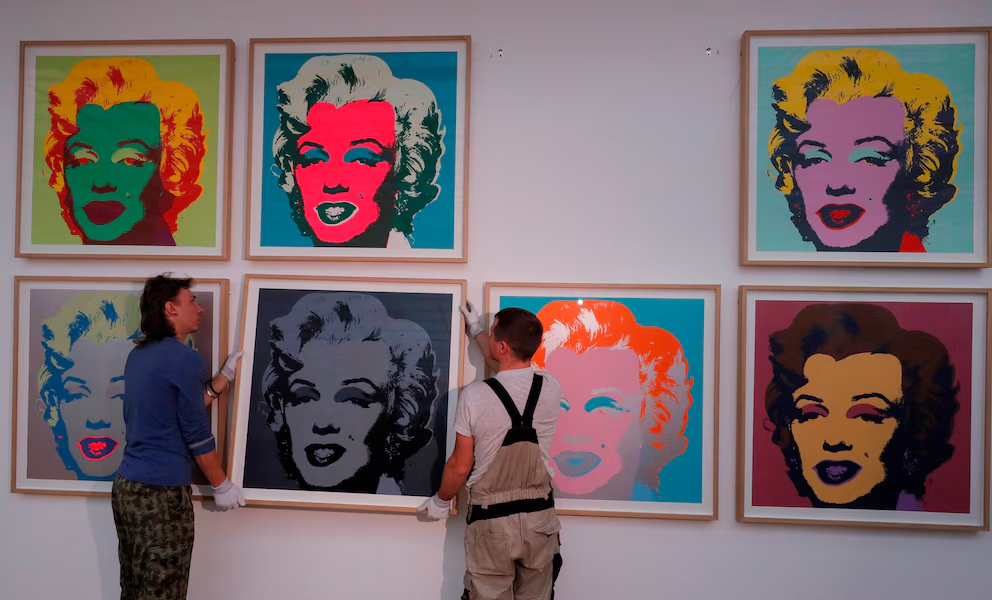
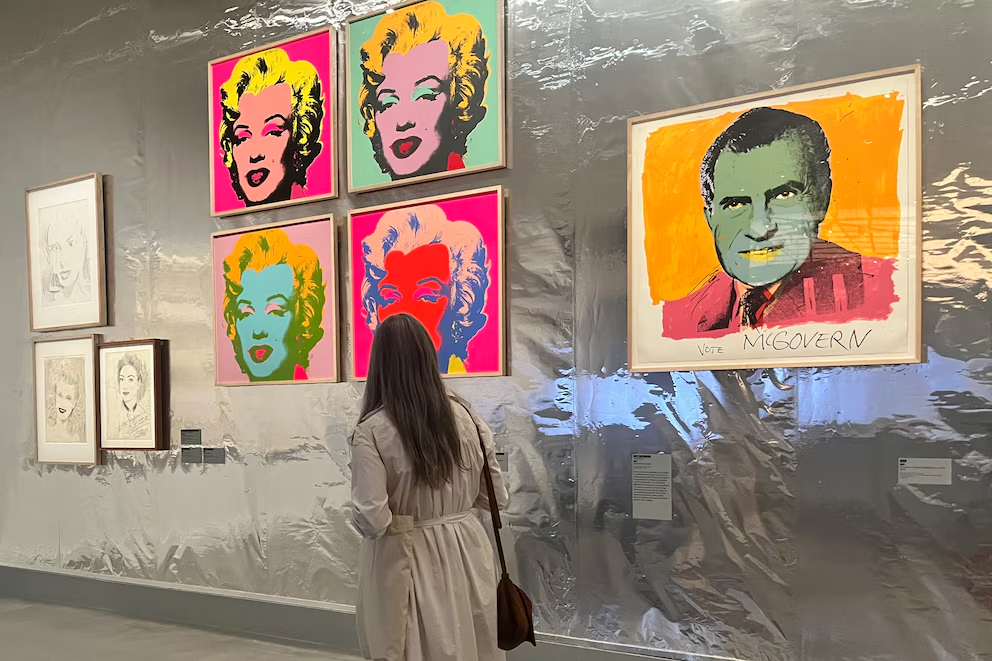
The movement achieved broader international recognition in the United States during the 1960s. Andy Warhol transformed Campbell’s soup cans, Marilyn Monroe and Elvis Presley into recognizable artistic subjects, using commercial printing techniques to reproduce images repeatedly. Roy Lichtenstein enlarged comic-book panels, incorporating speech bubbles and Ben-Day dots into monumental paintings. James Rosenquist drew on his experience painting billboards to create compositions combining advertising, military imagery and political symbolism.
Pop Art was never confined to a single national interpretation. In Germany, Gerhard Richter and Sigmar Polke developed Capitalist Realism, engaging with consumer imagery through the country’s complicated postwar history. France’s Nouveau Réalisme, associated with Pierre Restany and Yves Klein, explored manufactured objects, urban materials and unconventional artistic interventions. These parallel developments demonstrated that mass culture could generate different artistic responses depending on social and historical circumstances.
Its legacy extends into the twenty-first century through artists such as Jeff Koons and the continuing circulation of commercial imagery within contemporary art. Social media, internet memes and digitally reproduced celebrity portraits also share visual characteristics with the movement’s experiments, although they emerge from different technological and cultural conditions. Images can now circulate globally within seconds, reaching audiences on a scale unavailable to the original Pop artists.
The movement’s enduring significance lies in its transformation of what society considers worthy of artistic attention. A supermarket product, newspaper photograph or familiar advertisement could become a vehicle for examining consumption, identity and cultural power. Pop Art changed not merely the appearance of art, but the relationship between images and the societies producing them.
Lo visible y lo oculto, en contexto. / The visible and the hidden, in context.