

 Phoenix 24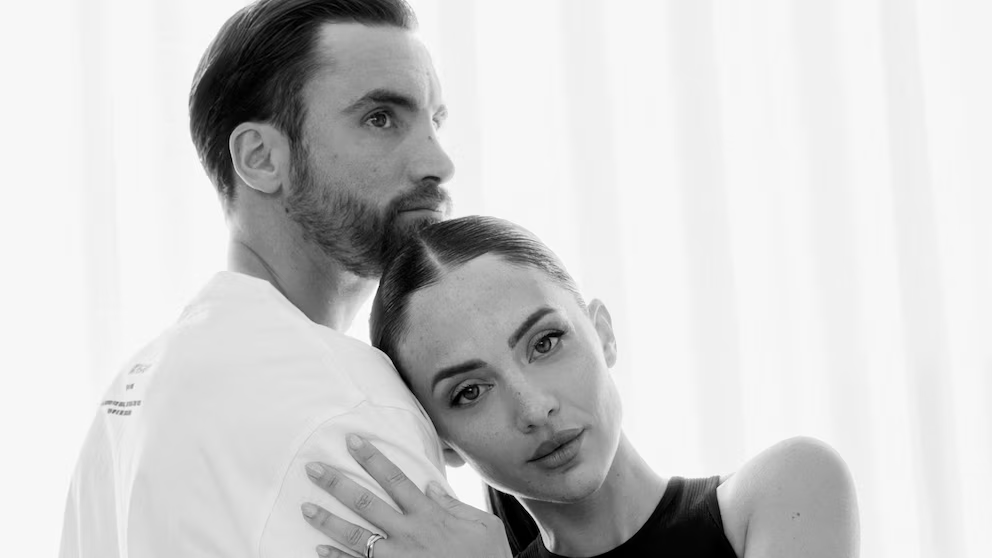
When football pauses, identity finds another field to play on.
Buenos Aires, October 2025.
Argentine defender Nicolás Tagliafico, long admired for his discipline on the pitch, has traded jerseys for runways — at least for a moment. The World Cup champion surprised fans this week by appearing as a model for his wife Caro Calvagni’s clothing brand, a crossover that merges athletic presence with creative expression. The campaign, unveiled on social media, shows Tagliafico in minimalist designs that reflect Calvagni’s clean aesthetic and sustainability ethos. Far from a publicity stunt, the collaboration signals a shift in how elite athletes navigate fame, identity, and partnership in the age of lifestyle branding.
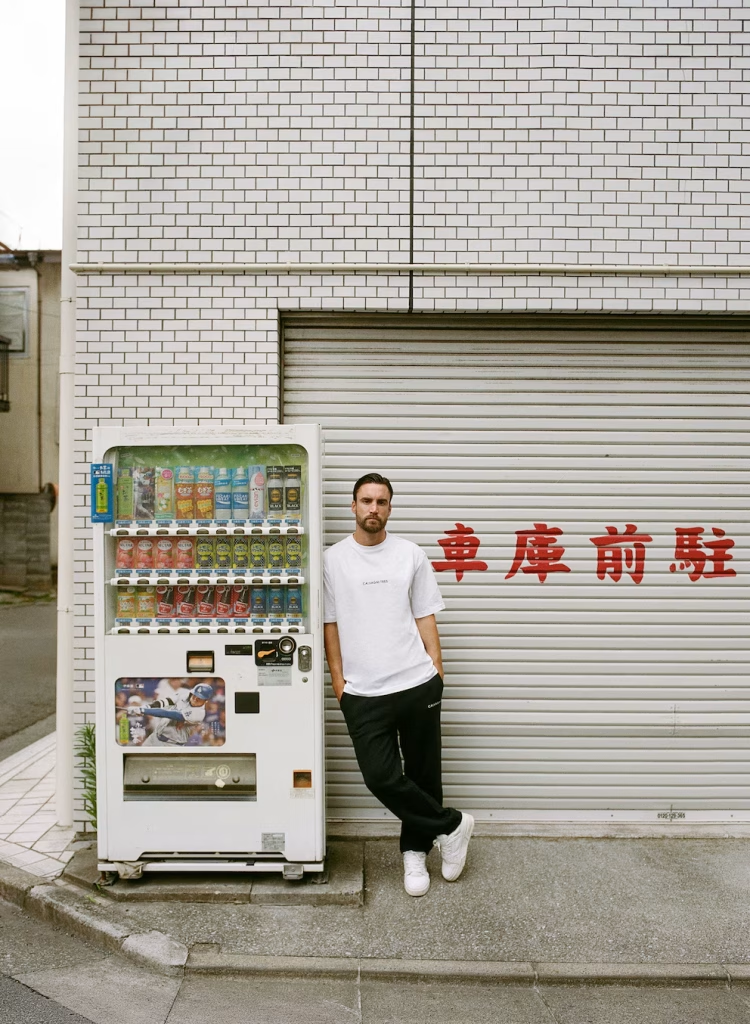
Calvagni, a fitness entrepreneur turned designer, launched her line three years ago with a focus on “wearable strength” — neutral tones, ergonomic fabrics, and a subtle fusion of elegance and functionality. Her husband’s participation, she explained, came naturally. “He embodies what the brand stands for: balance, authenticity, and perseverance,” she said during a launch event in Palermo Soho. The photos, captured by Argentine photographer Gaby Herbst, blend cinematic stillness with domestic intimacy, portraying Tagliafico not as a celebrity but as a partner moving through ordinary moments — coffee, reading, reflection.
For Tagliafico, the campaign is more than an exercise in fashion; it is an act of emotional reciprocity. In interviews, he has often credited Calvagni for grounding his career through years of travel and competition. “Football takes everything from you — time, presence, even silence,” he once said. “Working with her gives something back.” That personal tone has resonated with fans, many of whom interpret the project as a rare expression of vulnerability in a sport often defined by stoicism.
Sports psychologists note that such ventures are increasingly common among top players seeking balance in a hyper-commercialized profession. “Athletes today are brand ecosystems,” explained Italian sociologist Luca Ferrari. “The difference lies in whether the narrative feels transactional or human. Tagliafico’s case is deeply relational — it’s about shared purpose rather than exposure.” That distinction may explain why the campaign has avoided the usual cynicism that greets celebrity collaborations.
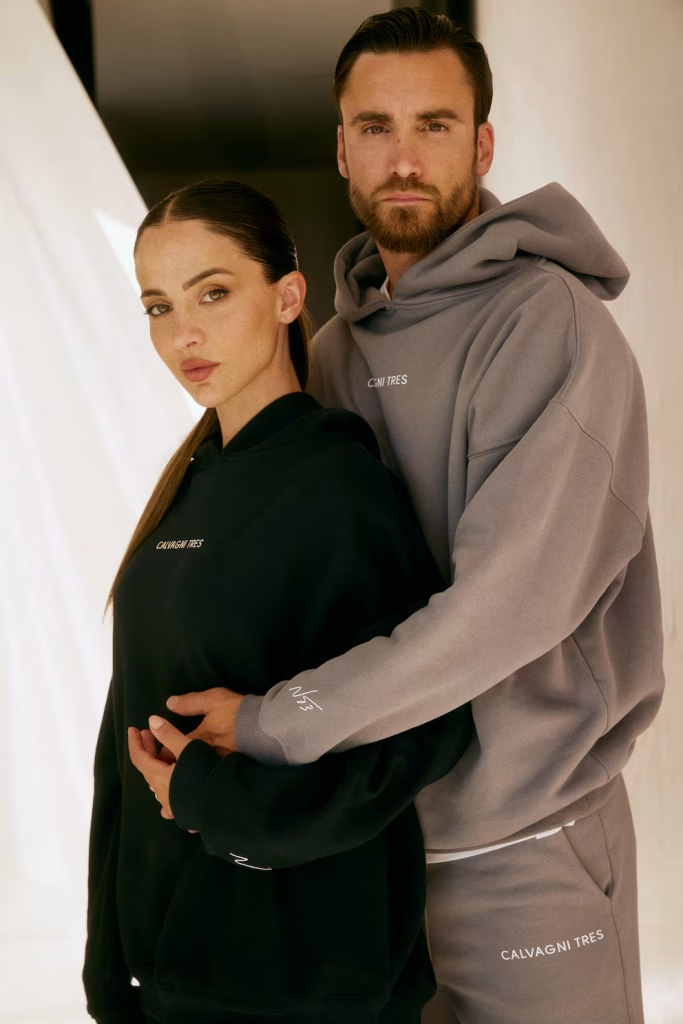
Beyond aesthetics, Calvagni’s brand has gained recognition for ethical sourcing and limited-edition production, aligning with a new generation of Argentine designers positioning local fashion on global platforms. The collection’s fabrics are produced in Mendoza and Córdoba, and part of the proceeds support female-led textile cooperatives. This fusion of craftsmanship and cause gives the project an authenticity that transcends the celebrity connection.
Tagliafico, who currently plays for Lyon Olympique in France, has maintained that this appearance does not mark a career shift but rather a creative bridge between personal and professional worlds. “I’m not changing teams,” he joked during a short video segment. “Just helping the one that matters most.” The statement, simple yet emotionally precise, captured the dynamic of mutual admiration that defines the couple’s public image — a rarity in the high-velocity culture of sports and social media.
Fashion critics in Buenos Aires and Paris have reacted with cautious praise. While few expect the defender to pursue modeling seriously, many see the campaign as a sophisticated blend of storytelling and aesthetics. “It’s visually quiet but emotionally articulate,” noted El Planeta Moda columnist Sofia Bergamo. “There’s a kind of mature tenderness in the way it’s staged — less about glamour, more about connection.”
The collaboration also underscores a broader trend in contemporary masculinity. As sociologists have observed, the boundary between strength and sensitivity has blurred in public perception, particularly among younger audiences. Tagliafico’s willingness to participate in a campaign built on subtlety and affection rather than dominance reinforces this evolution. In Argentina, where football remains the nation’s secular religion, such gestures carry symbolic weight.
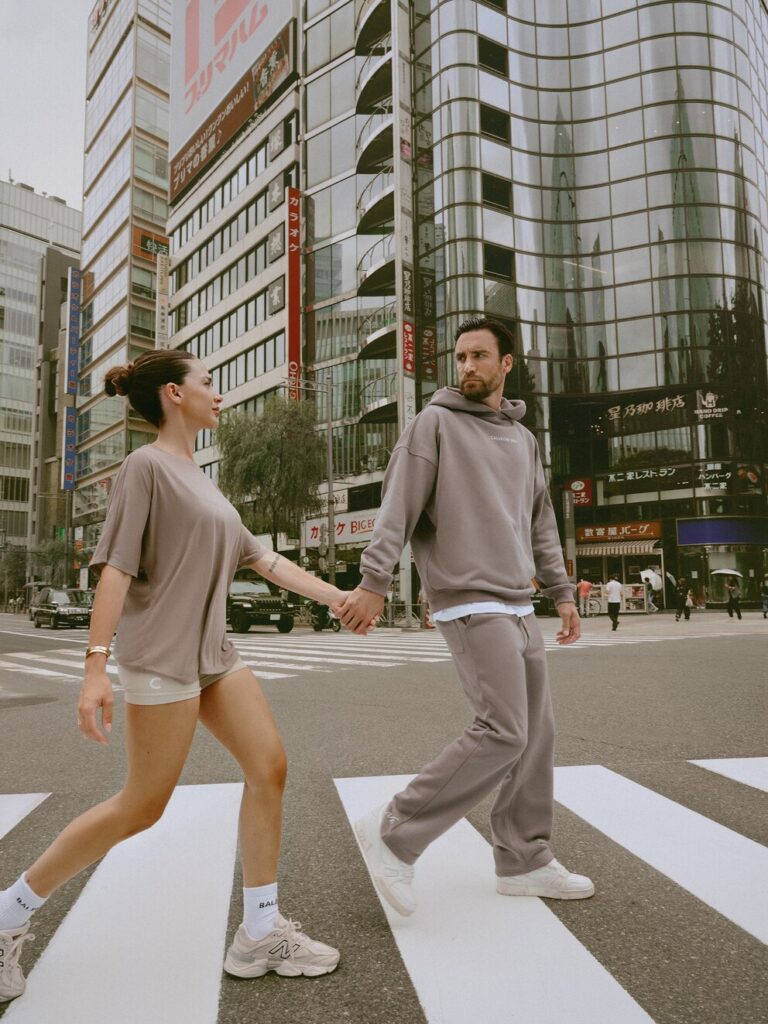
Still, there is an undeniable strategic layer. By intertwining sports credibility with lifestyle authenticity, the Tagliafico-Calvagni partnership cultivates a hybrid identity that extends beyond the ephemeral cycle of matches and endorsements. It signals the arrival of a new cultural model: athletes not merely endorsing brands but co-creating them as expressions of their own values.
As night falls over Buenos Aires, the campaign’s images circulate online — quiet, luminous, deliberately human. The defender who once lifted the World Cup now lifts a different narrative: one of partnership, balance, and quiet reinvention. In a media landscape addicted to spectacle, this understated gesture may prove more disruptive than any goal.
Phoenix24: truth is structure, not noise. / Phoenix24: la verdad es estructura, no ruido.