

 Phoenix 24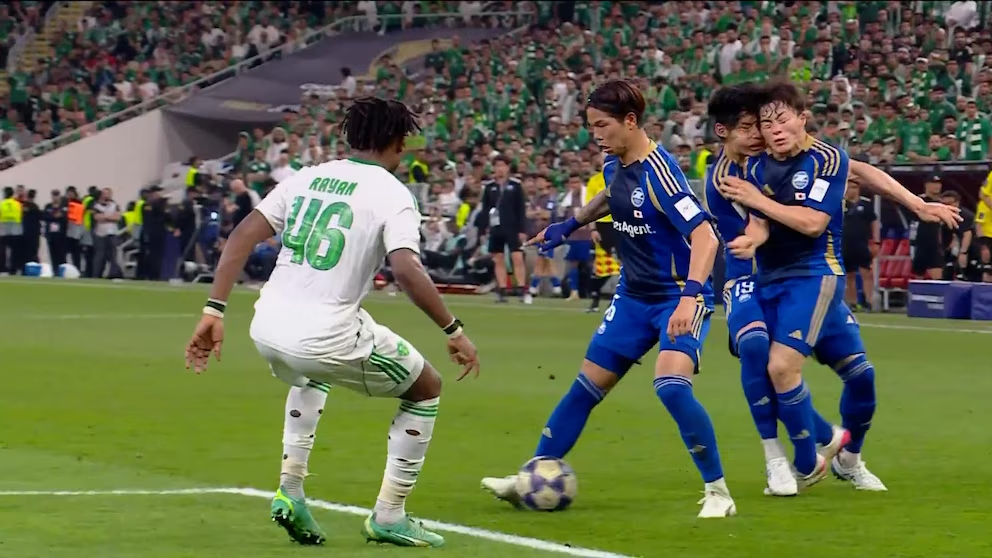
One rehearsed move collapsed into football absurdity.
Jeddah, April 2026. The AFC Champions League Elite final delivered a scene that quickly traveled beyond the match itself: Machida Zelvia attempted a rehearsed corner-kick routine, but the play collapsed into a violent collision between teammates. What was designed as tactical surprise became the most viral moment of the night, overshadowing much of the competitive drama surrounding Al-Ahli’s continental triumph.
The incident occurred with the match still level and roughly fifteen minutes left in regulation time. Yūki Sōma played a short corner toward Hiroyuki Mae, while Yūta Nakayama and Sōma accelerated behind the receiving player as part of the planned movement. Instead of creating space, the run produced a brutal clash between teammates, sending multiple Machida players to the ground and forcing the referee to stop play for medical attention.
The sequence became instantly shareable because it combined elite pressure, tactical choreography and physical comedy in a single breakdown. Social media turned the failed routine into a global joke, but the moment also revealed the psychological burden of a final that carried historic weight for the Japanese club. Machida had reached the continental title match for the first time, and the tension of that stage appeared to magnify every mistake.
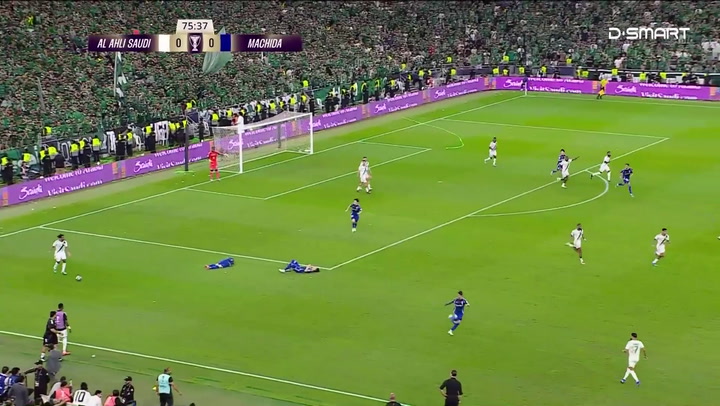
Al-Ahli, backed by Saudi football’s growing institutional power, eventually imposed itself in extra time. After playing much of the match with ten men, the Saudi side found the decisive goal through Firas Al-Burikan, assisted by Franck Kessié. The victory gave Al-Ahli back-to-back Asian titles and reinforced the club’s position within a regional football project increasingly tied to investment, spectacle and continental influence.
Still, the final will be remembered as much for the failed corner routine as for the trophy. Football often converts small tactical errors into large symbolic images, especially when cameras, platforms and instant commentary transform one awkward second into a permanent digital artifact. In that sense, Machida’s collision became more than a blooper; it became the visual shorthand for pressure overwhelming execution.
The deeper reading is simple but revealing: modern football is no longer judged only by results, but by moments that survive online. A title can define a season, yet a single mistake can define the memory of a final. For Machida, the night showed both the cost of ambition and the cruelty of visibility in the age of viral sport.
Detrás de cada dato, hay una intención. Detrás de cada silencio, una estructura.