

 Phoenix 24
The revenge story now has more room to burn.
Los Angeles, May 2026. Netflix’s new Man on Fire series has quickly moved to the top of the platform’s global ranking after its April 30 debut, proving that familiar intellectual property can still dominate streaming when it is rebuilt with enough emotional density and tactical violence. The story returns to John Creasy, now played by Yahya Abdul-Mateen II, in a version that expands the character beyond the memory of Denzel Washington’s 2004 film.

The new adaptation is based on A. J. Quinnell’s literary saga, which began with the 1980 novel that first introduced Creasy as a damaged protector shaped by violence, guilt and survival. Netflix’s version uses the longer television format to explore his psychological fracture with more space, turning revenge into a slow-burning study of trauma rather than a simple action mechanism. The result is not only about punishment, but about what remains inside a man trained to kill after the mission ends.

The plot follows Creasy through a landscape of corruption, personal loss and protective violence, placing him in a world where loyalty becomes the last moral structure available. The series also distances itself from being a direct copy of the earlier film by building its own rhythm, cast and visual identity. That matters because the audience is not only comparing performances; it is measuring whether a known story can justify being retold in another format.

Its early success reflects Netflix’s current strategy with recognizable titles. Platforms are increasingly betting on stories that already carry cultural memory, but they must still create enough difference to avoid feeling like recycled nostalgia. Man on Fire works inside that tension: it uses a familiar name to attract attention, then relies on serial structure, emotional backstory and contemporary violence to keep viewers inside the algorithm.

The mixed critical reception also reveals the fracture between prestige judgment and audience behavior. A series can receive uneven reviews and still become dominant if it satisfies the platform’s strongest demand: sustained engagement. In streaming economics, momentum often matters as much as critical consensus.
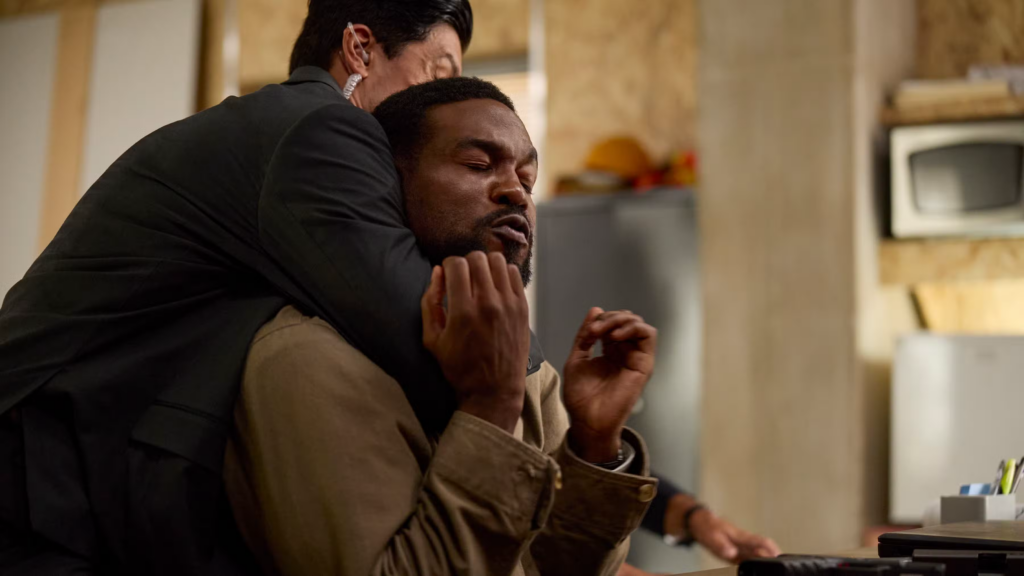
The deeper story is that revenge fiction has adapted to the age of serialized trauma. The old formula was direct: a wounded man protects, loses and destroys. The new formula stretches the wound, turning pain into architecture and violence into episodic retention. Netflix did not only revive Man on Fire. It converted it into a bingeable anatomy of damage.
Hechos que no se doblan. / Facts that do not bend.