

 Phoenix 24
Hollywood defends authorship in the age of algorithms.
Los Angeles, May 2026
The Academy of Motion Picture Arts and Sciences has tightened its rules on artificial intelligence, excluding synthetic actors and AI-generated screenplays from eligibility in major Oscar categories. The decision, set to apply to the upcoming awards cycle, establishes a formal boundary in an industry already experimenting with digital tools but increasingly concerned about automation replacing core creative roles. The message is precise: technology may assist filmmaking, but it cannot claim authorship or recognition reserved for human work.
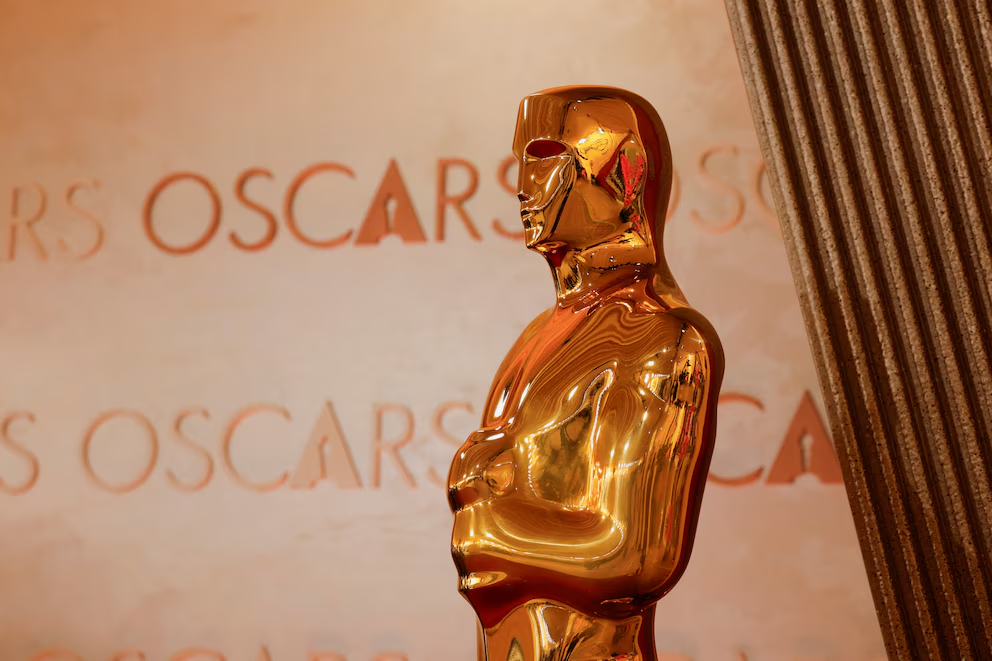
The move arrives at a moment of heightened tension in Hollywood, following recent labor disputes and growing anxiety among actors and writers over generative systems. Synthetic faces, cloned voices and algorithmic scripts have moved from experimental novelty to credible production tools, forcing institutions to respond before ambiguity becomes precedent. Under the new framework, AI remains acceptable as a technical aid, but any attempt to substitute human performance or writing disqualifies a project from competing in acting or screenplay categories.

This distinction attempts to stabilize a rapidly shifting landscape. In areas such as visual effects, editing and restoration, artificial intelligence will continue to operate as part of the production pipeline, much like previous technological advances. The difference now lies in the Academy’s effort to define a threshold between enhancement and replacement, a line that is becoming increasingly difficult to maintain as generative systems grow more sophisticated and indistinguishable from human output.
The underlying tension is both economic and symbolic. For actors and screenwriters, Oscar eligibility is not merely an honor but a structural component of career legitimacy, influencing contracts, visibility and industry hierarchy. Allowing synthetic performances or machine-generated scripts to compete on equal footing would have triggered disputes over creative ownership, consent, compensation and the preservation of professional identity.
To enforce the rules, the Academy may request additional disclosures to verify the extent of human involvement in nominated works. This introduces a new layer of oversight, as evaluation can no longer rely solely on the final product. Instead, it will increasingly depend on process transparency, credit attribution and the traceability of creative decisions in productions where AI tools may have influenced key stages.
For Hollywood, the decision represents an institutional defense against a transformation that is moving faster than its ethical frameworks. The Oscars cannot halt artificial intelligence, but they can define what kind of excellence they are willing to reward. In doing so, the Academy reaffirms a traditional conception of cinema: acting as embodied experience and writing as human imagination, not as statistical derivation.

For Phoenix24, the shift signals a broader cultural inflection point. Global institutions are beginning to decide which domains will remain anchored in human presence and which will accept algorithmic substitution as the new norm. At the Oscars, that boundary has now been drawn with caution and intent, but the larger contest over authorship is only beginning.
La narrativa también es poder. / Narrative is power too