

 Phoenix 24
Memory transforms the end of the world into home.
Buenos Aires
Argentine writer Natalia López has presented Una casa en el fin del mundo, a book that reconstructs the extraordinary year she spent living at Esperanza Base in Antarctica when she was 12 years old. López moved there with her family after her father’s work took them to one of the planet’s most isolated environments, where everyday life required adaptation to cold, distance and limited resources. She shared the experience with 17 other children of different ages, attending school and building friendships inside a small and intensely connected community. Decades later, those memories became the foundation for a narrative about childhood, identity and the lasting influence of an exceptional landscape.
Life at Esperanza Base required a radically different understanding of what was necessary. Families had to anticipate everything from food supplies to birthday and Christmas gifts because ordinary access to goods simply did not exist. López recalls learning to live with very little, an experience that continued to shape her relationship with material possessions long after leaving Antarctica. Yet her memories are not dominated by deprivation, but by games in the snow, close relationships and the sense of freedom that transformed an extreme environment into the setting for a happy childhood.
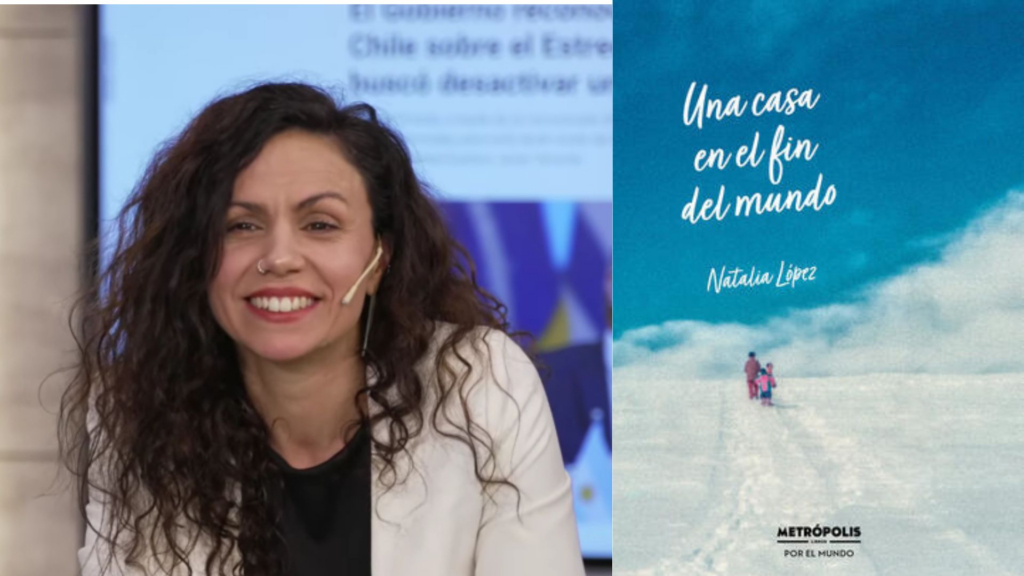
The central literary decision was to reconstruct Antarctica through the eyes of the girl López had been rather than exclusively through her adult perspective. Returning years later to make a documentary revealed how memory had altered the dimensions of familiar spaces, with rooms she remembered as enormous appearing unexpectedly small. She also digitized family VHS recordings and compared her recollections with those of her parents, discovering differences between remembered experience and recorded evidence. The book consequently places personal memory and family archives in dialogue rather than treating either as an unquestionable version of the past.
López also wants the book to bring Antarctica closer to readers who may perceive it only as a distant white territory on a map. Her experience portrays the continent through ordinary human activities such as attending school, playing with friends, sharing meals and learning to solve problems with limited resources. In doing so, Una casa en el fin del mundoturns an extreme geographical experience into an intimate exploration of belonging. Antarctica may have been a temporary home for López, but its deepest lesson appears permanent: some places remain part of us long after we leave them.
The visible and the hidden, in context. / Lo visible y lo oculto, en contexto.