

 Phoenix 24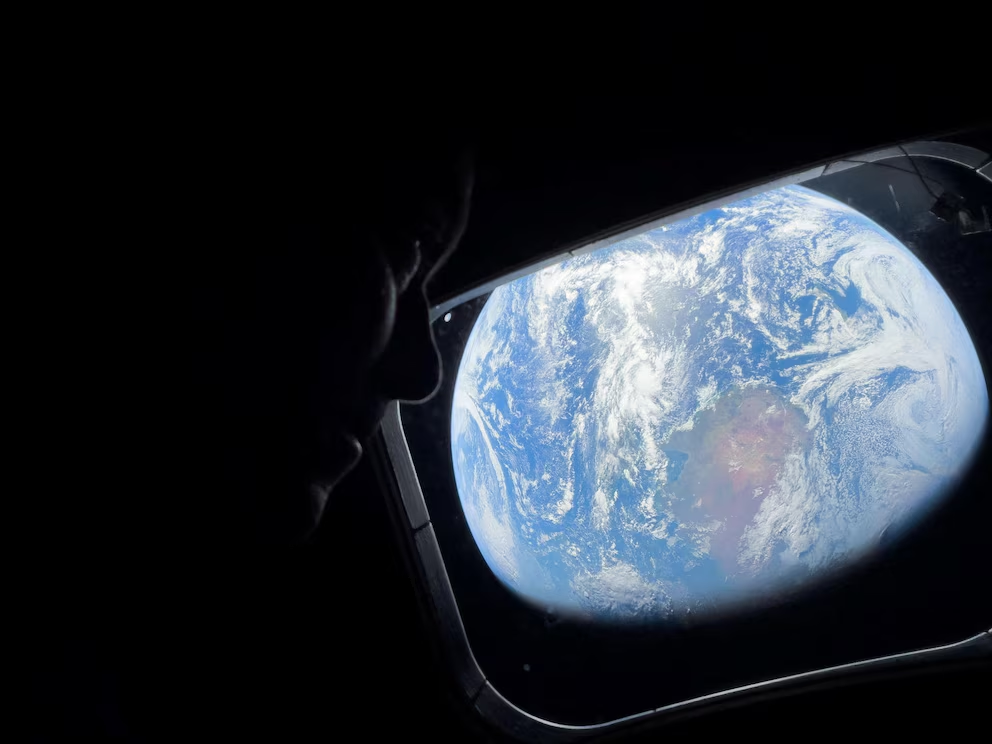
The selfie device is now part of the lunar script.
Houston, April 2026
The iPhone now traveling with the Artemis II crew matters for more than novelty. NASA’s decision to allow astronauts to carry an iPhone 17 Pro Max on the mission turns a familiar consumer device into a symbol of how space exploration is being reframed for the digital public. What once required highly specialized and visually distant hardware is now being partially filtered through a tool millions of people recognize instantly. That shift does not trivialize the mission. It changes the emotional grammar through which the mission reaches Earth.
The cultural power of the image is obvious. A phone associated with selfies, everyday messaging, and social media suddenly appears inside one of humanity’s most consequential lunar missions in half a century. That contrast is exactly what gives the story force. Artemis II is a high-stakes NASA operation designed to test Orion on a crewed journey around the Moon, yet part of its visual memory is now being captured through an object that belongs to ordinary life. Space exploration has not become ordinary, but it is being narrated through objects that make it feel less distant.
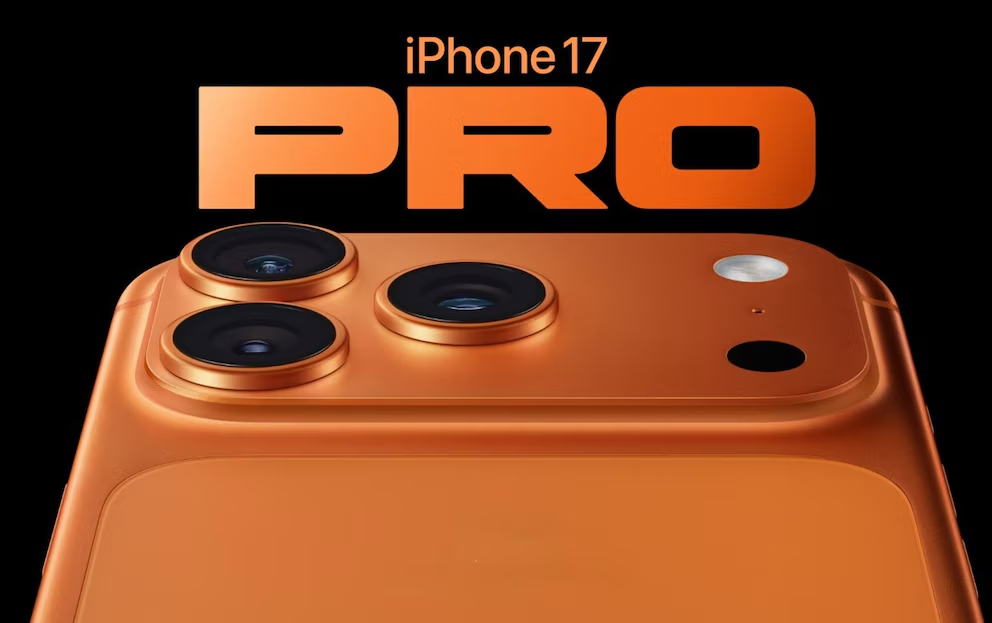
This is not just about photography. It is also about legitimacy in the age of public attention. The modern space race is fought not only through rockets, budgets, and launch windows, but through cultural reach. Governments and agencies no longer need only technical success. They need visual intimacy, symbolic relatability, and images that travel instantly across digital ecosystems. An iPhone floating inside Orion does more than take a picture. It collapses the distance between institutional grandeur and personal familiarity.
There is also a deeper technological message underneath the spectacle. A smartphone suitable for a mission environment, even in a limited or supplemental role, reflects how consumer electronics have reached a level of miniaturization, imaging power, and reliability that makes them culturally and operationally relevant even in elite aerospace settings. That does not mean a commercial phone has replaced mission-grade equipment. It means the gap between public technology and frontier technology is narrowing enough to be narratively useful.
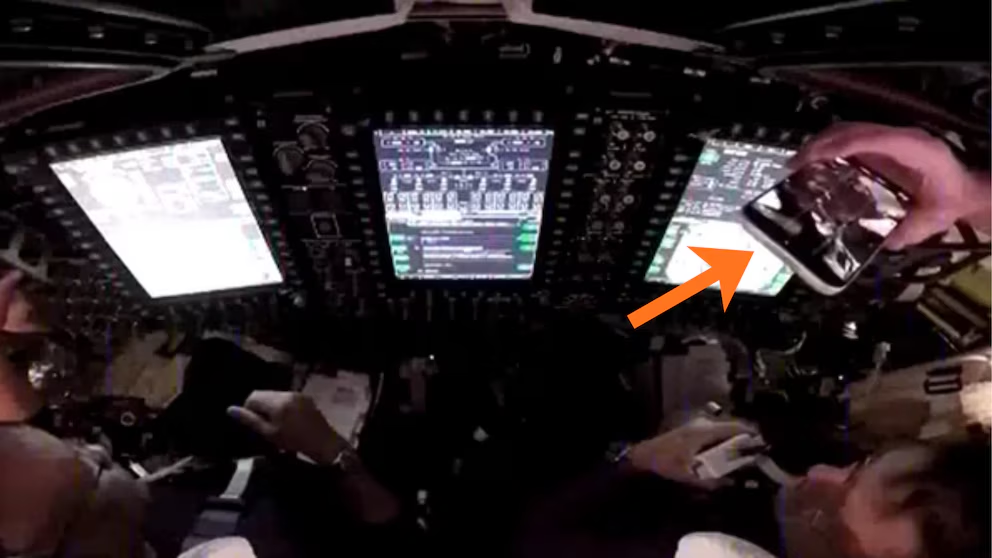
The move also says something about how NASA understands this mission’s symbolic audience. Artemis II is not only a rehearsal for future lunar operations. It is part of a broader effort to rebuild public identification with lunar exploration after decades in which deep-space ambition often felt abstract or politically intermittent. Letting astronauts carry a device the public associates with personal memory turns the mission into something more emotionally legible. It invites the viewer to imagine not only the spacecraft, but the human inside it.
That matters because the smartphone is no longer just a tool. It is the dominant interface through which contemporary life is recorded, performed, and remembered. Once it enters lunar exploration, it drags that whole symbolic universe with it. The phone does not merely document the mission. It domesticates part of it for mass imagination. In that sense, the iPhone aboard Artemis is not just hardware. It is a bridge between the heroic scale of spaceflight and the intimate scale of digital culture.
The deeper pattern is clear. The Artemis iPhone story is not really about selfies. It is about how institutions of power now package wonder through familiar devices in order to preserve relevance, intimacy, and reach. Space exploration remains one of the most extraordinary expressions of state science and technological ambition. But even that ambition now travels, at least in part, through the logic of consumer recognition. The Moon is still far away. The screen is what makes it feel close.
The visible and the hidden, in context. / The visible and the hidden, in context.