

 Phoenix 24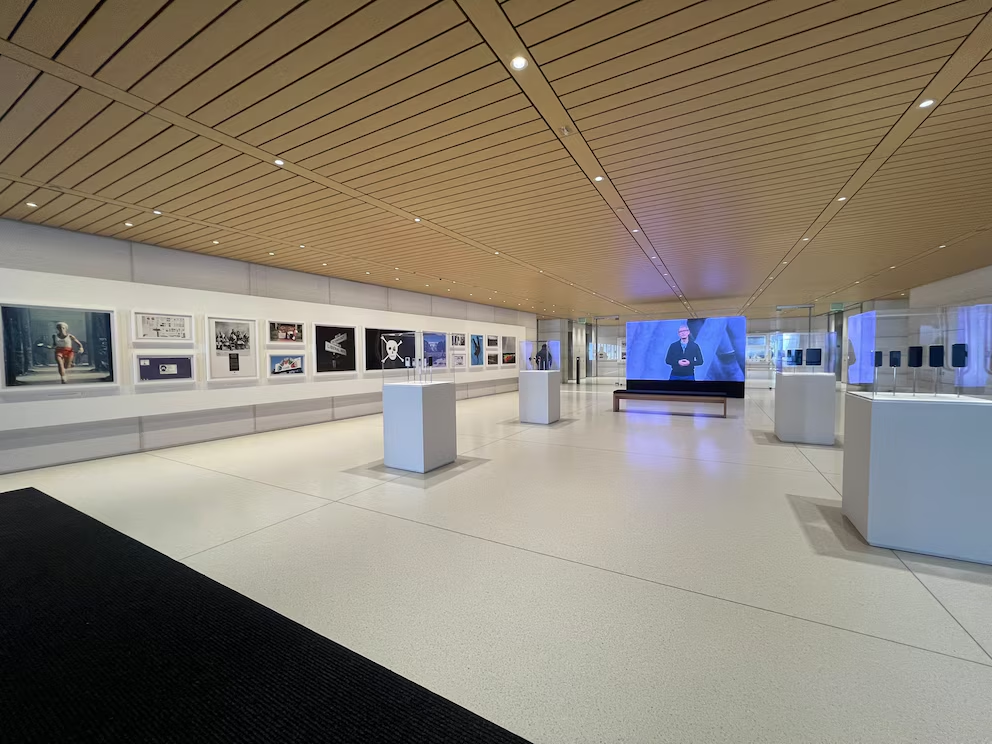
Nostalgia also works as brand governance.
Cupertino, April 2026
Apple’s new 50th anniversary exhibition is not just a celebration of old devices. It is a carefully curated exercise in narrative control. By placing the iPhone alongside historic Macs, iPods and other landmark products, the company is doing more than displaying objects. It is selecting which chapters of its history deserve to remain visible, and more importantly, which version of that history should survive in public memory.
That matters because Apple has never been a company that lives comfortably in nostalgia for its own sake. Its culture has usually leaned toward the next release, the next interface, the next category shift. So when it opens an anniversary exhibition built around iconic products, the move should not be read as sentiment alone. It is a statement of continuity. Apple is telling the public that its past was not a sequence of isolated inventions, but a coherent arc of transformation leading naturally into its present authority.
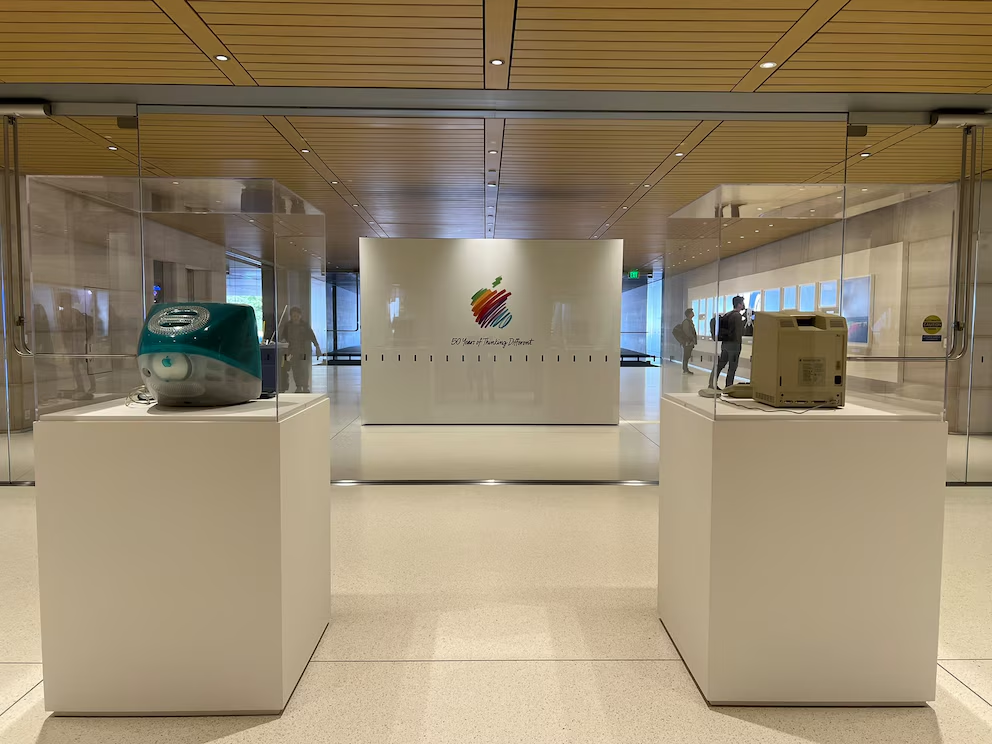
The iPhone sits at the center of that message for obvious reasons. It is not just one successful product among many. It is the device that reorganized Apple’s place in the world and helped turn the company from a premium computing brand into a planetary consumer infrastructure. To place it inside a 50-year historical exhibition is to reaffirm that the modern digital order still runs through Apple’s hardware mythology. In that sense, the exhibit is less about remembrance than about reaffirming jurisdiction over a technological age the company helped define.
There is also a deeper curatorial politics behind any corporate exhibition of this kind. A company archive is never neutral. It remembers through selection. It highlights moments of breakthrough, elegance and reinvention while smoothing over dead ends, fragilities and products that did not fit the myth as neatly. Apple’s anniversary exhibition therefore functions as a polished memory machine. It does not simply preserve history. It edits it into usable identity.
That is why the exhibition arrives with strategic value beyond commemoration. At a time when Apple faces more scrutiny over regulation, ecosystem control, supply chains and the slowing magic of radical surprise, an archive of iconic devices helps re-center the brand around invention, design legitimacy and long-range cultural influence. It quietly shifts attention away from the friction of the present and toward the accumulated authority of the past. This is not a museum against business. It is a museum in service of business.
The emotional power of the exhibition should not be underestimated either. Apple products carry biography for millions of users: first computers, first songs, first phones, first images of a more personal technology. When the company displays those devices, it is not only exhibiting industrial design. It is activating private memory at mass scale. That is one of Apple’s greatest strengths as a brand. It does not sell hardware alone. It sells eras of life attached to hardware.

The deeper pattern is clear. Apple’s 50th anniversary exhibition is not merely a tribute to a company growing older. It is a demonstration that in technology, whoever controls the archive can also shape the future story of legitimacy. By turning its own product history into a curated public experience, Apple is not just honoring its past. It is defending its place in the hierarchy of innovation.
The visible and the hidden, in context. / The visible and the hidden, in context.