

 Phoenix 24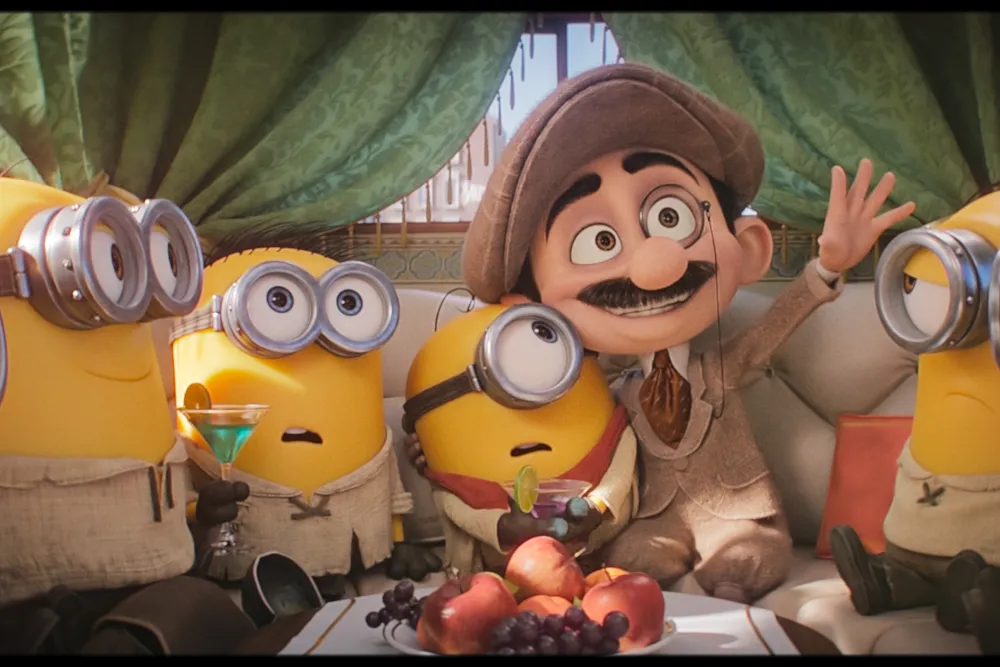
New tribes expand Illumination’s yellow mythology.
LOS ANGELES, UNITED STATES — July 2026.
Minions & Monsters has revived one of the most persistent questions surrounding the Despicable Me universe: where do the Minions really come from. The new film expands Illumination’s mythology by introducing multiple Minion tribes rather than treating the yellow characters as a single unified group. That creative decision opens space for new stories, new social structures and new contradictions inside a franchise that has often relied on comic mystery rather than strict internal logic. The result is a film that entertains younger audiences while also giving longtime fans fresh material for theories about the characters’ origin, survival and place in history.
The story introduces James, a Minion with artistic ambitions who does not fully fit the traditional model of serving villains. Instead of focusing only on loyalty to a master, James moves toward filmmaking and becomes involved with the movie industry during Hollywood’s silent-film era. This change adds a playful historical dimension to the franchise and allows the Minions to interact with another kind of power: cinema itself. By placing a tribe inside early Hollywood, the film turns the Minions from sidekicks into participants in cultural production.
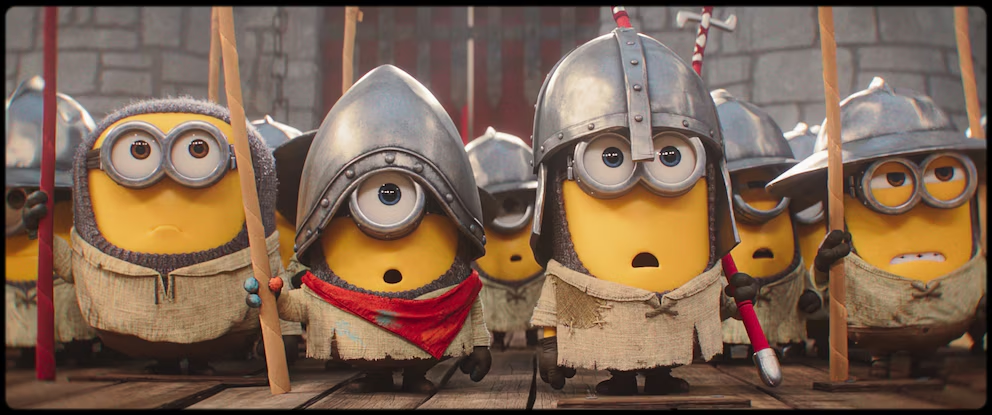
The introduction of several tribes is important because previous films largely presented the Minions as a collective species with a shared history. Earlier continuity suggested that the familiar group had spent a long time isolated in a cave after failing previous masters. Minions & Monsters complicates that assumption by suggesting that other groups may have existed elsewhere, outside the main narrative followed by the franchise. That expansion gives Illumination more freedom, but it also forces the creative team to confront questions fans have been asking for years.
Director Pierre Coffin, who has shaped the Minions across multiple films and also provides their voices, addressed those questions in a recent interview. He explained that the creative team has discussed the origin of the Minions at a very high level, but historically chose not to answer it directly. The opening of the first Minions film already hinted at an evolutionary beginning by showing the characters as small yellow cellular organisms. Coffin’s explanation confirms that the franchise has always played with origin mythology without fully locking itself into a definitive scientific or cosmic explanation.
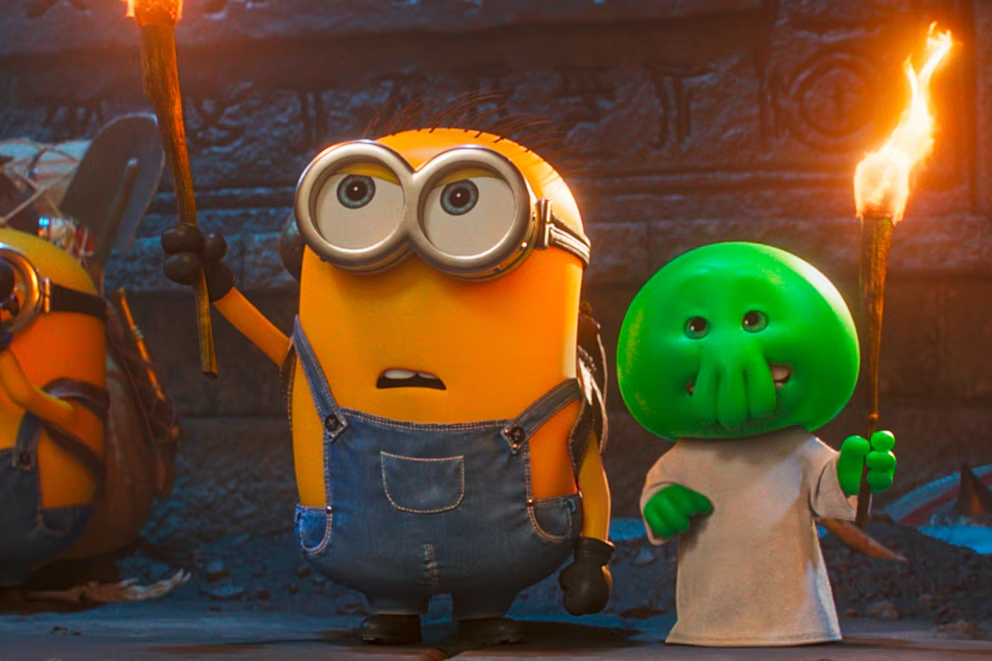
One unused idea for Minions & Monsters would have taken that mythology much further. Coffin said the team considered an opening built around the Big Bang, where tiny yellow points would emerge from darkness and travel across planets. Those points would eventually reach a blue planetary formation and participate in the separation of what became Earth and the Moon. The concept would have suggested, in comic terms, that the Minions were not merely part of history but somehow connected to the origin of everything.
That idea was ultimately excluded because it moved too far away from the kind of story the filmmakers wanted to tell. Even for a franchise built on absurd humor, making the Minions responsible for cosmic creation would have changed the scale of the universe dramatically. Coffin left the possibility open that such a concept could be explored in a future Minions film if the right story emerges. For now, the official mythology remains suggestive rather than definitive, preserving the characters’ comic ambiguity.
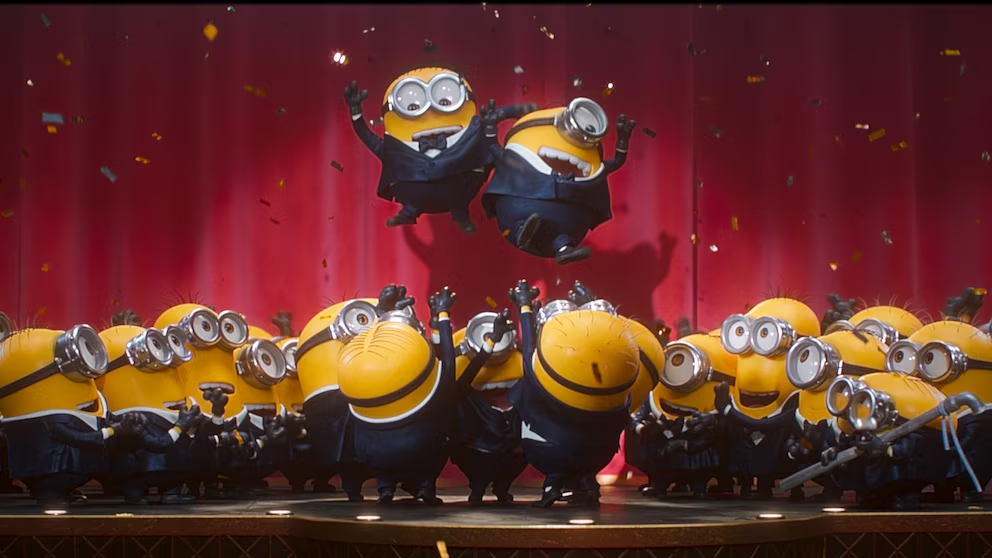
Another recurring fan question involves whether the Minions can die. Coffin’s response indicated that the creative team has tried to explore that possibility, but the characters always seem to return for some unexplained reason. That answer reinforces the slapstick logic of the franchise, where danger can be exaggerated without carrying real mortality. In practical terms, the Minions operate like classic animated figures whose bodies survive explosions, accidents and absurd punishment because comedy requires their constant return.
The film also reopens one of the most awkward long-running internet debates about the Minions: where they were during major historical crises. Earlier films avoided the issue by placing the known group in a cave for a long historical period, effectively removing them from some of humanity’s darkest chapters. Coffin acknowledged the difficulty of the question when asked about the Second World War and suggested that the Minions from the first film were still trapped in that cave. When pressed about the newly introduced tribes, he clarified that those other groups were not part of the central story previously followed by the franchise.
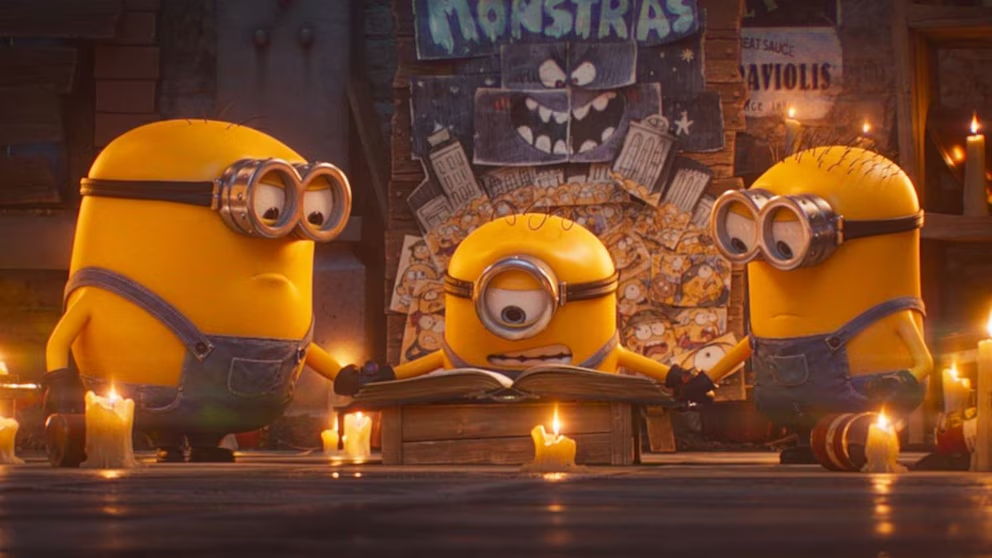
That answer may satisfy official continuity, but it will probably not end online speculation. The Minions have always functioned as comic chaos agents, and the more the franchise expands their world, the more viewers will ask how that world fits into broader fictional history. Multiple tribes provide narrative flexibility, but they also create new gaps that fans will attempt to fill through theories, jokes and continuity debates. Illumination appears comfortable with that tension because mystery has become part of the brand’s appeal.
Minions & Monsters therefore does more than add another adventure to a commercially powerful animated franchise. It shifts the mythology by presenting the Minions as a broader species with internal diversity, creative ambitions and an origin story that may be bigger than audiences previously imagined. Coffin’s comments show that the filmmakers know the questions exist, but they are still choosing comedy, flexibility and future possibility over rigid explanation. The Minions remain ridiculous, indestructible and mysterious, which may be exactly why they continue to dominate popular animation.
Phoenix24 — Global news with clarity and perspective.