

 Phoenix 24
Reinvention came with a public cost.
Los Angeles, March 2026
Miley Cyrus’s life after Hannah Montana was not defined by a single scandal, but by a long and highly visible break from the image that had made her a Disney star. Once the series ended, Cyrus moved quickly to separate herself from the expectations of child stardom, and that transition became one of the most debated transformations in pop culture during the last decade.
The shift was not only musical. It was visual, behavioral and strategic. Cyrus replaced the carefully managed identity associated with her Disney years with a far more confrontational public persona, one built around provocation, sexual autonomy, genre shifts and a deliberate rejection of the innocence linked to her television past. That change drew enormous attention because it was interpreted not just as artistic reinvention, but as a public rupture with the machinery that had produced her fame.
Much of the controversy surrounding her post Disney period came from the speed and intensity of that rupture. Performances, videos and interviews began to project an image designed to unsettle rather than reassure. For part of the audience, that transformation looked like liberation. For another, it seemed like excess, instability or rebellion staged for spectacle. The tension between those two readings followed Cyrus for years and became central to the way her career was discussed.
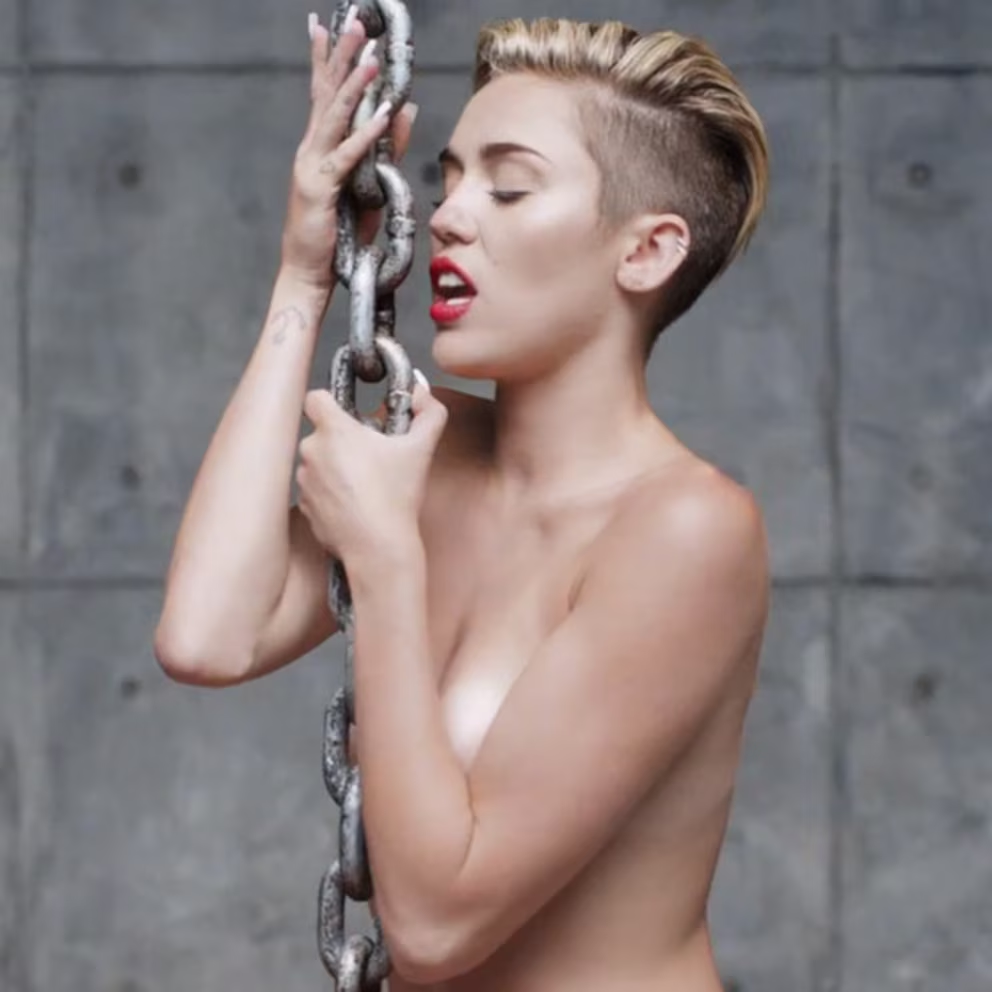
The Bangerz era marked the moment when that break became impossible to ignore. By then, Cyrus was no longer being read as a former teen actress experimenting with adulthood, but as a pop figure actively using controversy as a language of reinvention. Her public image became tied to shock, sexual provocation and a rejection of conventional pop-star respectability. That period made her one of the most polarizing artists of her generation, but it also established her as someone capable of dominating cultural conversation beyond the music itself.
What made that phase especially significant was that the controversy did not erase her career. It reshaped it. Cyrus moved through criticism, ridicule and overexposure, yet remained visible enough to keep reworking her image across different musical and cultural moments. Over time, she shifted again, incorporating country roots, rock textures and a more controlled public presence. That longer arc is important because it shows that the post Hannah Montana years were not a collapse, but a turbulent transition toward a more autonomous identity.

The aftermath of Disney also revealed the pressure placed on former child stars when they try to age in public. Cyrus’s case became one of the clearest examples of how female celebrities are often judged not only for what they create, but for how abruptly they abandon the roles that made them commercially acceptable in the first place. Her controversy was amplified because it unfolded at the intersection of youth culture, sexuality, celebrity branding and media obsession.
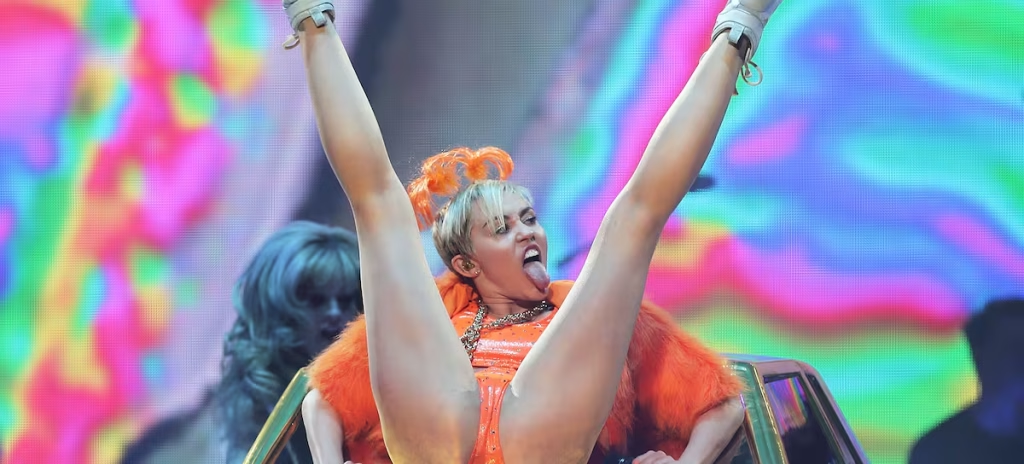
In retrospect, the most controversial side of Miley Cyrus after Hannah Montana was less about isolated incidents than about the broader decision to destroy the predictability attached to her earlier image. That process was messy, highly visible and often divisive, but it also became the foundation of the artist she later evolved into. What looked at times like permanent scandal now reads more clearly as a difficult, public and commercially risky form of reinvention.
Phoenix24: journalism without borders. / Phoenix24: journalism without borders.