

 Mario López Ayala, PhD
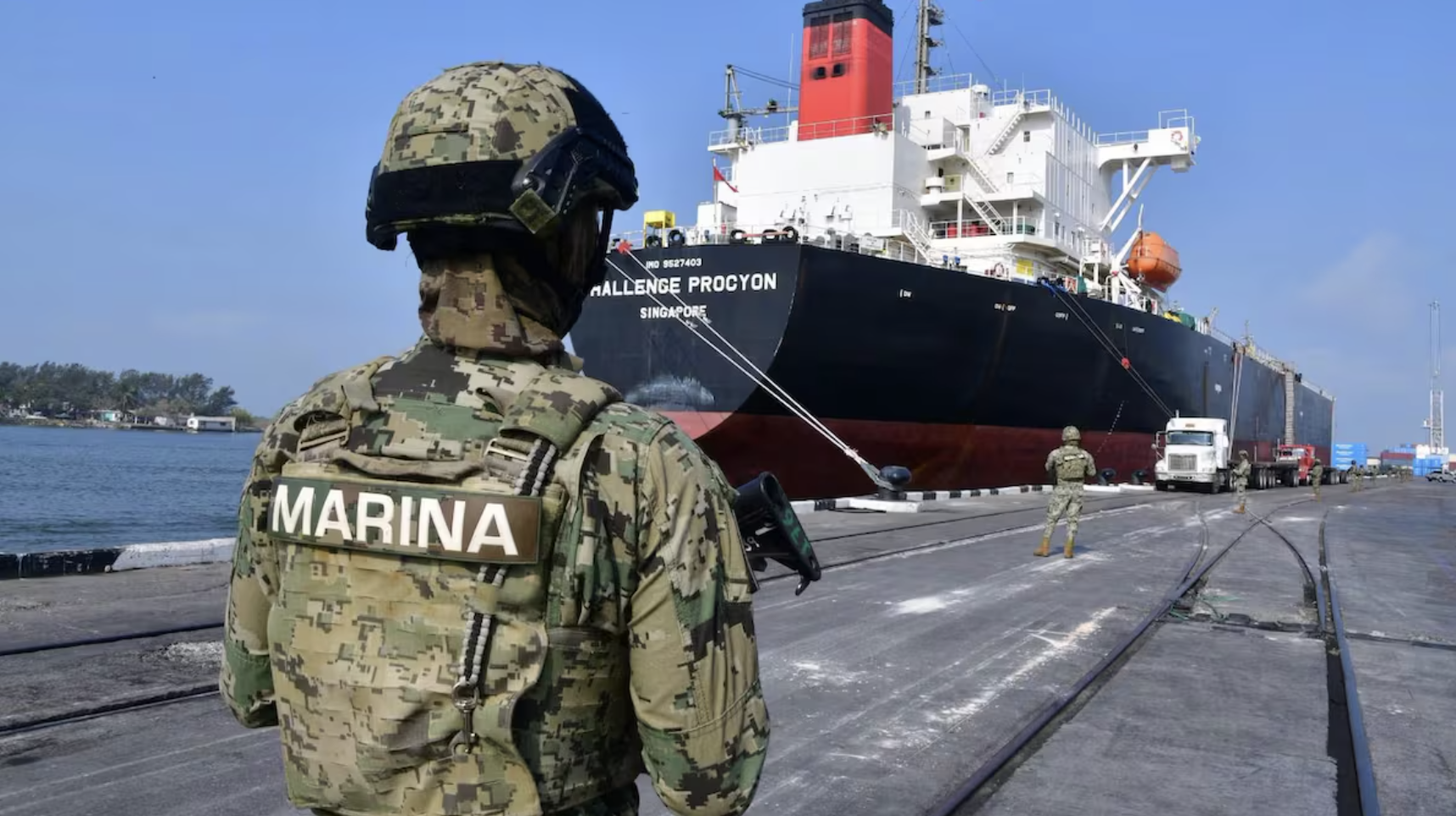
Mexico has perfected its old formula of power: turning tax evasion into a state policy.
Mexico City, October 2025.
In contemporary Mexico, new fortunes rarely emerge from innovation or industry. They are born from fraud, bureaucratic privilege, and the silent complicity of institutions. Over the past seven years, the country has perfected a parallel economy of enrichment built on fiscal smuggling, customs manipulation, and the moral flexibility of its ruling class. Mexico has become an express factory of fortunes where money moves faster than justice.
The so-called fiscal fuel theft is not about tapping pipelines but about technified evasion. Gasoline, diesel, and additives are imported under falsified tariff codes—listed as lubricants or chemical solvents—to avoid the Special Tax on Production and Services (IEPS). According to El País (2025), the scheme drains more than USD 9 billion each year, roughly MXN 177 billion in lost revenue.
Between April 2024 and March 2025, the Attorney General’s Office identified 31 vessels carrying irregular cargo—just a fraction of the ocean of transactions that pass unchecked. The Farías Laguna network, documented by El País and France 24 (2025), handled 564 million liters of contraband fuel through 69 shipments, generating USD 150 million in illicit profit.
The militarization of customs, introduced as a remedy, barely scratched the surface. Naval control and centralized port management failed to curb corruption. In 2025, only five percent of imports were physically inspected; the rest flowed freely. Data from Petro Intelligence estimated that 18 billion liters of fuel entered the illegal market that same year.
The pattern dates back to 2019: diesel exports from Texas consistently exceeded Mexico’s declared imports, revealing an average differential of 88 000 barrels per day—about 74 million barrels unaccounted for and MXN 71 billion in unpaid taxes. As columnist Raymundo Riva Palacio (2025) noted, “Fiscal huachicol was born the moment power replaced transparency with political control.”
Opacity turns systemic when power becomes family. The allegations surrounding the López Beltrán brothers, sons of the former president, have become a symbol of the conflict between ethics and power. Though no formal prosecutions exist, their proximity to businessman Amílcar Olán—accused of multimillion-dollar transfers to Swiss accounts—has fueled public suspicion and undermined state credibility (Riva Palacio, 2025; Político MX, 2025).
In Mexico, sudden wealth always finds a political godfather. As investigative journalist Héctor de Mauleón (El Universal, 2025) wrote, “Corruption no longer hides; it is administered.” Within that informal administration, the offspring of power become discreet partners in an economy that rewards proximity more than competence.
President Claudia Sheinbaum inherited an exhausted state. Her administration has promoted a comprehensive customs reform, approved by 338 votes to 129, strengthening digital tracking powers for both the Navy and the tax authority (SAT) (El País, 2025). Yet the same institution now empowered remains tainted by its past role in fuel-smuggling networks operating between 2023 and 2024.
The dilemma is both ethical and political. If the government limits itself to isolated show trials, it will repeat the old cycle—media purges, selective impunity, and recycled bureaucrats. But if it dares to prosecute those under current protection, even within the presidential circle, Mexico could finally make the institutional leap it has postponed for a century.
The problem is no longer domestic. InsightCrime (2025) reports that fuel theft has become Mexico’s most lucrative criminal economy, surpassing narcotics trafficking in certain corridors. In states such as Puebla and Guanajuato, territorial battles for pipeline control now cause more killings than cartel warfare.
The New York Times (2024) warned of adulterated fuel flowing from U.S. terminals into Mexico, facilitated by binational intermediaries and gaps in port oversight. For Washington, fiscal smuggling represents a regional energy-security risk, distorting legitimate trade while funding hybrid networks that blend organized crime with political corruption. What began as tax evasion has evolved into a form of clandestine diplomacy, a tacit pact between governments that prefer silence over exposure.
Mexican corruption has mutated into biology: it reproduces by contact, adapts to every administration, and survives every discourse of change. Fiscal fuel theft now empties not only the Treasury but public trust. While new millionaires toast their sudden success in luxury lounges of Polanco, millions of citizens pay for gasoline taxed to fund a state that never receives it.
The real challenge is not technical or legislative—it is moral. A nation that celebrates wealth without merit condemns itself to endless poverty. In the coming months, Mexico faces the most decisive social contract since its democratic transition: to determine whether power will cleanse the system or perpetuate it under new faces.
Because in Mexico, when power becomes business and law turns into favor, corruption ceases to be the exception—and becomes the system.
Mario López Ayala is a senior Mexican journalist, geopolitical analyst, and applied psychologist at Phoenix24. His multidisciplinary work bridges strategic intelligence, cyber-warfare, and AI governance with behavioral insight and mental health. As an international speaker and strategic profiler, he has contributed to global forums on democracy, cognition, and digital disruption. Known for decoding power and perception, López Ayala explores narrative manipulation, societal resilience, and global security in the digital age. He is an active member of the United Communicators Organization of Sinaloa (OCUS).
References
- Carabaña, C. (2025, September 10). Las aduanas militarizadas, un coladero para el huachicol fiscal. El País.
- Carabaña, C. (2025, September 17). La red de tráfico de combustible de los hermanos Farías Laguna. El País.
- Castillo Jiménez, E. (2025, October 7). Sheinbaum da poder a la Marina en las aduanas. El País.
- De Mauleón, H. (2025, September 8). El huachicol operado desde los altos niveles de la Marina. El Universal.
- France 24. (2025, September 24). Huachicol fiscal: la millonaria trama de corrupción al descubierto en México.
- InsightCrime. (2025). Fuel theft in Mexico: The criminal economy that rivals drug trafficking.
- Riva Palacio, R. (2025, October 8). 2019, cuando nació el huachicol fiscal. El Financiero.
- Riva Palacio, R. (2025, October 7). La transferencia de tres mil millones. El Financiero.
- The New York Times. (2024, December 12). Fuel smuggling across the Texas–Mexico border tests U.S. oversight.
- Suárez, K. (2025, June 9). El huachicol fiscal, un boquete de más de 9,000 millones de dólares al año. El País.