

 Mario López Ayala, PhD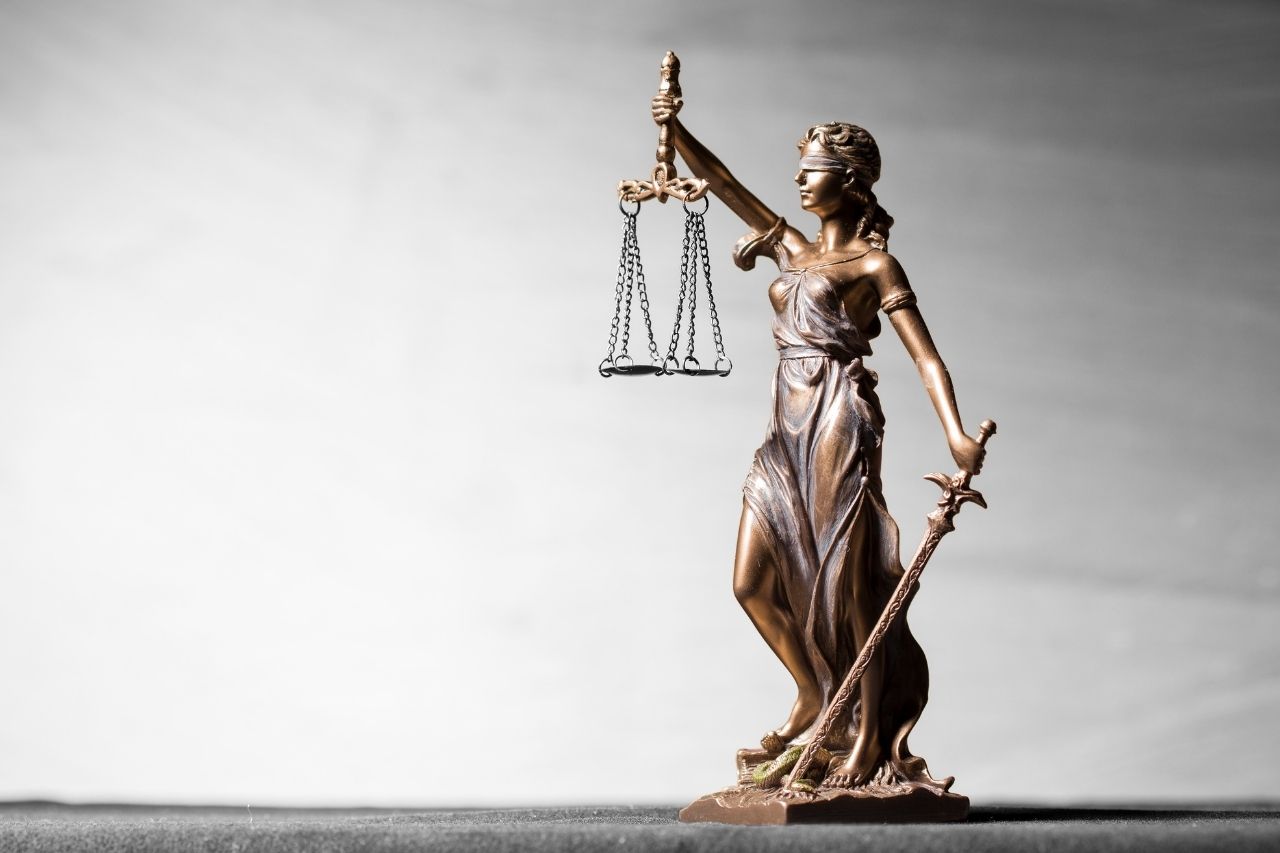
Introduction
In Greek mythology, Themis is the goddess who embodies divine justice, order, and law. She is often depicted holding scales—symbolizing fairness—and wearing a blindfold, representing the impartiality required for true justice. The Romans adopted her as Iustitia, and through her we inherited a universal principle: justice must not serve power, but rather balance it.
Today in Mexico, these ancient ideals are trembling. In the name of democracy, a judicial reform is being promoted that threatens the very essence of what Themis and Iustitia represent: independence, objectivity, and balance. The proposal to elect judges, magistrates, and Supreme Court justices through popular vote not only undermines the Rule of Law—it opens the gates to a politicized justice system, seduced by popularity and vulnerable to organized crime.
Mexico is about to make a decision that most of its citizens barely understand. In a country where 65% of the population cannot name a single Supreme Court minister (UNAM, 2025), and where institutional distrust is chronic, what could go wrong by handing the keys to justice to an electoral process? Amid populist applause, a darker reality looms: drug cartels, widespread legal ignorance, and rampant politicization are preparing their infiltration. And the judicial system, once a last bastion of republican balance, is shaking.
I. A Constitution Under Siege
Since its enactment in 1917, the Political Constitution of the United Mexican States has undergone over 800 reforms. Far from being a stable constitutional document, it has been constantly reshaped to fit the political agenda of the ruling party (Cossío Díaz, 2021). The most recent reforms—promoted by President López Obrador and supported by President Claudia Sheinbaum—propose that the public directly elect members of the judiciary.
Instead of bringing greater transparency, this change dismantles decades of institutional architecture meant to ensure checks and balances, professionalism, and judicial independence.
II. Popular Vote for Judges: Democracy or Judicial Dismantling?
The logic may sound democratic: if the people choose their legislators, why not their judges? Yet what appears to be democratization may become judicial trivialization. A judge’s role is not to please the electorate, but to interpret the law with fairness and technical competence.
According to the UNAM Legal Research Institute (2025), less than 4% of Mexicans could identify even one candidate with a solid legal background. With over 3,000 candidates appearing on ballots, the likelihood of informed voting is negligible. The result? Justice at the mercy of popularity, propaganda, or worse—covert power brokers.
III. Narco and Justice: The Cracks of Infiltration
Organized crime does not need to win elections. It only needs to co-opt those who do. In states like Michoacán, Guerrero, Sinaloa, and Zacatecas, drug cartels already influence electoral processes through intimidation, vote buying, or candidate sponsorship. Why wouldn’t they now infiltrate the judiciary?
Reports by the U.S. Department of State and the DEA confirm that Mexican judges have previously favored drug lords through manipulated rulings or leaks (U.S. Department of State, 2023). Now, under the guise of a “sovereign vote,” cartels could install loyal judges within the justice system with electoral legitimacy.
Furthermore, the newly introduced figure of the “faceless judge” aggravates opacity. How can society demand accountability from a judge whose identity and history are unknown, and whose rise to power occurred through fear, media saturation, or electoral confusion?
IV. International Comparison: What Real Democracies Do
United States
While several state judges are elected, federal judges—including Supreme Court justices—are nominated by the president and confirmed by the Senate after rigorous public hearings and scrutiny (Epstein & Segal, 2005). Even in a highly polarized nation, institutional safeguards exist.
Canada
Judges are appointed by the Prime Minister, based on recommendations from independent committees that assess credentials, ethics, and judicial experience. In Canada, electing judges by popular vote would be seen as a constitutional aberration (Russell, 2012).
European Union
In countries like Germany, France, and Spain, judges are appointed by judicial councils or parliaments based on legal careers, reputation, and expertise (European Commission, 2024). Popular vote plays no role in judicial appointment. In Europe, impartiality is non-negotiable.
V. Epilogue: Between Populism and the Rule of Law
Mexico is not just about to elect judges—it is about to decide whether justice will remain a bastion of legality or become a puppet of politics. If merit is replaced by electoral appeal, and independence by alignment with power or crime, the Mexican judicial system will implode from within.
Democracy is not about filling ballot boxes. It is about strengthening institutions. And if these institutions fall to populism or drug cartels, the country will no longer be governed by laws, but by fear and manipulation.
The goddesses Themis and Iustitia gaze upon us from antiquity. The question is: will we betray them in the name of a misunderstood democracy?
References
- Cossío Díaz, J. R. (2021). La Constitución Mexicana: Historia, estructura y reformas. Mexico: Fondo de Cultura Económica.
- Epstein, L., & Segal, J. A. (2005). Advice and Consent: The Politics of Judicial Appointments. Oxford University Press.
- European Commission. (2024). EU Justice Scoreboard 2024. Retrieved from https://commission.europa.eu
- Russell, P. H. (2012). The Judiciary in Canada: The Third Branch of Government. McGill-Queen’s University Press.
- UNAM. (2025). Public Perceptions on Judicial Elections in Mexico. Legal Research Institute.
- U.S. Department of State. (2023). International Narcotics Control Strategy Report. https://www.state.gov