

 Mario López Ayala, PhD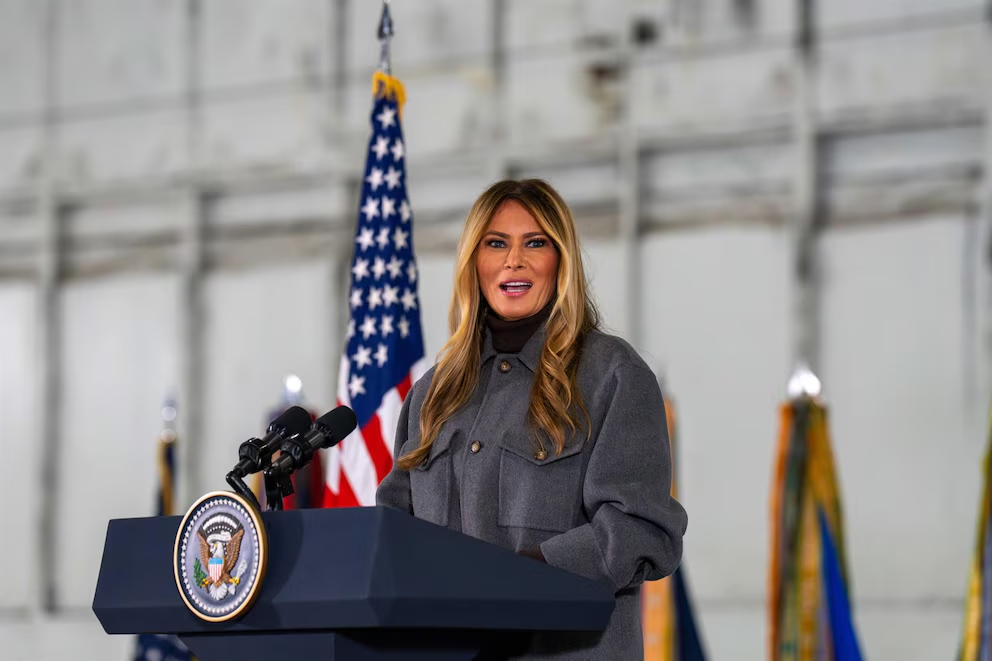
A reunion is never only a personal victory; it becomes a measure of what the world is willing to defend.
Washington, December 2025
Seven Ukrainian children who had been held inside Russia have been returned to their families after a series of diplomatic exchanges involving Melania Trump, Ukrainian authorities and Russian counterparts. The children, six boys and one girl, were welcomed in Kyiv under conditions shaped by the complicated humanitarian dynamics of a war that continues to fracture identities, communities and legal norms across Eastern Europe. Their repatriation highlights both the possibilities and the limits of high level negotiations when fundamental rights intersect with geopolitical tension.
In Ukraine, the news was received as a rare moment of emotional relief. Officials familiar with the case described the children’s homecoming as a step toward addressing the broader crisis of minors displaced during the conflict. Advocacy groups in Europe have repeatedly documented instances in which Ukrainian children were transported to Russian territory or to regions under Russian control. Although circumstances vary, the common thread involves disrupted guardianship, altered documentation and fragmented communication, leaving families desperate for answers and governments seeking accountability.
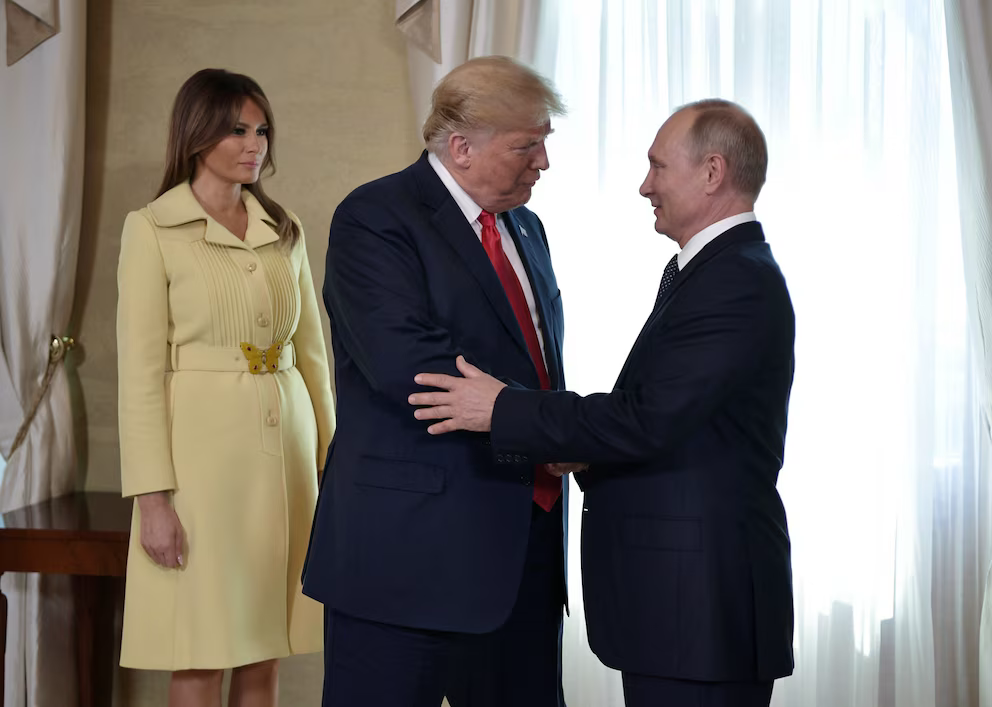
In North America, analysts examining humanitarian diplomacy note that the involvement of the United States adds political weight to the repatriation. Melania Trump’s public confirmation that she engaged Russian leadership underscores an unusual channel of negotiation during a period marked by strained bilateral relations. Specialists emphasize that such engagements, though humanitarian in framing, occur within a strategic field shaped by sanctions, military support and competing narratives about sovereignty. As a result, even acts of compassion carry implications that extend beyond their immediate emotional resonance.
Across Asia, observers focusing on conflict mediation see the episode as an example of the increasing use of individualized cases to generate diplomatic openings. Returning children, they argue, does not resolve structural grievances but offers limited contact points in an otherwise rigid geopolitical environment. Yet these opportunities remain fragile. Regional experts warn that the sustainability of such repatriations depends on monitoring mechanisms, transparent documentation and an international consensus that child displacement cannot be leveraged as a negotiating instrument.
Inside Ukraine, humanitarian workers involved in child protection stress the long recovery process that awaits returning minors. Many children experience psychological trauma, disrupted education and uncertainty about their identity and place in society. Reintegration requires coordinated medical, social and legal assistance. Ukrainian authorities have pledged to prioritize these cases, reflecting an understanding that emotional recovery is inseparable from national reconstruction. For communities that have endured mass displacement, each returned child becomes a symbol of resilience and a reminder of the thousands who remain unaccounted for.
Russian officials have maintained that transfers of minors occurred under protective circumstances, citing alleged abandonment or security concerns in areas near active fighting. However, international legal experts point out that forced movement of children during armed conflict is prohibited under multiple conventions. They argue that the burden lies with occupying authorities to justify any relocation and to ensure rapid reunification. The difficulty of obtaining verifiable information from within Russia complicates oversight, reinforcing calls for independent monitoring. European institutions continue to press for broader access to documentation and records that could clarify the scale of displacement.
For the United States, the repatriation emerges during a period of renewed emphasis on humanitarian diplomacy. Policy analysts note that high visibility cases serve both symbolic and practical functions. They demonstrate the capacity of diplomatic channels to secure outcomes even in adversarial contexts, yet they also highlight ongoing complexities that require sustained engagement. The return of seven children is meaningful but does not reduce the urgency of addressing the fate of others who remain separated from their families.
In the broader international landscape, the repatriation reignites debate about accountability. Legal scholars point out that successful returns document the fact of displacement, providing evidence that may be relevant in future investigations. These cases offer insight into the mechanisms by which children were identified, moved and housed. They also illuminate the networks of intermediaries who facilitated or supervised their transfer. Collecting and preserving such information becomes essential for any long term effort to establish responsibility.
Diplomatic observers caution that the episode should not be interpreted as a sign of softening geopolitical tensions. Rather, it reflects a tactical convergence where both sides found limited benefit in cooperation on a humanitarian matter. The underlying strategic positions remain unchanged. Ukraine continues to demand the return of all displaced children. Russia maintains that its actions were lawful and motivated by protection. The United States seeks measurable humanitarian progress without conceding political ground. Within this matrix, the success of the repatriation depends on its continuity rather than its singularity.
Nevertheless, the emotional impact of the return cannot be dismissed. For the families, the arrival of their children marks the end of a period defined by fear, uncertainty and longing. For Ukraine, it represents a reaffirmation that persistence and international advocacy can yield results even amid war. For the global community, the event serves as a reminder of the human dimension of conflict, where every policy decision reverberates in the lives of individuals whose stories often remain unseen.
As the children begin the long process of rebuilding their lives, the episode reinforces a central truth: humanitarian victories, however small, challenge the erosion of ethical boundaries in wartime. They signal that amid devastation, principles endure, and that protecting the vulnerable is not merely an aspiration but a standard against which nations are judged.
The visible and the hidden, in context.
Lo visible y lo oculto, en contexto.