

 Phoenix 24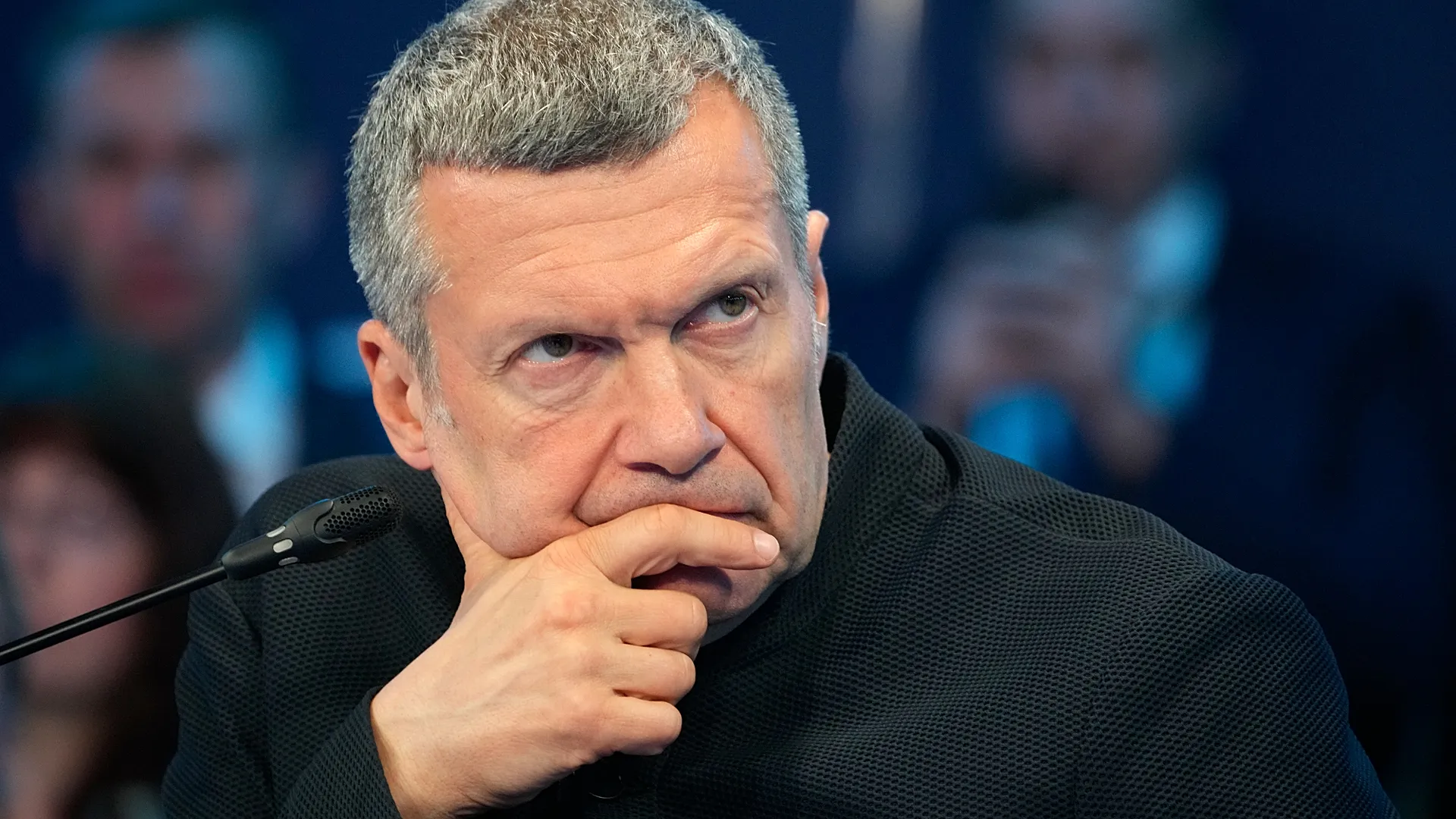
An insult has become a diplomatic signal.
Rome, April 2026. Italy has summoned the Russian ambassador after Kremlin aligned television host Vladimir Solovyov launched a fresh verbal attack on Prime Minister Giorgia Meloni, deepening an already tense relationship shaped by war, sanctions, and competing political narratives over Ukraine. The move by Italy’s Foreign Ministry turns what might have been dismissed elsewhere as propagandistic spectacle into an official diplomatic incident. That matters because Rome is signaling that attacks on the head of government are no longer being treated as television theater, but as part of a broader pattern of hostile political messaging tied to Moscow’s information strategy. In today’s Europe, rhetoric is no longer separate from state pressure. It is often one of its preferred delivery systems.
The episode itself is revealing for both tone and timing. Solovyov reportedly described Meloni in deeply offensive terms during a broadcast, reviving the language of ideological insult and personal degradation that has increasingly accompanied Russian messaging toward European leaders aligned with Ukraine. He accused her not only of political betrayal, but of moral and strategic weakness, placing her inside a familiar propaganda frame used by the Kremlin ecosystem against Western figures who support Kyiv militarily or politically. Rome’s reaction suggests that the issue was not merely vulgarity, but the cumulative strategic meaning of such language. When a regime friendly media figure repeatedly attacks the leadership of a NATO and EU member state, the distinction between unofficial outrage and politically useful intimidation becomes thinner than governments are willing to admit.
What gives the incident additional weight is the unusually broad Italian response. Condemnation did not come only from Meloni’s own coalition, but from across the parliamentary spectrum, including figures who are normally her domestic opponents. That unity is politically significant. It indicates that, at least on questions of institutional dignity and foreign interference, Italy’s internal rivalries can still be temporarily suspended in favor of a national response. In a fragmented European political environment, such consensus is never automatic. Its emergence here suggests that the perceived offense crossed a threshold from partisan controversy into state level affront.
This is also not an isolated rupture. Tensions between Rome and Moscow have been hardening for months through a series of diplomatic and rhetorical confrontations. Italian authorities have already reacted strongly to previous comments from Russian officials, including verbal attacks directed at President Sergio Mattarella and inflammatory statements from Moscow’s diplomatic apparatus. The current case therefore fits into an existing chain rather than appearing as a sudden anomaly. Seen in sequence, these incidents form a recognizable pattern: Russia’s public facing political language toward Italy is becoming more confrontational at the exact moment Europe is trying to maintain cohesion over Ukraine and long term support structures.
Meloni’s position inside that wider European equation helps explain why she has become a target. Italy remains an important actor within both the European Union and the Atlantic alliance, and Meloni has aligned herself firmly with support for Ukraine despite the political complexities such a stance creates at home. For Moscow, leaders like her are useful targets because they personify the continuity of European backing for Kyiv. Attacking them rhetorically serves several purposes at once. It energizes domestic nationalist audiences inside Russia, pressures foreign governments through symbolic humiliation, and attempts to inject volatility into the public image of European resolve.
The deeper issue, then, is not the insult itself, but the political function of insult in an age of hybrid confrontation. Modern interstate rivalry increasingly unfolds through overlapping channels of war, information pressure, symbolic aggression, and institutional signaling. A televised outburst from a Kremlin propagandist can therefore operate as more than spectacle. It can test the opponent’s tolerance, provoke a diplomatic reaction, and reinforce a hostile narrative without requiring a formal declaration from the state. That ambiguity is part of its utility. It allows aggression to travel through cultural and media instruments while retaining plausible deniability.
Italy’s decision to summon the ambassador is best understood in that context. It is a way of refusing the downgrade of political offense into mere noise. Rome is drawing a line that says verbal aggression directed at the country’s highest institutions will carry diplomatic consequences, even when delivered by figures who operate through propaganda channels rather than official communiqués. That does not resolve the larger deterioration in relations, but it does impose a cost on normalization. It also tells domestic and European audiences that institutional insult is being interpreted as part of a strategic environment, not as an isolated media provocation.
What comes next will depend on whether this episode remains a contained dispute or becomes another marker in a larger downward spiral between Moscow and European capitals. If such rhetorical attacks continue, Europe will face an increasingly familiar question: how far can hostile political messaging go before it is treated as a substantive form of interstate pressure rather than an ugly accessory to it. Italy has offered one answer for now. It is saying that in a war saturated by narrative combat, words are not peripheral to the conflict. They are part of the battlefield.
Detrás de cada dato, hay una intención. Detrás de cada silencio, una estructura.
Behind every datum, there is an intention. Behind every silence, a structure.