

 Phoenix 24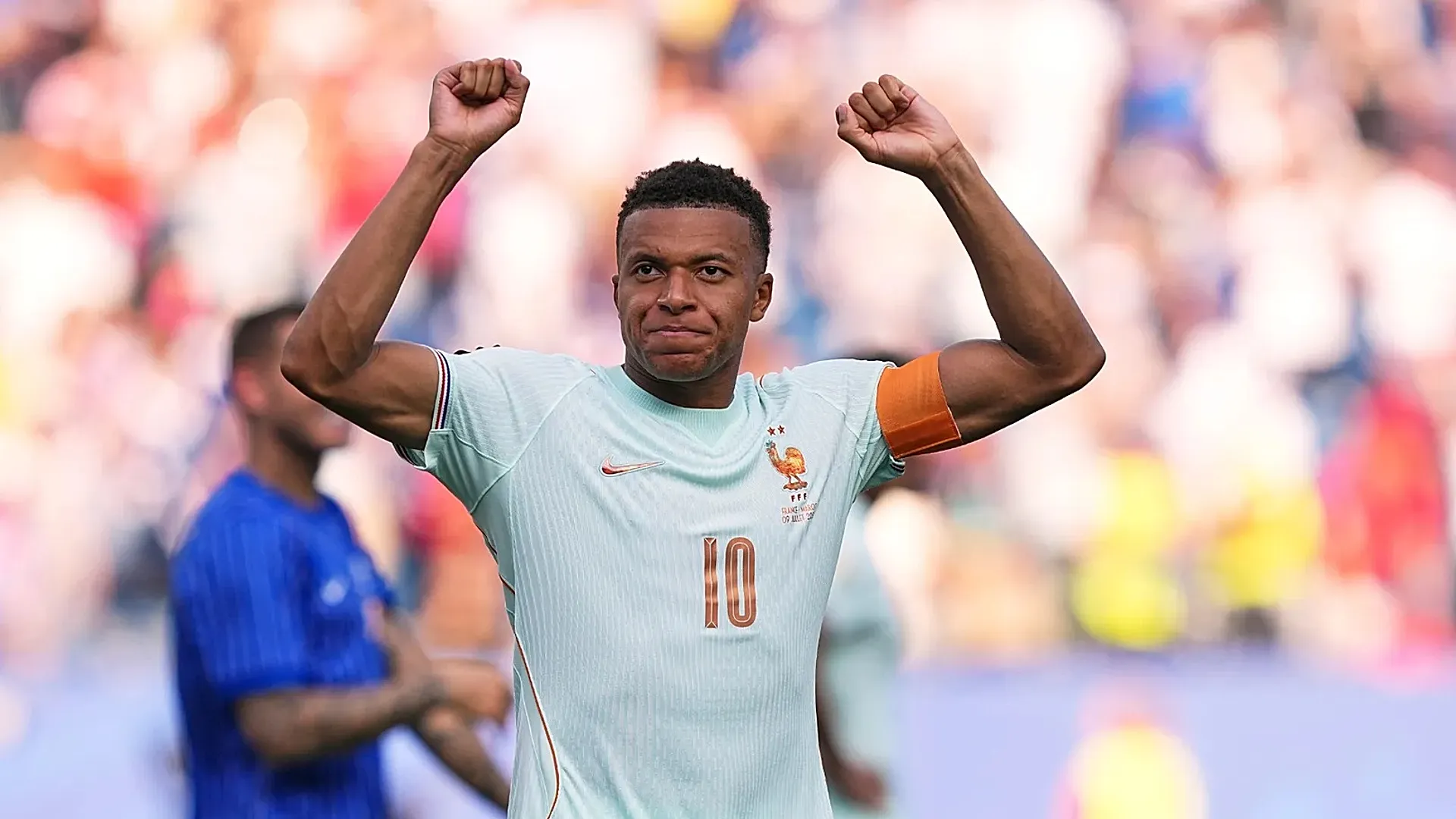
His influence reaches far beyond the scoreboard.
Arlington | July 2026
Kylian Mbappé entered France’s World Cup semifinal against Spain as captain, leading scorer and the central figure of a team pursuing its third consecutive appearance in the final. He had scored eight goals during the tournament, consistently providing the decisive attacking contribution for the French squad. Spain’s 2-0 victory ended that campaign, but the defeat did not reduce Mbappé’s wider status as France’s most influential football representative.
The semifinal exposed the limits even the world’s most dangerous forwards can encounter. Spain controlled possession, restricted France’s transitions and prevented Mbappé from finding the space required to exploit his acceleration. Mikel Oyarzabal opened the scoring from the penalty spot before Pedro Porro completed the victory in the second half.
France struggled to transform individual talent into sustained collective pressure. Mbappé remained a constant concern for Spain’s defense, but he could not reproduce the effectiveness that had defined his earlier performances. The match ended France’s attempt to reach another World Cup final after winning the competition in 2018 and finishing second in 2022.
His tournament nevertheless reinforced his importance to the national team. Mbappé carried both creative and scoring responsibilities while operating as captain under Didier Deschamps. His leadership was measured not only through goals, but also through his willingness to accept pressure when France’s performance fell below expectations.
That responsibility has followed him since he became a global star as a teenager. Mbappé won the World Cup with France in 2018 and scored a hat trick in the 2022 final against Argentina. His speed, finishing and ability to decide high-pressure matches placed him among the defining footballers of his generation before he reached his mid-twenties.
The captaincy added another dimension to that profile. Wearing the armband requires a player to represent teammates, communicate with coaching staff and speak for the national team during moments of victory and failure. It also places personal behavior under permanent observation, particularly in a country where football is closely connected to debates over identity and belonging.
Mbappé has refused to accept the idea that professional athletes should remain silent about public affairs. He has argued that footballers are citizens whose fame does not remove them from political and social consequences. This position distinguishes him from players who limit public statements to sport, commercial partnerships and carefully controlled messages.
His most consistent interventions concern racism and discrimination. During the World Cup, he responded publicly to racist comments directed at him by a Paraguayan political figure. Mbappé stated that he would not permit hatred to circulate without opposition, reinforcing his position as one of football’s most visible voices against racial abuse.
He has also defended Real Madrid teammate Vinícius Júnior after repeated incidents of racism in Spanish football. Mbappé’s support reflects the broader reality facing Black players across European stadiums, where discriminatory insults continue despite disciplinary campaigns and public condemnation. His interventions place pressure on institutions to move beyond symbolic gestures.
The French captain has additionally spoken against the political rise of the far right in his country. He has expressed concern about the potential consequences of a National Rally victory and previously described the party’s electoral advances as dangerous for France. These statements placed him directly inside a national political debate despite his lack of affiliation with a political party.
His position is shaped partly by his own family and social background. Mbappé was raised in Bondy, a suburb of Paris located in Seine-Saint-Denis, one of metropolitan France’s poorest departments. His father is of Cameroonian origin and his mother has Algerian roots, making his personal story inseparable from the multicultural reality of modern France.
Bondy continues to occupy a central place in his public identity. A mural in the city presents him as a symbol of possibility for children growing up in neighborhoods often discussed through unemployment, inequality and social tension. Mbappé has repeatedly addressed young people from the suburbs, emphasizing that ambition should not be restricted by geography or economic background.
His success carries particular significance because French football has long depended on players whose families came from Africa, the Caribbean and other former French territories. The national team is celebrated as a symbol of diversity when it wins, but its players can become targets of political criticism when results decline. Mbappé operates inside that contradiction as both captain and public figure.
He has responded to debates over the origins of French players by emphasizing their nationality and their responsibility to represent the country positively. This position rejects the notion that athletes with immigrant family backgrounds are somehow less French than others. It also reinforces the idea that the national team reflects France as it exists rather than an imagined version of cultural uniformity.
His move to Real Madrid further expanded his international reach. At one of the world’s most visible football institutions, every goal, interview and controversy becomes part of a global media cycle. The platform strengthens his commercial power while increasing expectations that he will respond to events extending beyond the stadium.
That visibility creates risks. Political statements can divide supporters, attract hostility and expose a player to accusations that he is exceeding his professional role. Silence, however, also carries consequences when athletes possess the influence to challenge discriminatory conduct or speak to millions of young followers.
Mbappé’s approach does not transform him into a political leader, nor does sporting achievement make every public position authoritative. His significance comes from his decision to use a platform that many athletes prefer to protect through neutrality. He accepts that captaincy can involve defending principles as well as directing teammates.
France’s defeat against Spain demonstrated that leadership does not guarantee victory. Mbappé could not overcome an opponent that was tactically superior during the semifinal, and his eight tournament goals were insufficient to return France to the final. Sporting leadership remains accountable to performance, and elimination will inevitably produce technical and institutional evaluation.
Yet the World Cup also confirmed that Mbappé’s influence cannot be measured exclusively through one result. He remains the captain of France, one of the tournament’s leading scorers and a public voice on discrimination, political extremism and social opportunity. The semifinal ended his pursuit of another trophy, but not the larger role he has assumed within French public life.
El liderazgo también se mide fuera del campo. / Leadership is also measured beyond the field.