

 Phoenix 24
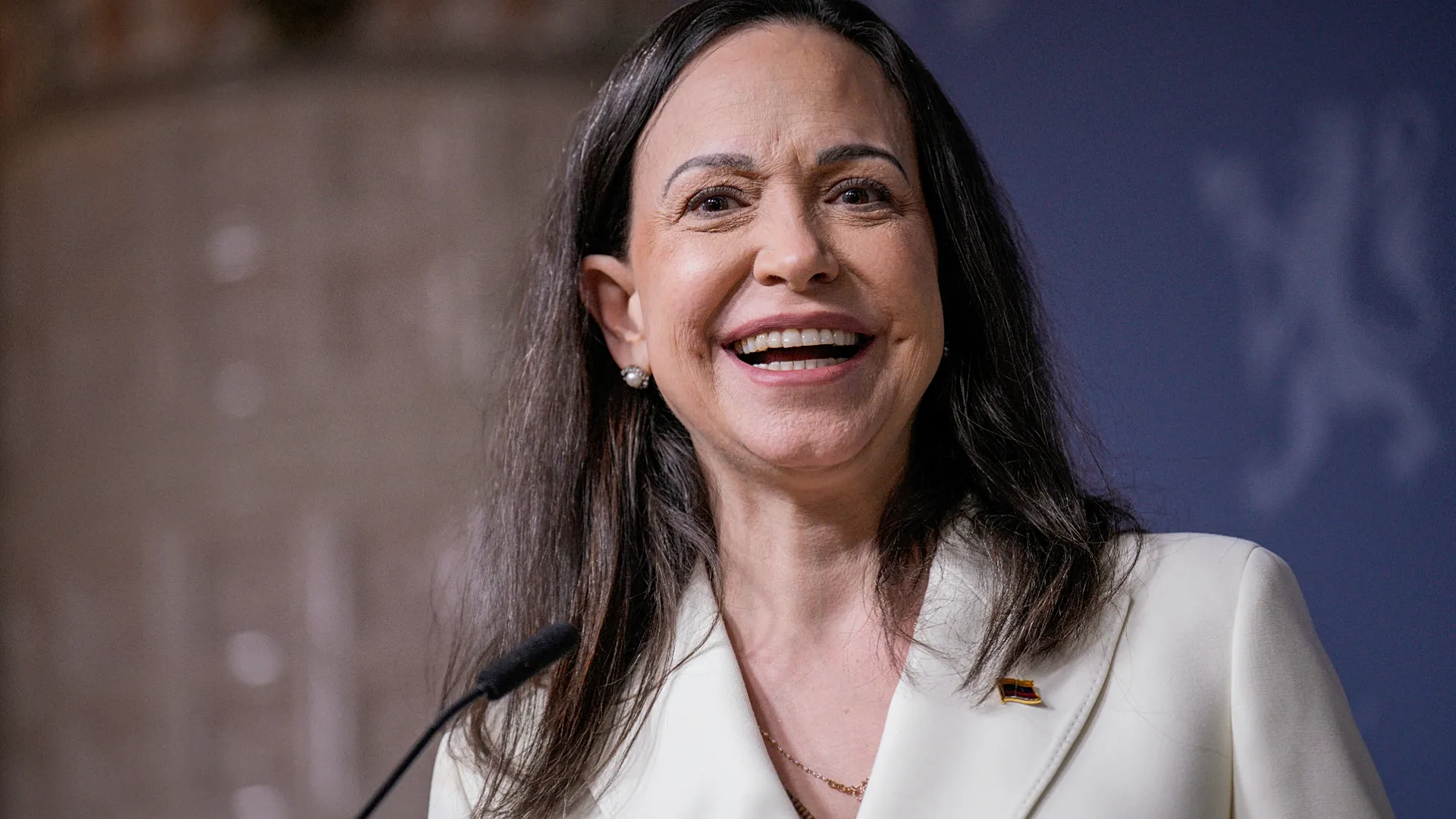
Her unexpected emergence in Europe adds renewed force to Venezuela’s democratic struggle and places international pressure mechanisms at the center of a fast-shifting political landscape.
Oslo, December 2025. The reappearance of María Corina Machado in the Norwegian capital sent a sharp wave through diplomatic circles already attuned to Venezuela’s prolonged democratic crisis. After nearly a year of silence brought on by security threats, legal persecution and successive waves of repression in Caracas, Machado stepped onto a public stage once more, using the visibility granted by her recent Nobel Peace Prize to call for sustained and coordinated pressure against the government of Nicolás Maduro. Her presence in Oslo was neither ceremonial nor symbolic. It was designed to reposition Venezuela’s democratic cause within an international arena that has oscillated between active engagement and fatigue, particularly as global crises increasingly compete for attention.
Machado addressed foreign correspondents, diaspora communities and representatives from human rights organizations at a controlled but emotionally charged event. She argued that democratic governments must adopt stronger instruments of pressure, moving beyond declarations toward concrete policies capable of constraining a regime she described as structurally resistant to negotiation. Observers from the European human rights community noted that her rhetoric fits within a growing demand for accountability across authoritarian systems, mirroring concerns expressed in reports by organizations in Brussels and Geneva regarding systemic repression, extrajudicial practices and institutional collapse in Venezuela.
Her appearance in Norway was made possible through a discreet and carefully coordinated journey facilitated by international partners. While government sources in Oslo declined to comment on operational details, diplomatic specialists in Washington and Bogotá underscored that Machado’s extraction from Venezuelan territory demonstrates the expansion of informal networks designed to protect political dissidents under threat. Institutions comparable to the CSIS have remarked that Venezuela’s internal security apparatus has grown increasingly intolerant of high-profile opposition figures, transforming exile, clandestinity and digital suppression into routine mechanisms of political survival.
Machado’s return to the public arena comes at a moment when the Venezuelan opposition remains fragmented, with some factions advocating negotiation frameworks and others endorsing sustained international pressure. Analysts in Latin America argue that Machado’s Nobel recognition has recalibrated the balance of influence within the opposition, giving her a renewed mandate to articulate demands for democratic transition. Meanwhile, media outlets across Europe, including Paris and Berlin, have framed her reappearance as a test of whether democratic powers can respond with the consistency and resolve necessary to influence authoritarian trajectories in the Western Hemisphere.
In Asia, geopolitical institutions such as the Seoul Institute of Global Affairs have contextualized Machado’s message within broader patterns of democratic backsliding. They note that Venezuela’s crisis sits at the intersection of internal political erosion and external alignments with Russia, China and Iran, alliances that grant Maduro diplomatic insulation and economic alternatives. This dynamic complicates traditional Western pressure strategies, requiring a blend of multilateral coordination, financial enforcement and targeted sanctions capable of shifting incentives within the regime’s inner circle. By resurfacing in Oslo, Machado has effectively internationalized the urgency of this challenge, linking Venezuela’s fate to ongoing debates about global democratic resilience.
Her discourse also resonated strongly among Venezuelan expatriates. Crowds gathered in Oslo’s central district, waving flags and chanting slogans that had been muted in Caracas due to restrictions on public assembly. For many in the diaspora, Machado’s visibility represents a psychological counterweight to years of institutional decay, economic collapse and forced migration. Sociologists monitoring displacement patterns have emphasized that the Venezuelan diaspora now forms a political ecosystem of its own, capable of shaping narratives, mobilizing resources and influencing international agendas.
Predictably, the Maduro government responded with hostile rhetoric, dismissing Machado’s speech as an orchestrated attempt to destabilize the country. State-aligned media framed her Nobel Prize as a political maneuver engineered by Western governments to legitimize foreign interference. Analysts in Middle Eastern media outlets noted the similarity between this narrative and propaganda frameworks used by other governments accused of human rights violations, where foreign recognition of dissidents is reframed as an imperial strategy. Yet these discursive tactics, while familiar, do not diminish the fact that Machado’s reappearance places extraordinary pressure on Caracas at a moment when domestic legitimacy remains fragile and economic indicators reveal persistent contraction.
International observers caution that the political impact of her message will depend on how foreign governments respond. Diplomats in North America have stressed that sanctions, humanitarian corridors and democratic guarantees require unified action and verifiable enforcement mechanisms. Meanwhile, European policymakers debate whether to amplify her call for electoral oversight or prioritize dialogue channels that have historically produced limited outcomes. Across these discussions lies a central tension: sustaining pressure without enabling further deterioration of Venezuela’s already precarious humanitarian situation.
What remains clear is that Machado’s emergence in Oslo has transformed Venezuela’s internal struggle back into a global priority. Her words carry weight not only because of her political trajectory, but because they articulate a collective demand for democratic restoration that resonates far beyond Venezuela’s borders. By moving the center of gravity from clandestine survival to international advocacy, Machado has inserted renewed urgency into a crisis that had begun to normalize itself in the global consciousness.
Phoenix24: truth stands.
Phoenix24: la verdad permanece.