

 Phoenix 24
Reality bends when perception becomes architecture.
Paris, June 2026. Argentine artist Leandro Erlich arrives at the Grand Palais with a major exhibition that places illusion, architecture and public participation at the center of contemporary art. Running from June 2 to September 6, the show confirms Erlich’s status as one of Latin America’s most internationally recognizable visual artists, capable of transforming ordinary spaces into unstable systems of perception.
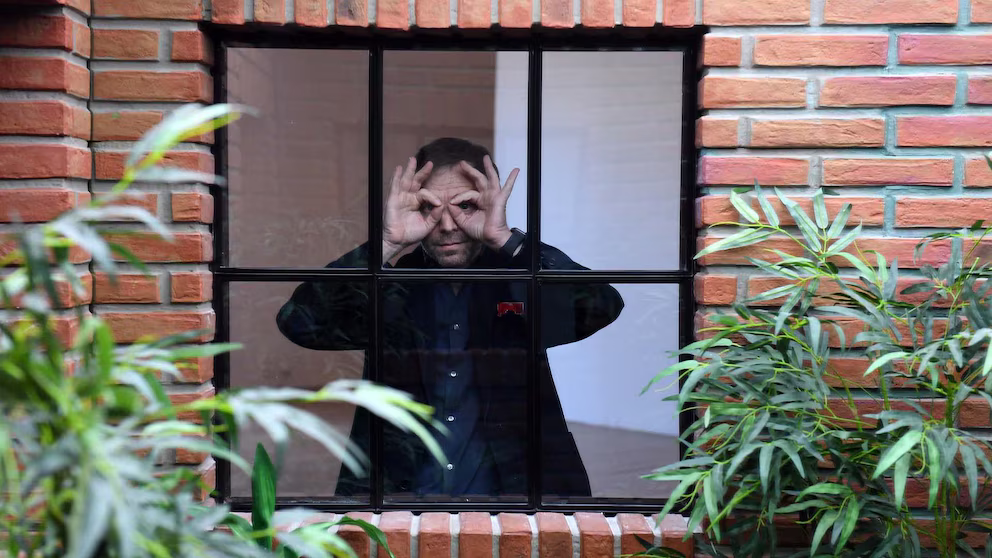
The exhibition brings his language of mirrors, scale, theatrical displacement and spatial contradiction into one of France’s most symbolic cultural venues. Erlich’s work does not simply ask spectators to look at art; it pushes them to enter the mechanism of illusion. The viewer becomes part of the image, part of the trick and, eventually, part of the question.
That is the force of his practice. A building can appear to tilt, a swimming pool can seem habitable from below, a familiar urban scene can become physically impossible. Erlich uses visual deception not as entertainment alone, but as a method for exposing how fragile certainty can be. His installations make perception feel reliable for only a few seconds before the mind begins to doubt itself.
The Grand Palais setting increases the symbolic weight of the project. For an Argentine artist to occupy that institutional stage is not a decorative achievement; it is a signal of how Latin American contemporary art continues moving from peripheral classification toward global authorship. Erlich enters Paris not as an exotic exception, but as a major architect of experiential art.
His work also fits the current cultural moment with unusual precision. In an age shaped by artificial images, manipulated realities and algorithmic uncertainty, Erlich’s installations feel almost prophetic. They remind audiences that the problem of truth did not begin with digital platforms. The eye has always been vulnerable, and reality has always depended on structures that teach us what to believe.
The exhibition’s appeal will likely be broad because Erlich understands spectacle without surrendering to superficiality. His installations are accessible, photogenic and immediately engaging, but their deeper intelligence lies in the discomfort they produce after the first visual surprise. The visitor laughs, poses, photographs and then confronts a more serious question: if space can be manipulated so easily, what else in daily life is staged as certainty?
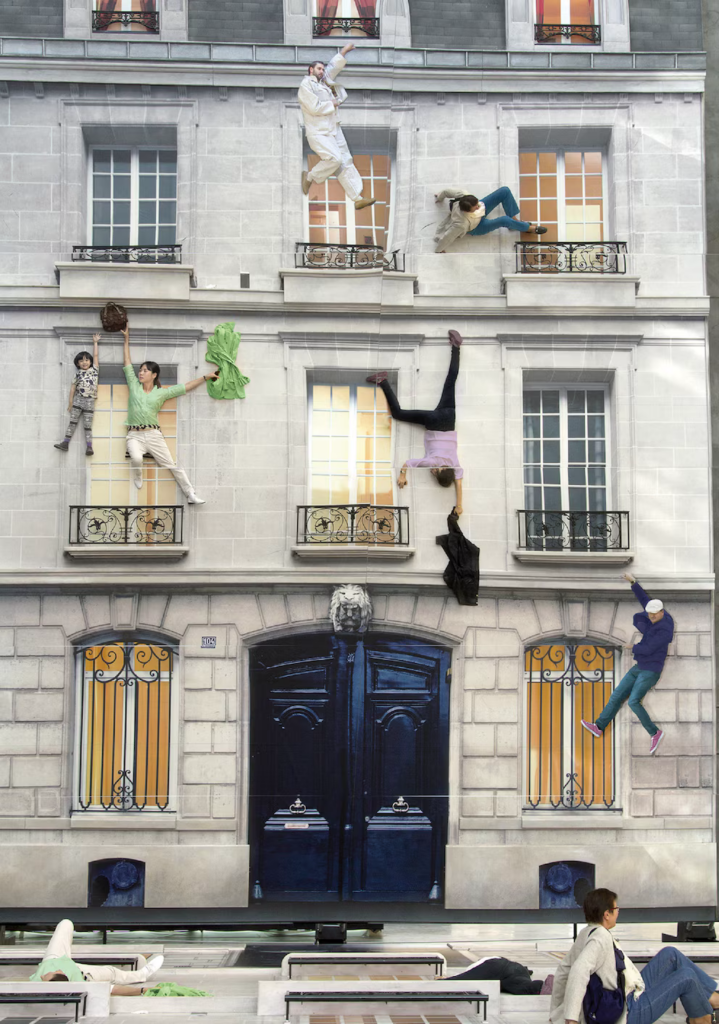
This is why Erlich’s art travels so effectively across cities and cultures. It does not depend on a closed academic code. It operates through buildings, doors, pools, façades and rooms, the common grammar of urban life. By altering those familiar forms, he turns everyday perception into a philosophical problem.
The Grand Palais exhibition therefore functions as both cultural event and institutional recognition. It places Erlich’s work inside a European space historically associated with prestige, spectacle and national cultural authority. But it also allows his installations to quietly destabilize that authority from within, proving that illusion can be more than a visual game. It can become a way of thinking.
Erlich’s strongest achievement is that he makes doubt physical. He does not lecture about uncertainty; he builds it. In Paris, that uncertainty now occupies one of Europe’s grandest stages, inviting audiences to step into a world where the impossible looks normal and the normal no longer feels secure.
La verdad es estructura, no ruido. / Truth is structure, not noise.