

 Phoenix 24
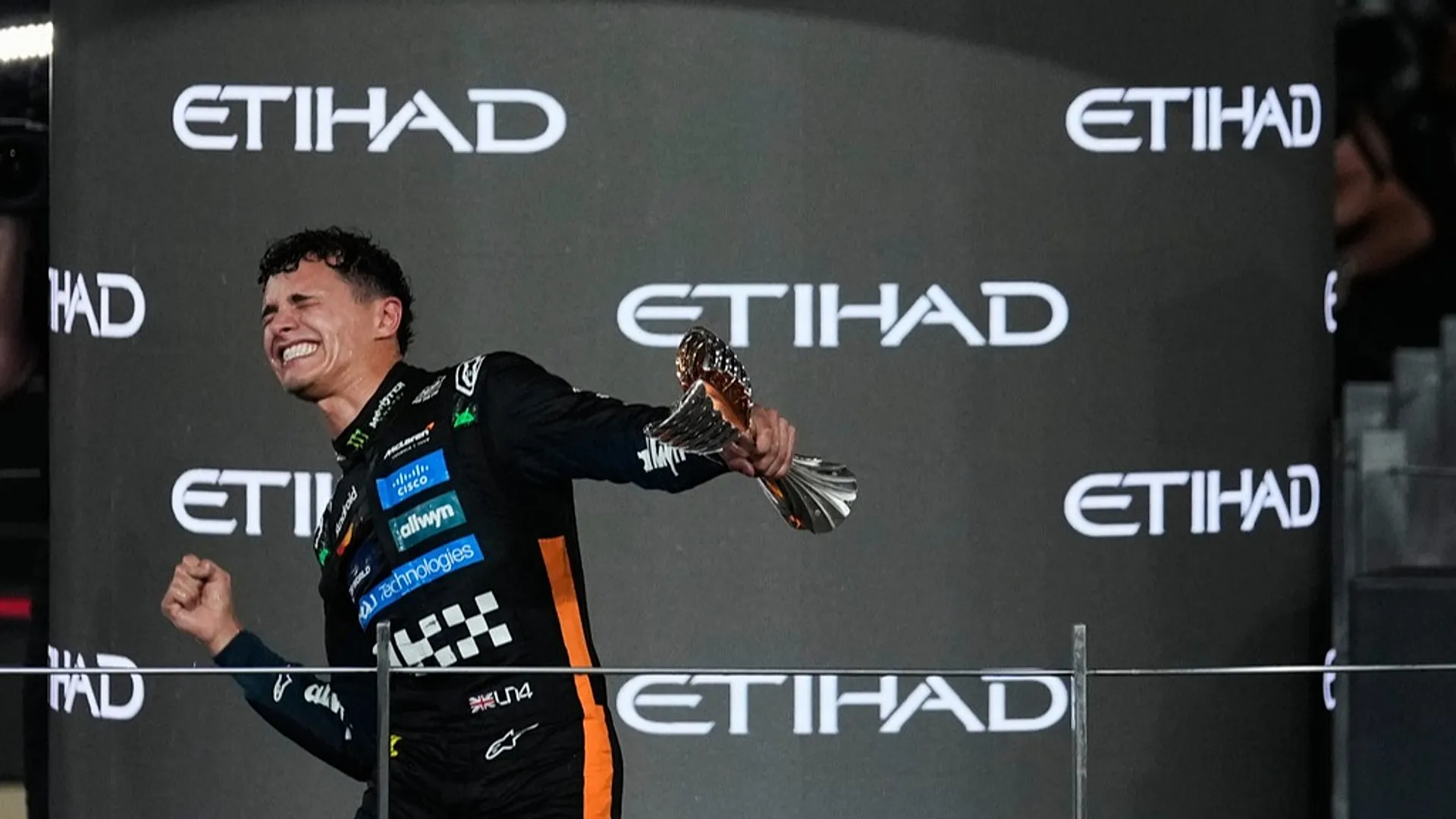
A season defined by pressure, precision and emotional endurance concluded with the British driver seizing the championship in a finale that rewrote the balance of modern racing.
Abu Dhabi, December 2025
The chequered flag in Yas Marina did more than close a chapter of the Formula 1 calendar. It completed a transformation years in the making as Lando Norris secured his first world championship, turning McLaren’s resurgence into one of the most remarkable narratives in contemporary motorsport. The result was mathematically sealed with a third place that carried more weight than the victory ahead of him, a paradox typical of a season marked by narrow margins and unrelenting strategic tension. The championship battle remained alive until the final laps, yet Norris’s calm execution reflected a maturity that analysts of the FIA had long argued would eventually translate into competitive domination.
Throughout the year, McLaren’s upward curve caught the attention of experts from outlets such as the BBC, who noted that the team’s aerodynamic philosophy began showing consistent superiority on circuits where downforce efficiency had historically favored other rivals. While Max Verstappen remained a formidable presence on the grid and claimed the Abu Dhabi race with characteristic aggression, the broader context of the season evidenced a shift in performance equilibrium. Data reviewed by specialists at the Tokyo based Motorsports Institute suggested that McLaren’s mid season upgrades delivered a measurable advantage in cornering stability. Those incremental gains allowed Norris to accumulate points with surgical precision even in races where outright pace was insufficient to challenge for the win.
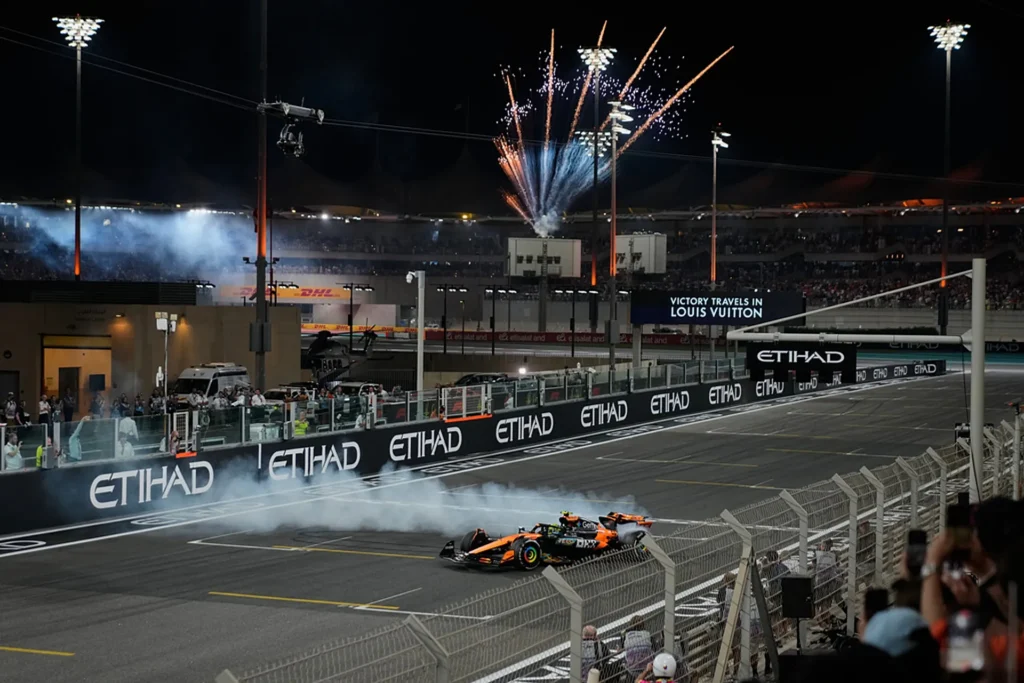
Emotion, however, played as central a role as engineering. When Norris crossed the finish line, the radio exchange between driver and team encapsulated the emotional arc of a season defined by fluctuating confidence and recurring scrutiny. For months, commentators in Europe had questioned whether Norris possessed the psychological fortitude required to endure a championship fight that stretched across continents and conditions. His answer arrived not in a single overtake but in a season long sequence of composed performances where he balanced aggression with restraint. The tears that followed the final lap served as testament to an internal struggle resolved in real time under the brightest lights of the sport.
McLaren’s organizational revival carries implications that extend far beyond garage walls. In North America, analysts from major sporting networks underlined how the team’s rise has reinvigorated its brand appeal, attracting new commercial partners and restoring competitive credibility. The ripple effect is visible in the constructors’ standings, where McLaren secured the title earlier in the year. That achievement realigned expectations across the paddock and placed additional pressure on traditional powerhouses forced to rethink their development pathways in response to the British team’s ascent.
The season also reshaped the dynamics within McLaren itself. Oscar Piastri’s presence as a consistent contender added internal tension yet also created a constructive rivalry that advanced the team’s performance ceiling. Observers from the Australian motorsports press often highlighted how the dual leadership between the two drivers compelled engineers to push the limits of parallel setups. While Norris ultimately prevailed in the points tally, Piastri’s relentless pace throughout the season ensured that the championship narrative never settled prematurely. Their combined output constructed the statistical backbone of McLaren’s year, elevating the organization from aspirant to juggernaut.
In Asia, commentary from the South China Morning Post examined how McLaren’s renaissance reflects broader technological shifts in Formula 1, especially in simulation modeling and real time data interpretation. Teams that adapt quickly to these evolving tools tend to outperform competitors reliant on legacy systems. McLaren’s strategic investments in high fidelity simulators and predictive analytics proved decisive in several key races. Precision in energy deployment and tire management was not merely intuitive but the result of iterative computational modeling that narrowed margins of error lap by lap. Norris emerged as a driver who could translate these technical insights into racecraft, often adjusting his style mid stint to align with evolving strategies.
Despite the celebratory tone, the title fight revealed the intensifying complexity of modern Formula 1. Verstappen’s campaign remained technically impressive and demonstrated an ability to dominate individual weekends with explosive pace. Yet championships reward consistency and adaptability, and Norris capitalized on every opportunity where conditions favored patience over risk. For fans, the season illustrated a blend of human emotion, engineering sophistication and geopolitical diversity that continues to elevate Formula 1 as a global spectacle. Venues across continents contributed to a narrative that felt less like a mechanical sequence of races and more like a shifting theater of athletic performance and technological mastery.
As celebrations erupted across the McLaren garage, the image of Norris standing atop the podium’s third step while claiming the highest honor demonstrated the multidimensional nature of the sport. Victory in Formula 1 is not confined to the top of the podium but is woven through the mathematics of endurance, the resilience of a team and the psychological discipline of a driver navigating weeks of pressure. The championship that Norris now holds represents a convergence of talent, timing and organizational reinvention, placing him among the defining figures of a new era in motorsport.
Phoenix24: clarity in the grey zone.
Phoenix24: claridad en la zona gris.