

 Phoenix 24
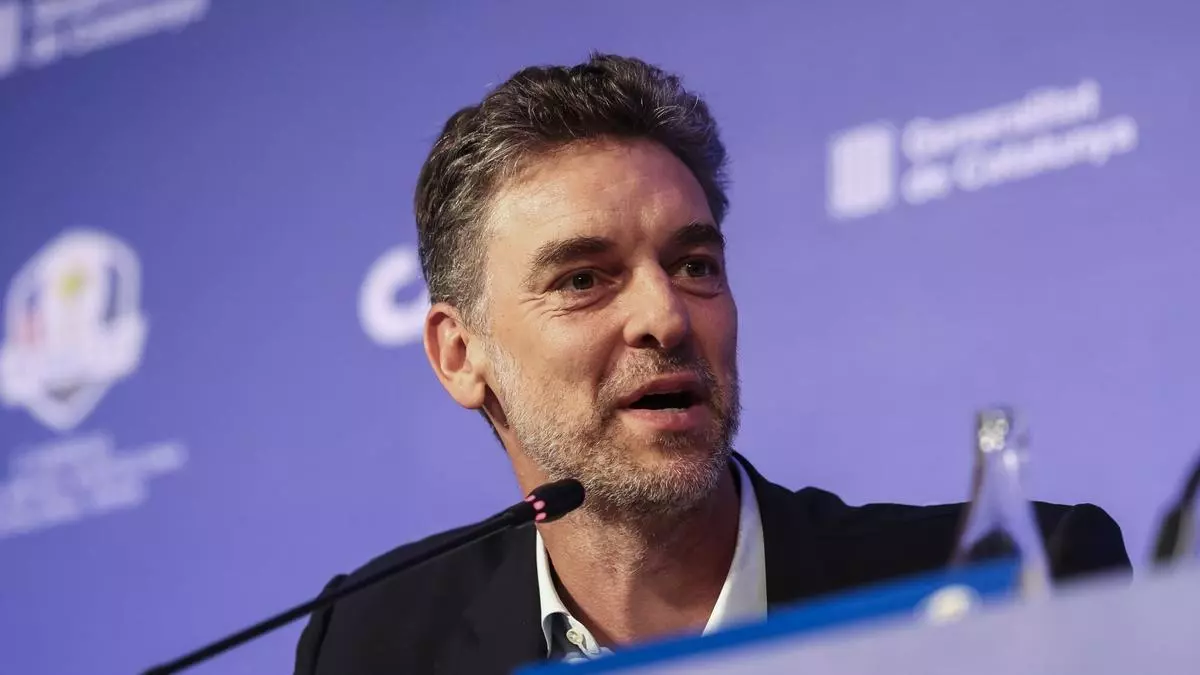
MEMPHIS, UNITED STATES — November 2, 2026. Twenty-five years ago, a 21-year-old Spanish basketball player stepped onto the court at Memphis’ Pyramid Arena without knowing that his career would transform the international perception of European basketball. On November 1, 2001, Pau Gasol made his National Basketball Association (NBA) debut with the Memphis Grizzlies, scoring four points and collecting four rebounds in a 90–80 defeat against the Detroit Pistons. What initially appeared to be an unremarkable performance marked the beginning of a remarkable career that would produce two NBA championships, six All-Star selections and a lasting legacy in Spanish and international basketball.
Gasol’s first appearance reflected the difficulties of adapting to an unfamiliar competitive environment. Playing just 17 minutes, he struggled with early turnovers and missed free throws before scoring his first NBA basket with a dunk following an assist from Jason Williams. Memphis had recently relocated from Vancouver, creating a situation in which both the franchise and its young European prospect were searching for a new identity. The experience was especially challenging for Gasol, who had arrived in the United States after establishing himself as one of Spain’s most promising players.
His preparation for the NBA had begun at FC Barcelona, where he developed into a leading figure during the 2000–2001 season. At just 20, Gasol helped Barcelona win the Spanish league championship and Copa del Rey, earning individual recognition for his performances against established domestic rivals. His combination of height, mobility, passing ability and technical intelligence attracted the attention of American scouts. In the 2001 NBA Draft, the Atlanta Hawks selected him third overall before transferring his rights to Memphis, making him one of the highest-drafted European prospects of his generation.
The adjustment was not immediate, but his development accelerated dramatically. During his first NBA season, Gasol averaged 17.6 points, 8.9 rebounds and 2.1 blocked shots while appearing in all 82 regular-season games. His consistency earned him the 2002 Rookie of the Year award, making him the first non-American player to receive the distinction. Beyond the statistical achievement, his success challenged established assumptions about the ability of European-trained basketball players to compete against elite American athletes.
Gasol spent more than six seasons with Memphis, gradually becoming the franchise’s central figure and helping establish the Grizzlies as a competitive Western Conference team. His career changed significantly in February 2008, when a major trade brought him to the Los Angeles Lakers. The move reunited him with championship ambitions and introduced one of the NBA’s most successful partnerships of the period. Alongside Kobe Bryant, Gasol reached three consecutive NBA Finals and won championships in 2009 and 2010, demonstrating how his versatility and understanding of team basketball complemented Bryant’s offensive leadership.
Their relationship extended beyond professional competition. Bryant’s demanding approach and Gasol’s technical sophistication created a partnership built on mutual respect, competitiveness and shared responsibility. The Lakers subsequently retired Gasol’s No. 16 jersey in March 2023, recognizing his contribution to the franchise’s championship history. The ceremony also acknowledged his friendship with Bryant, who died in January 2020, and whose influence remained an important part of Gasol’s personal and professional journey.
His achievements with Spain were equally significant. Gasol helped the national team win the 2006 FIBA Basketball World Cup and three EuroBasket championships, while collecting Olympic silver medals in Beijing 2008 and London 2012 and bronze in Rio de Janeiro 2016. His leadership contributed to the emergence of a generation that included his brother Marc Gasol, Juan Carlos Navarro, Rudy Fernández and other internationally recognized players. Their collective success strengthened Spain’s position in world basketball and encouraged younger athletes to pursue opportunities beyond domestic competitions.
After playing for Chicago, San Antonio and Milwaukee, Gasol returned to Barcelona in 2021 before announcing his retirement from professional basketball that October. His NBA career concluded with averages of 17 points, 9.2 rebounds and 3.2 assists across 1,226 regular-season games. In August 2023, he was inducted into the Naismith Memorial Basketball Hall of Fame, joining an international group of players whose achievements helped reshape the league. His recognition reflected both individual excellence and his contribution to expanding basketball’s global reach.
Gasol’s influence has continued beyond competitive sport through philanthropic and institutional activities. Together with Marc, he established the Gasol Foundation in 2013 to promote healthier lifestyles and help prevent childhood obesity. The organization supports initiatives involving physical activity, nutrition, sleep and emotional well-being, connecting the brothers’ sporting experience with broader public health objectives. Gasol has also participated in international discussions concerning athlete representation and the social responsibilities associated with professional sport.
The anniversary highlights a transformation extending far beyond one player’s accomplishments. When Gasol entered the NBA, opportunities for Spanish players were comparatively limited, and the success of European basketball talent was still frequently questioned. Twenty-five years later, international athletes occupy central positions across the league, reflecting changes in scouting, player development and the globalization of professional basketball. Although Gasol was not solely responsible for that evolution, his achievements helped demonstrate that elite basketball talent could emerge from different national and competitive traditions.
Looking back on November 1, 2001, the significance of Gasol’s debut lies less in his initial four points than in everything that followed. His journey from Barcelona to Memphis, Los Angeles and international recognition illustrates the importance of adaptation, sustained development and collective achievement. A quarter-century later, Pau Gasol remains an influential figure whose sporting accomplishments and social initiatives continue shaping the relationship between basketball, international opportunity and public service.
Phoenix24: Beyond the game, the legacy. / Más allá del juego, el legado.