

 Phoenix 24
Her race number became a symbol of resistance after an official tried to physically remove her from the 1967 Boston Marathon—and the institutions governing athletics punished her for finishing.
BOSTON, UNITED STATES | HISTORY | AUGUST 2026
On April 19, 1967, 20-year-old journalism student Kathrine Switzer entered the Boston Marathon wearing bib number 261. What began as an athletic challenge became one of the defining confrontations in the history of women’s sport.
Women were not formally admitted to the race at the time. Prevailing medical and cultural prejudices claimed that they were too physically fragile to run 26.2 miles and that endurance competition could damage their health and fertility.
Switzer registered as “K. V. Switzer,” the name she routinely used. She submitted the required medical certificate, paid the entry fee and received an official number without falsely claiming to be a man.
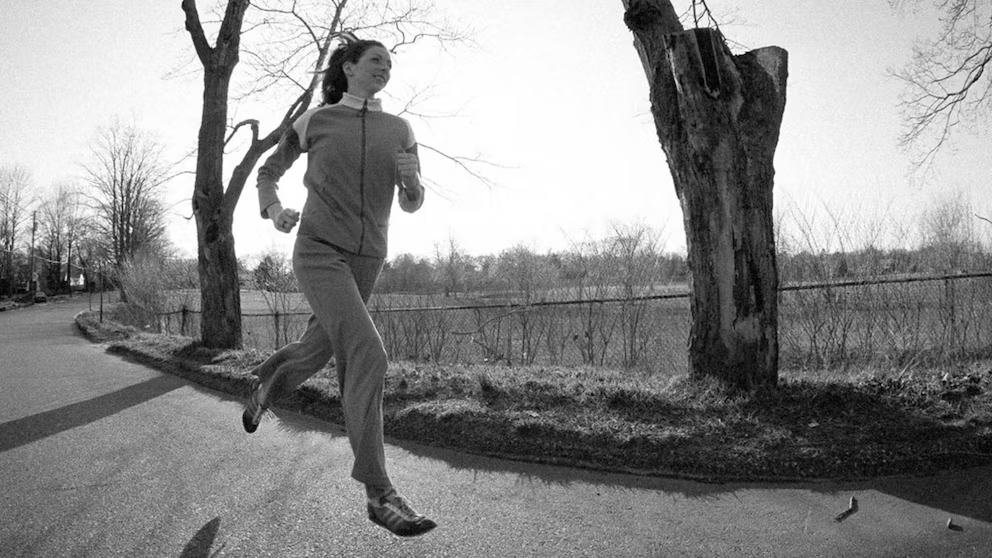
The organizers did not initially question her presence. Other runners reportedly welcomed her, but the atmosphere changed when journalists aboard a press vehicle noticed that a woman was competing with an official bib.
Race official Jock Semple ran onto the course and attempted to remove Switzer while trying to tear number 261 from her clothing. Her coach protested, and her boyfriend, Thomas Miller, pushed Semple away, allowing her to continue.
Photographers captured the confrontation. The images of an official pursuing and grabbing a young woman for entering a road race circulated internationally, turning an attempt to enforce exclusion into visual evidence of institutional discrimination.
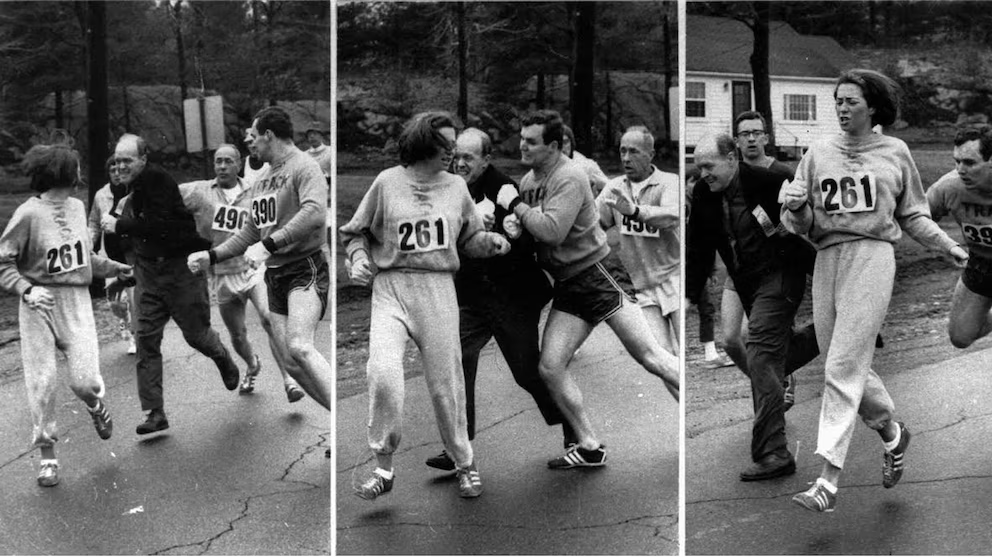
Switzer considered abandoning the race after the attack but concluded that withdrawing would reinforce the argument that women were incapable of completing the distance. She crossed the finish line in approximately four hours and 20 minutes.
Her achievement requires an important historical distinction. Bobbi Gibb became the first woman to complete the Boston Marathon in 1966 after entering the course without an official number. Switzer became the first woman to run it as a registered participant wearing an officially issued bib.
Finishing carried an institutional cost. Switzer was disqualified and expelled from the Amateur Athletic Union, while officials accused her of entering fraudulently, competing alongside men and running without a chaperone. The federation subsequently tightened its rules to prohibit women from competing in races with male participants.
The punishment transformed her personal decision into a public campaign. Switzer began working to expand women’s access to organized distance running, helping establish international competitions that demonstrated both the athletic ability of women and the commercial viability of their participation.

The Boston Marathon officially admitted women in 1972. Switzer returned that year and finished third in the women’s division. Two years later, she won the New York City Marathon, and in 1975 she recorded a personal best of 2:51:37 in Boston.
The women’s marathon finally entered the Olympic programme at the 1984 Los Angeles Games, ending decades of unsupported claims that women could not safely compete over the distance.
In 2017, Switzer returned to Boston at the age of 70 and completed the marathon again wearing number 261. The Boston Athletic Association subsequently retired the bib, while her organization, 261 Fearless, transformed it into an international symbol of inclusion through running.
Switzer did not merely violate an exclusionary norm. She exposed its absence of scientific legitimacy, survived its public punishment and dedicated the rest of her life to making the rule impossible to defend.
Contra la propaganda, memoria. / Against propaganda, memory.