

 Phoenix 24
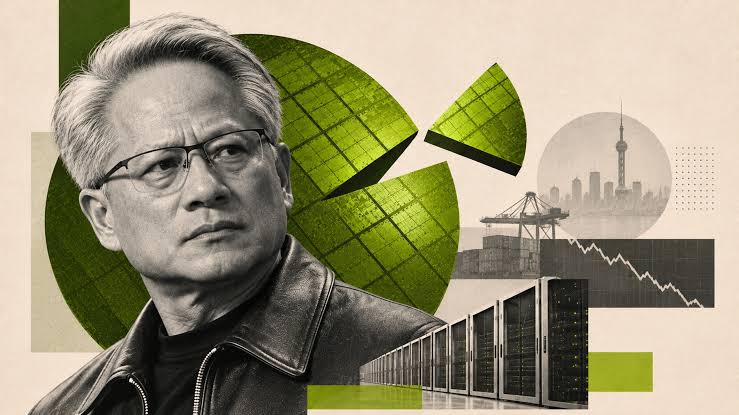
A leadership reversal reveals deeper financial dependencies.
FRANKFURT
The unexpected reinstatement of Jensen Huang as Nvidia’s chief executive triggered a powerful recovery across global technology markets, sending European semiconductor and artificial intelligence stocks sharply higher. Nvidia shares surged approximately 31.5% on Monday, adding more than $900 billion to the company’s market capitalization in a single trading session. Yet the enthusiasm proved fragile, with European technology stocks retreating the following day as investors reassessed the political and corporate governance uncertainties surrounding the American chipmaker.
Huang returned to Nvidia less than two weeks after resigning amid controversy over his personal relationships and questions involving a company linked to an American investigation into advanced semiconductor exports. Nvidia’s board unanimously approved his reinstatement following discussions that reportedly included senior United States government officials. President Donald Trump publicly supported the decision, emphasizing Huang’s importance to American technological leadership and economic competitiveness.
The announcement immediately changed investor sentiment across European financial markets. Germany’s DAX advanced 2.2%, France’s CAC 40 gained 1.5%, and the pan-European STOXX 600 rose 1.8% during Monday’s session. Semiconductor equipment manufacturers recorded some of the strongest gains, reflecting the market’s expectations that Huang’s return could restore confidence in Nvidia’s strategic direction and the broader artificial intelligence ecosystem.
Germany’s SUSS MicroTec gained 9.8%, while Dutch semiconductor equipment manufacturer BE Semiconductor Industries advanced 9.3%. Franco-Italian chipmaker STMicroelectronics increased 9%, and Dutch lithography specialist ASML climbed 8.9%. The recovery extended beyond chip production, benefiting companies involved in the electricity infrastructure and cooling technologies required by increasingly powerful AI data centers.
Siemens Energy rose 6.9%, Italian cable manufacturer Prysmian gained 6.5%, and Schneider Electric advanced 4.1%. These movements demonstrated the interconnected nature of the artificial intelligence economy, where semiconductor development depends on telecommunications networks, industrial equipment and substantial electricity infrastructure. Companies operating far from Silicon Valley can therefore experience significant financial consequences from decisions made within a single American corporation.
However, Tuesday’s trading exposed the limits of the rebound. The STOXX 600 declined 0.7%, while European technology stocks surrendered nearly 3% as renewed caution replaced the previous session’s optimism. Aixtron fell 16.3% following an analyst downgrade, illustrating how company-specific developments and broader market uncertainty can rapidly reverse gains generated by favorable industry sentiment.
The volatility also revealed an important distinction between technological capability and financial independence. Europe possesses internationally competitive companies in semiconductor manufacturing equipment, advanced materials and industrial automation, yet their market valuations remain closely connected to the investment cycle surrounding American artificial intelligence developers. Nvidia’s influence increasingly extends beyond the chips it sells, shaping expectations across an international network of suppliers and strategic partners.
Nokia provides a particularly revealing example. Nvidia agreed in October 2025 to invest $1 billion in the Finnish telecommunications company as part of a partnership focused on AI-powered mobile networks. The relationship strengthened Nokia’s position within the emerging AI infrastructure market, while simultaneously increasing investors’ sensitivity to developments involving Nvidia’s leadership and commercial strategy.
For European policymakers and corporate executives, the episode raises questions that extend beyond short-term stock market performance. Sustained technological competitiveness requires investment, innovation and diversified commercial relationships, but it also depends on institutional resilience when external developments disrupt investor confidence. Huang’s reinstatement temporarily relieved concerns surrounding Nvidia’s leadership, without resolving broader questions about AI valuations, export restrictions or the profitability of expanding computational infrastructure.
The market’s reaction illustrates how leadership decisions, political influence and technological concentration have become increasingly difficult to separate in the global artificial intelligence economy. Europe’s challenge is not simply to participate in that expansion, but to strengthen its capacity to withstand decisions made beyond its own industrial and regulatory boundaries.
Beyond the Numbers, the Consequences.