

 Phoenix 24
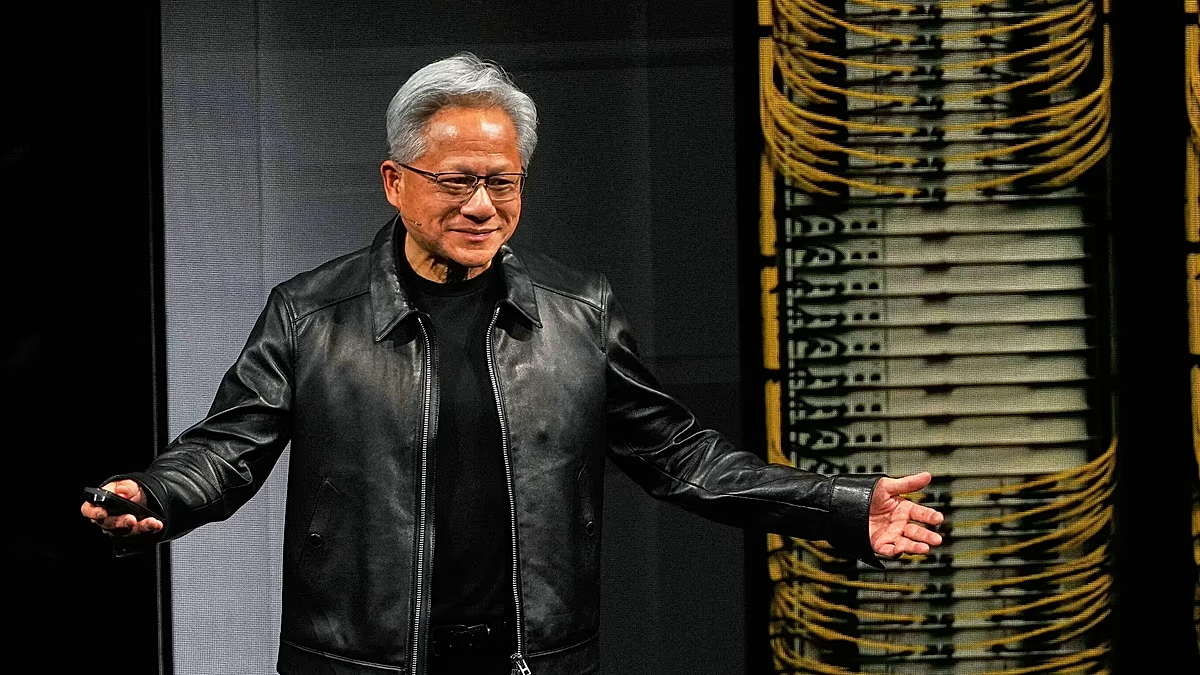
When one executive becomes indispensable, corporate governance faces its limits.
SANTA CLARA, CALIFORNIA — November 2026
Jensen Huang’s extraordinary return to Nvidia has exposed a fundamental question about power within the global artificial intelligence industry: what happens when a company’s founder becomes so influential that replacing him threatens confidence far beyond the organization itself? Just 11 days after leaving his position amid a personal controversy involving national security concerns, Huang was reinstated as president and chief executive officer on November 23. The decision followed intense pressure from investors, technology executives and President Donald Trump, raising questions about the independence of corporate boards when commercial interests and political influence converge.
Dennis Veltrop, a professor specializing in corporate governance and organizational behavior at the University of Groningen, described Huang as virtually impossible to remove because of his importance to Nvidia and the wider AI industry. Speaking to Euronews, Veltrop argued that external pressure played a decisive role in persuading the company’s directors to reverse their earlier position. The board had publicly ruled out reinstating Huang on November 17, only six days before announcing his return.
The controversy began after reports emerged concerning Huang’s extramarital relationship with a woman suspected by American authorities of having connections to Chinese intelligence. Huang acknowledged the personal relationship and subsequently resigned, while Nvidia initiated an independent investigation into the potential national security implications. The allegations concerning foreign intelligence connections have not been established as proven espionage, and the company’s investigation remains underway.
Nvidia’s board announced that its decision to reinstate Huang was unanimous and followed discussions intended to assess his ability to lead the company. In an official statement, directors acknowledged receiving information from senior United States government officials and expressed confidence that his return would not create a national security risk. The company simultaneously confirmed that its independent investigation would continue, an important distinction between deciding to restore an executive and conclusively resolving the underlying concerns.
The government’s involvement introduced an unusual political dimension into what would ordinarily be an internal corporate decision. Trump publicly supported Huang’s reinstatement and claimed personal credit for helping secure the outcome, while influential Silicon Valley figures advocated his return. The intervention raises questions about where legitimate concern for economic stability ends and political influence over corporate governance begins.
Financial markets reacted dramatically. Nvidia shares rose 31.5% on November 23, while the Nasdaq Composite advanced 6.5% and the S&P 500 gained 4.7%. The rally followed substantial losses during Huang’s absence, demonstrating the extent to which investors had associated the company’s future with his leadership.
Yet the market response should not be confused with evidence that the board made the correct governance decision. Share prices reflect expectations, uncertainty and investor sentiment, particularly during periods of significant market volatility. The scale of the rebound indicates how strongly Huang’s return influenced confidence, but it does not resolve the legal, ethical or strategic questions surrounding the decision.
Huang’s extraordinary position results from more than three decades of leadership at the company he co-founded in 1993. Under his direction, Nvidia evolved from a manufacturer associated primarily with graphics processing into a central supplier of computing infrastructure for artificial intelligence. Its graphics processing units, networking technologies and software ecosystem now underpin major investments in data centers, machine learning and generative AI.
That technological importance has generated an unusually concentrated form of executive influence. Huang maintains direct relationships with customers, semiconductor suppliers, investors and technology entrepreneurs, often becoming personally involved in negotiations that would ordinarily be delegated across multiple management levels. His influence therefore extends beyond Nvidia’s internal hierarchy into commercial relationships supporting a substantial portion of the global AI economy.
This concentration creates a paradox for corporate governance. An executive can generate exceptional value precisely because of personal expertise, strategic vision and accumulated relationships, yet those same characteristics can make succession increasingly difficult. When investors believe that replacing a leader could destabilize an entire industry, the board’s practical freedom to exercise independent oversight may become constrained even without formal limitations on its authority.
Huang does not possess the special voting structure used by certain other technology founders to maintain effective corporate control. His ownership stake gives him substantial financial influence, but not an absolute legal entitlement to remain chief executive. The speed of his reinstatement instead suggests that personal authority, investor expectations and the company’s strategic importance can produce a form of power that operates outside conventional shareholder voting arrangements.
There is also a broader economic dimension. Nvidia has invested heavily in companies developing AI infrastructure and services, some of which also purchase its computing products. These interconnected financial relationships have generated debate about the sustainability of AI investment and whether capital circulating among suppliers, developers and infrastructure providers could amplify risks if industry growth slows.
The temporary absence of Nvidia’s founder intensified those concerns. Investors were forced to consider whether commercial commitments, product development schedules and strategic partnerships depended excessively on one individual’s continued involvement. Although Huang’s return restored short-term market confidence, it did not eliminate the underlying risks associated with leadership concentration or the financial structure of the AI expansion.
Nvidia has announced additional governance measures, including a committee focused on national security and export controls and plans to appoint a chief compliance officer. These initiatives may strengthen oversight, particularly in a business operating at the intersection of advanced semiconductors, international trade restrictions and geopolitical competition. Their effectiveness, however, will depend on the authority, independence and resources available to those responsible for enforcing compliance.
For the wider technology sector, the case challenges the assumption that exceptional corporate performance necessarily reflects strong institutional resilience. A business may possess remarkable technological capabilities and financial resources while remaining vulnerable to the departure of a single executive. That dependency becomes more consequential when its products support essential economic infrastructure and strategic national interests.
The unresolved question is whether Nvidia can develop governance mechanisms capable of preserving accountability without undermining the strategic leadership that contributed to its success. Boards must retain the capacity to investigate misconduct, manage succession and evaluate risks independently of financial markets or political pressure. Otherwise, exceptional executive performance may gradually weaken the institutional safeguards intended to protect the company and its shareholders.
Huang’s reinstatement has restored an influential leader to one of the world’s most consequential technology companies. It has also demonstrated the extraordinary power that can accumulate around individuals positioned at the center of critical technological ecosystems.
For Nvidia, the immediate crisis may have passed, but the more significant challenge remains unresolved: building an institution whose long-term credibility does not depend entirely on the continued presence of the person who created it.
Behind Every Decision, a Larger Consequence.