

 Phoenix 24

Millions of synthetic songs are reshaping the music industry.
NEW YORK
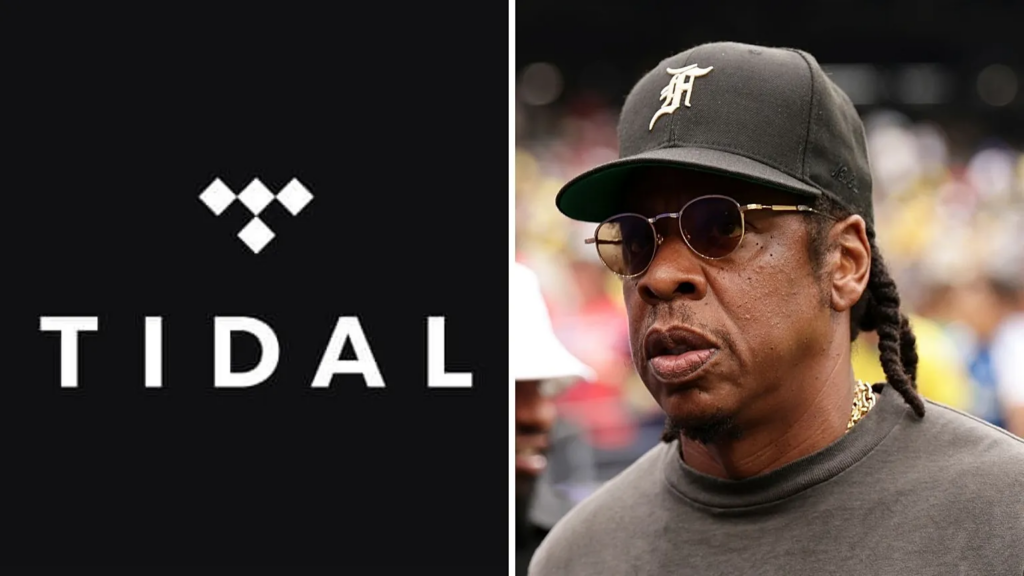
Music streaming platform Tidal has announced a sweeping ban on fully AI-generated recordings, marking a significant escalation in the industry’s response to artificial intelligence. Beginning December 9, the service will reject new tracks created entirely by generative AI and begin removing existing recordings from its catalog. The decision reflects growing concerns about artistic authenticity, royalty distribution and the ability of human musicians to compete in an increasingly automated digital marketplace.
The scale of the problem has become difficult to ignore. According to Tidal, approximately 43% of tracks delivered to its platform during the previous 90 days were identified as entirely AI-generated. On November 6, that proportion exceeded 60%, illustrating how quickly automated music production can overwhelm traditional distribution channels. The company estimates that around 27 million recordings in its catalog carry an AI designation, representing approximately 6.3% of its available music.
Yet the enormous volume of synthetic recordings has not translated into equivalent listener demand. Tidal reports that 96% of its identified AI-generated tracks received no streams during the preceding three months. This imbalance raises questions about whether automated content production is expanding musical diversity or simply increasing the amount of material competing for attention within streaming platforms. For independent artists, discoverability can become more difficult when large numbers of synthetic recordings enter the same distribution systems.
The policy represents a departure from Tidal’s earlier approach. In June, the company introduced measures to identify AI-generated music, label recordings and prevent entirely synthetic tracks from generating royalties. Those restrictions were intended to protect legitimate artists while allowing listeners to recognize machine-generated content. However, the continued acceleration of automated uploads persuaded the company that additional intervention was necessary.
Importantly, the prohibition does not extend to every musician who incorporates artificial intelligence into the creative process. Recordings developed with AI assistance may remain available when they are not solely generated by automated systems. This distinction recognizes that digital technology has become an established component of modern music production, while attempting to preserve a meaningful boundary between human-directed creativity and entirely synthetic output.
Enforcement will depend partly on detection technology supplied by Ircam Amplify, a company associated with France’s renowned music and acoustics research institution IRCAM. Identifying AI-generated recordings at scale introduces technical challenges, particularly when sophisticated models produce increasingly convincing musical performances. Incorrect classifications could affect legitimate artists, making transparency, accuracy and effective appeals essential to the policy’s credibility.
The decision also places Tidal within a broader industry debate. Bandcamp has adopted restrictions on AI-generated music, while Deezer has developed identification systems and measures intended to limit the prominence of synthetic recordings. Major streaming companies now face different strategic choices concerning whether to prohibit, label, restrict or monetize music created through artificial intelligence.
Beyond questions of copyright and commercial competition, Tidal’s decision exposes a fundamental tension in the digital creative economy. Artificial intelligence can dramatically reduce the cost of producing music, but the economic value of creativity depends on more than the ability to generate recordings at scale. As automated content becomes increasingly abundant, the industry’s central challenge may shift toward protecting attribution, sustaining fair compensation and preserving public confidence in artistic expression.
Where Innovation Meets Responsibility.