

 Phoenix 24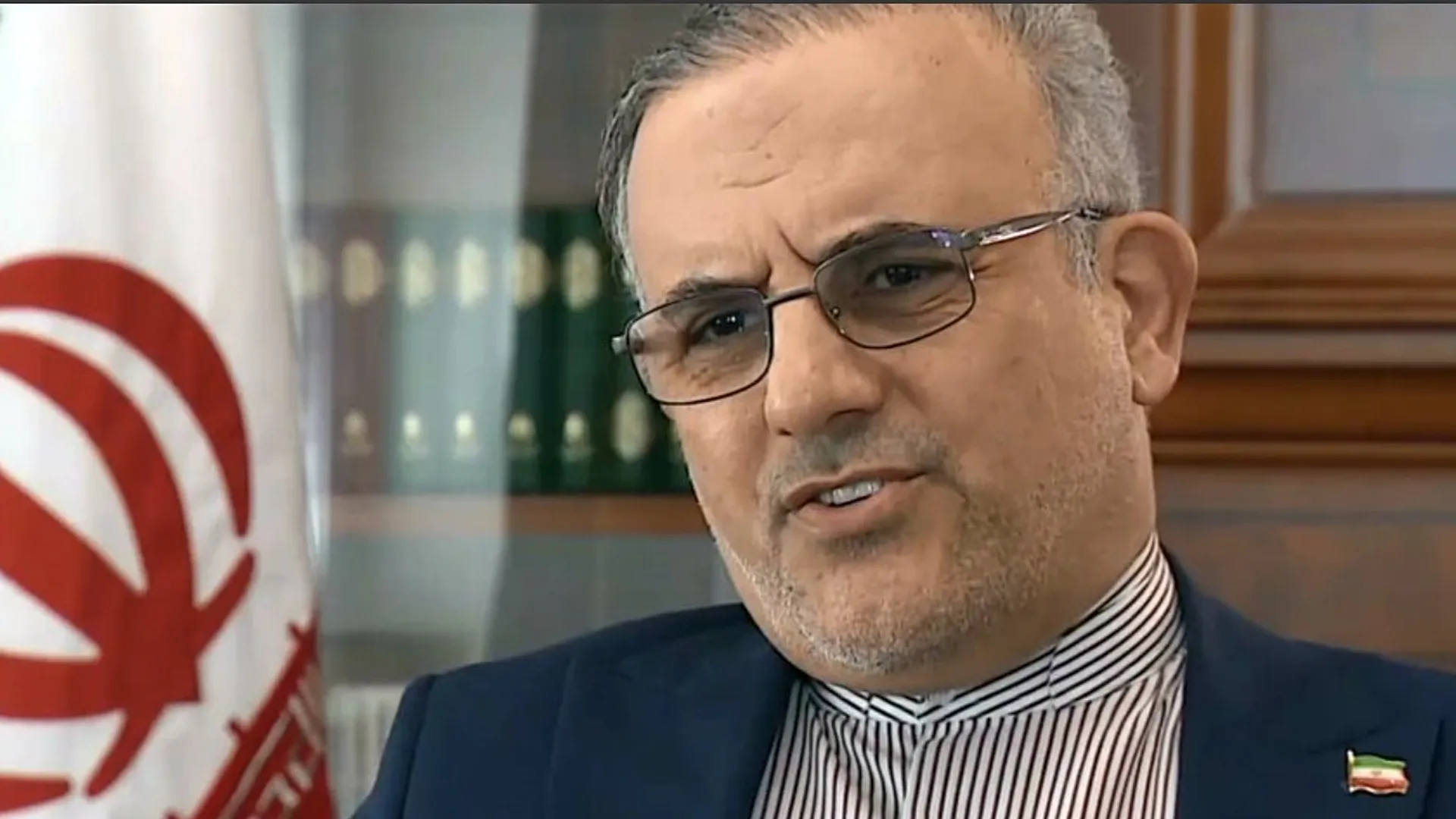
Bases become politics when wars expand.
Lisbon, March 2026
Iran’s ambassador to Portugal, Majid Tafreshi, has turned a technical debate about access to a military base into a broader indictment of European credibility in wartime. In a written interview with Euronews, Tafreshi accused Portugal of “incoherence and ambiguity” over the United States’ use of the Lajes Air Base in the Azores in the days surrounding the outbreak of the current Middle East conflict. He also said Tehran has received no reply to a formal diplomatic note sent to Lisbon on the matter. The dispute might look like a narrow procedural quarrel, but it is really about something larger: how smaller allied states manage legal responsibility and political exposure when a major power uses their infrastructure for operations that others call unlawful.
At the center of Tafreshi’s critique is the gap between what Portugal’s leaders said before the strikes and what they said after. He argues that public statements made prior to the attacks implied Lajes could be used for operations against Iran, while later messages emphasized Portuguese non-involvement. In his framing, that shift is not merely communications management, it is a legal vulnerability. He explicitly references the Articles on Responsibility of States, highlighting Article 16, which concerns assistance in the commission of an internationally wrongful act and the conditions under which a state may incur responsibility through aid or support. This is a deliberate choice of legal language. It signals that Tehran wants the issue treated as a question of state responsibility, not as a diplomatic misunderstanding that can be softened through polite phrases.
Portugal’s government has tried to narrow the issue by presenting a conditional authorization framework. The foreign minister has described an approach in which use of the base after the start of the intervention would be conditional, tied to response to an attack, proportionality, and operations directed only at military targets. Tafreshi’s response is to suggest that conditional language is not enough if the overall posture appears inconsistent or if the base is perceived to have enabled actions Iran deems illegal. His underlying logic is straightforward: in a high-intensity conflict, the margin between “permitted transit” and “complicity” becomes politically thin, and Iran wants that thinness to be felt in European capitals.
The ambassador’s complaint about not receiving a reply to Tehran’s diplomatic note is not a minor detail. In diplomatic practice, silence can be interpreted as avoidance, and avoidance creates space for the accusing party to set the narrative. Tafreshi counterbalances that accusation with an appeal to history, emphasizing more than five centuries of Portuguese-Iranian relations, dating back long before the founding of the United States. This is not nostalgia. It is a pressure tactic dressed as cultural respect: the message is that Lisbon should treat the relationship as older than the alliance logic pulling it toward Washington, and that this heritage should not be sacrificed to ambiguity.
Tafreshi also uses the interview to widen the battlefield from Portugal to Europe. He argues that Europe’s role has weakened in the conflict, with only “some positive and valuable exceptions,” and that the continent is not fully acting like the historically strong diplomatic player it claims to be. The implication is sharp: Europe is failing its own identity by drifting from mediation toward alignment. This is where the interview stops being a bilateral complaint and becomes an attempt to reposition Iran as the party calling for diplomacy while portraying European leaders as politically compromised.
The ambassador reserves particular criticism for calls by senior European figures for regime change. He warns that such rhetoric risks damaging Europe’s dignity and credibility, and he frames it as a strategic error that will rebound against Europe’s own future challenges. The point is not only moral. It is structural: when external actors openly endorse regime change, they become stakeholders in escalation, and their ability to claim neutrality or to mediate collapses. Tafreshi’s argument is designed to corner Europe into a dilemma. If Europe wants to keep a diplomatic role, it must stop speaking like a participant. If it speaks like a participant, it should expect to be treated as one.
On the military side, Tafreshi insists Iran is exercising its “legitimate right to self-defense” until the conflict ends, and he repeatedly frames the strikes against Iran as illegal and inhumane. He emphasizes that Iran did not start the war and that condemnation of aggression is a legal and moral imperative, one he claims dozens of countries have already embraced. This rhetorical structure matters because it attempts to reverse the usual Western framing in which Iran is cast as the destabilizing actor and Israel and the United States as responders. Whether audiences accept that reversal is secondary to the objective: to put European governments on the defensive, forcing them to explain why they treat some uses of force as legitimate and others as criminal.
The interview also addresses the specter of escalation involving European states. In recent days, anxiety has grown across parts of Europe about warnings from Iranian officials that European involvement could be treated as an act of war. Tafreshi does not explicitly endorse retaliation against Portugal. Instead, he pushes a message of restraint and mediation, arguing Europeans should take constructive steps toward negotiation and act according to long-established “global values.” The language is carefully chosen: it offers a diplomatic off-ramp while keeping the pressure on, suggesting that Europe’s safest route is to return to its mediator identity and stop enabling U.S. operational leverage.
What makes the Lajes issue so sensitive is that it sits at the intersection of law, alliance, and perception. Portugal cannot easily deny the strategic importance of the base to U.S. operations, yet it also cannot easily admit that the base functioned as a supporting node for an offensive that is contested internationally. This is where “incoherence” becomes a political hazard: contradictory messaging may satisfy domestic audiences in the short term, but it creates openings for adversaries to argue that Portugal is hiding complicity behind legal language. Tafreshi is exploiting that opening, not only to pressure Lisbon, but to signal to other smaller allied states that hosting infrastructure carries reputational and legal cost when wars expand.
The deeper pattern is that bases are no longer quiet back-end logistics. They have become public front-end politics. The more conflicts widen, the more the map of military access becomes a map of accountability, and the more smaller states are forced to explain how sovereignty works inside alliances. Iran’s ambassador is not merely complaining. He is putting a legal theory of responsibility on the table and daring Portugal, and by extension Europe, to respond.
Hechos que no se doblan. / Facts that do not bend.