

 Phoenix 24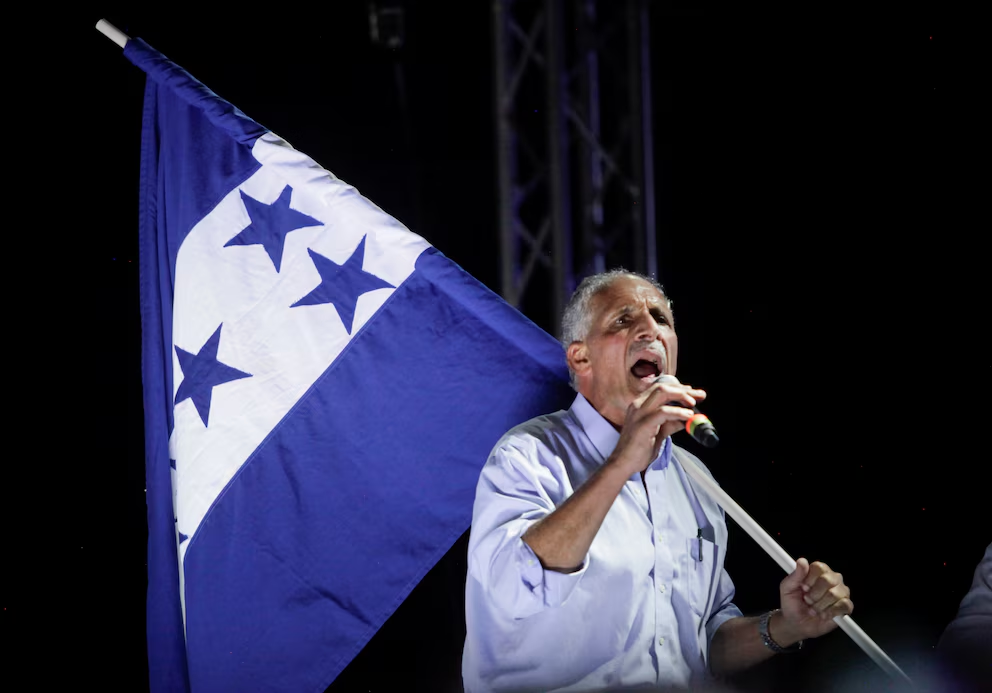
Electoral closure is not only about counting votes, but about whether institutions can transform numbers into accepted authority.
Tegucigalpa.
Honduras formally concluded its prolonged electoral process after the National Electoral Council proclaimed Nasry “Tito” Asfura as president-elect, bringing to an end weeks of political tension, legal challenges and public uncertainty following one of the country’s most closely contested elections in recent history. The declaration came after the completion of a special vote review mechanism designed to address disputes raised during the post-election phase.
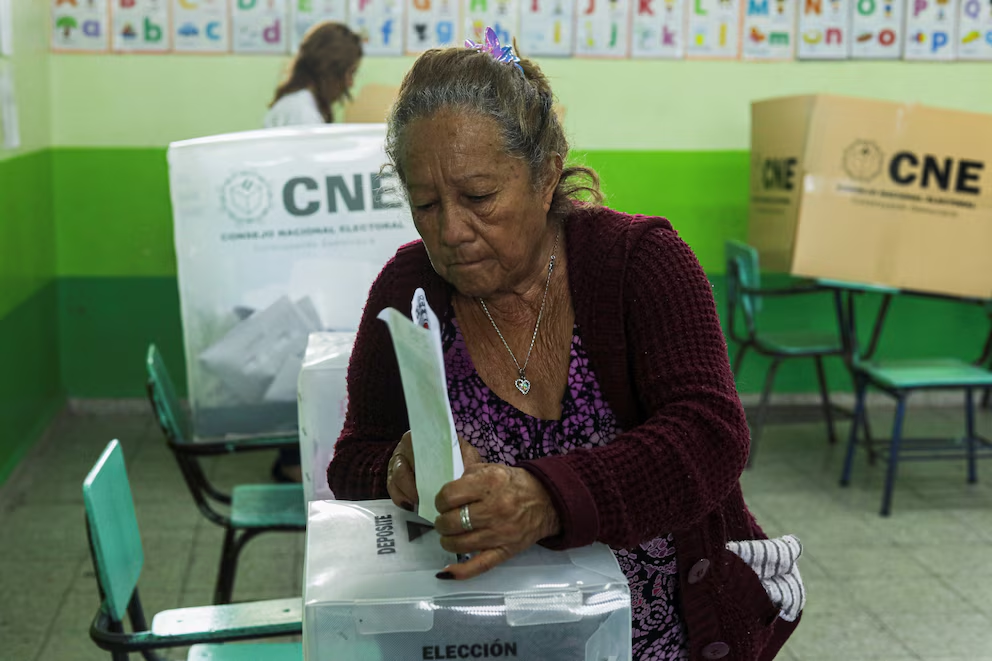
Asfura, a former mayor of the capital and a central figure within Honduras’ conservative political establishment, secured victory by a narrow margin that kept the country in a state of institutional suspense well beyond election day. The extended counting process, combined with accusations of irregularities and demands for additional verification, tested public confidence in electoral authorities and exposed the fragility of trust in democratic procedures under polarized conditions.
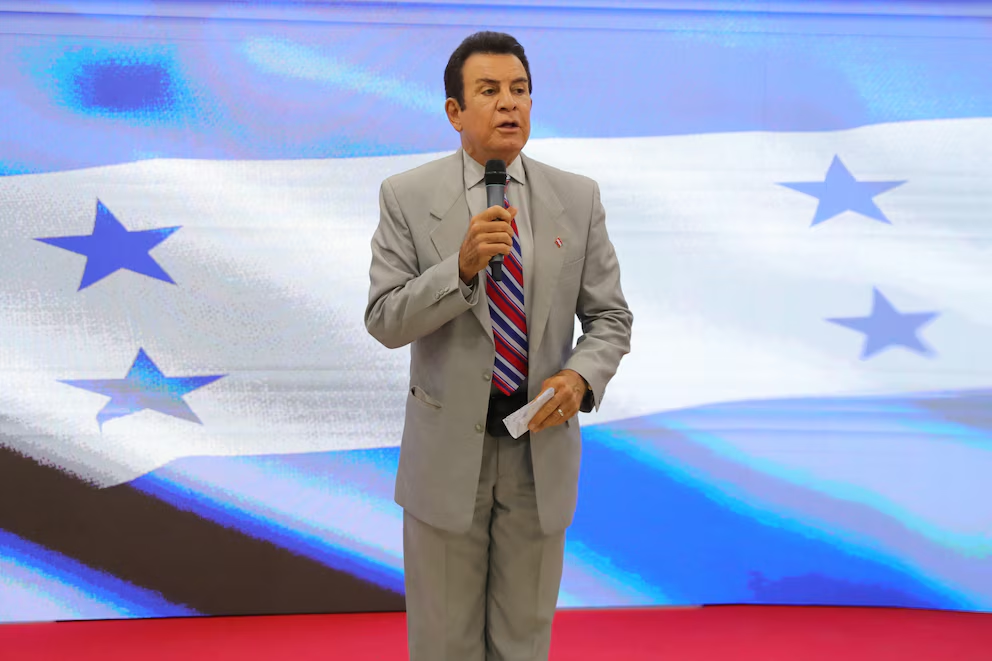
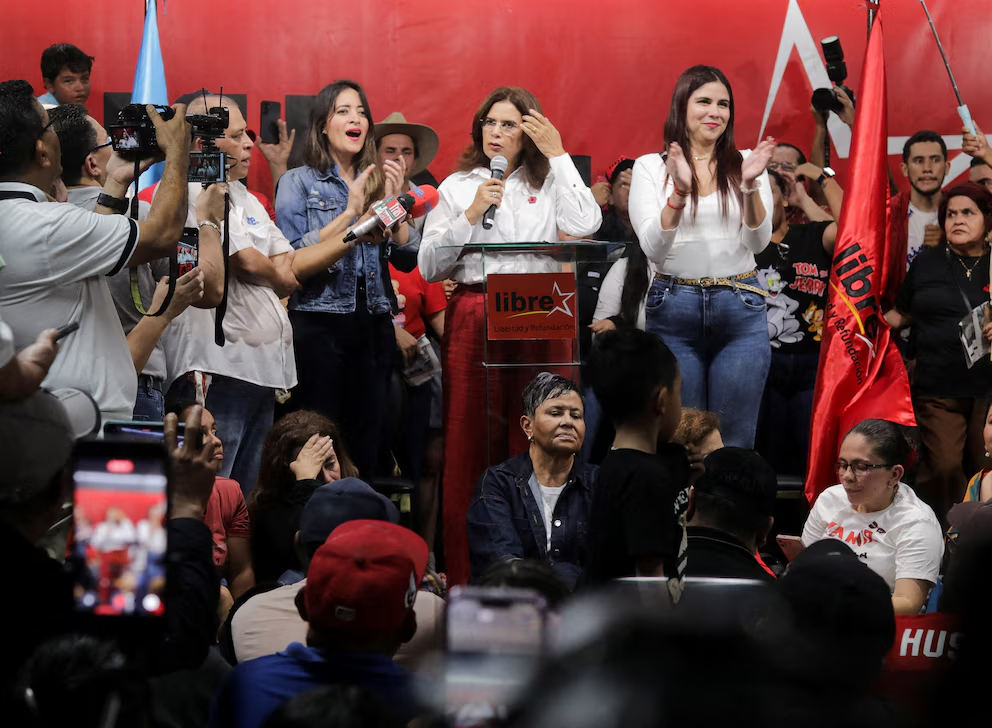
The electoral authority defended the final declaration as the result of technical verification rather than political preference, stressing that the process reflected the will expressed at the ballot box. Nevertheless, opposition sectors maintained reservations regarding the handling of the scrutiny phase, arguing that procedural delays and internal disagreements within the electoral body weakened perceptions of transparency, even as legal avenues were exhausted.
Public reaction to the proclamation was divided. Supporters of Asfura framed the announcement as a necessary step toward restoring political stability and economic predictability, while critics viewed the outcome as the conclusion of an election marked by structural weaknesses rather than institutional strength. The atmosphere across the country remained cautious, with calls for calm coexisting alongside demands for political accountability.
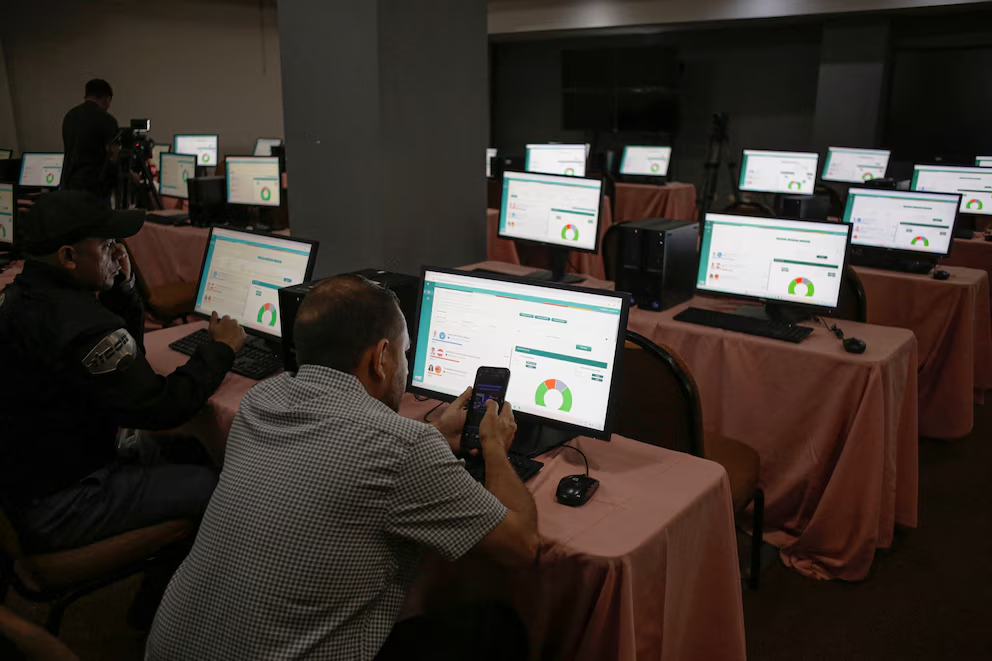
International responses followed a similar pattern of guarded recognition. External actors emphasized the importance of a peaceful transition and institutional continuity, while quietly noting the need for electoral reforms capable of preventing future crises of legitimacy. The Honduran case thus joins a broader regional pattern in which close elections increasingly strain democratic systems already under pressure from social fragmentation and declining trust.
With the result now official, the challenge facing the president-elect extends beyond governance. Rebuilding confidence in public institutions, managing political polarization and translating electoral victory into effective authority will define the early phase of the incoming administration. In a country where elections have become moments of systemic stress, legitimacy must be consolidated not only through law, but through performance.
Behind every data point lies an intention. Behind every silence, a structure.