

 Phoenix 24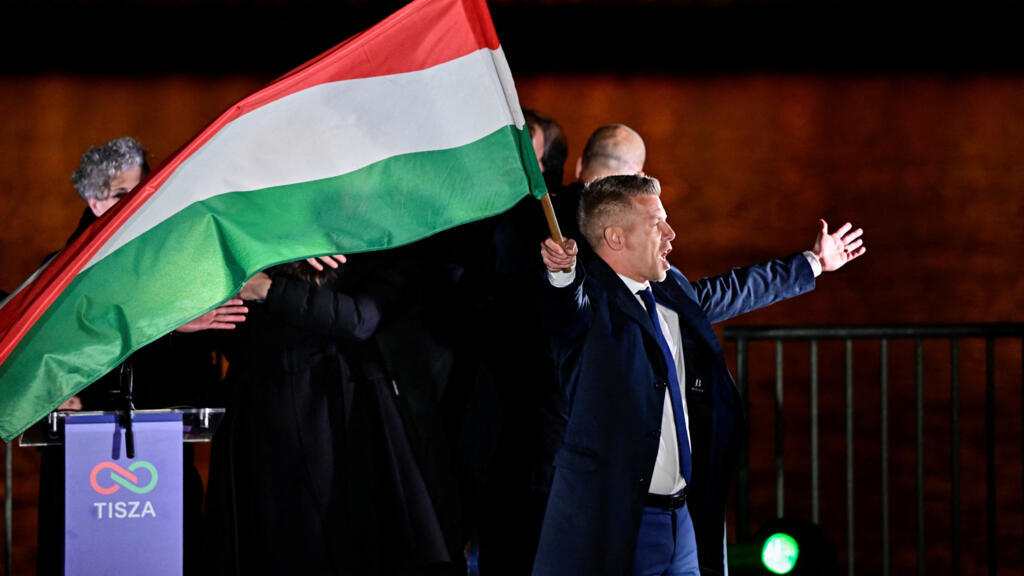
Victory was followed almost immediately by narrative sabotage.
Budapest, April 2026. Hungary’s prime minister-elect, Péter Magyar, has become the target of a rapid post-election disinformation wave centered on migration and his alleged stance toward Viktor Orbán. The timing is revealing. Less than two weeks after his electoral victory, misleading claims began circulating across social media, attempting to redefine his public image before his government can define itself on its own terms. What follows is not merely online noise. It is an early struggle to shape legitimacy in the fragile space between electoral victory and political consolidation.
One of the most widely shared false claims asserted that Magyar would revoke work permits for all Ukrainians and other non-EU migrants beginning in June 2026 and force them to leave Hungary. That is not what his earlier remarks indicated. The underlying source was a New Year’s Eve speech in which he said his Tisza party would stop allowing new non-EU guest workers to enter Hungary from June 1, 2026, reflecting a restrictive migration position. But that proposal did not apply to non-EU nationals already residing legally in the country before that date. The distortion works by converting a forward-looking restriction into an immediate mass expulsion narrative.
A second misleading narrative tried to portray Magyar as someone sympathetic to Orbán’s elevation to a top European Union post. Viral posts circulated an old video clip in which Magyar asked what would happen if Viktor Orbán became president of the European Commission or the European Council. The clip was presented as if he were endorsing that outcome. In reality, the footage came from a 2024 interview in which he raised the scenario as a hypothesis rather than a political proposal. In the same exchange, he suggested that most Hungarians would probably not agree with Orbán’s vision, which sharply undermines the idea that he was backing such a move.
The mechanics of these falsehoods matter as much as their content. Both cases rely on a familiar disinformation technique: extracting older material, removing its context, and reintroducing it at a politically sensitive moment to generate confusion about a leader’s real agenda. This is not accidental messaging drift. It is reputational engineering. The objective is not only to mislead voters on one issue, but to burden a rising political figure with strategic ambiguity before he fully occupies office.
The broader concern is that Magyar had reportedly already been targeted before the election by a disinformation environment linked by researchers to Storm-1516, a network associated with manipulated content and the amplification of false narratives through seemingly credible channels. There is no conclusive public proof in this specific case identifying who is behind the current wave, but the operational pattern fits a wider ecosystem in which political vulnerability is exploited through repetition, emotional framing, and plausible-looking distortion. In that sense, the real issue is larger than one rumor cycle in Hungary. It is about how contemporary elections continue even after the vote, through contested interpretation.
What Hungary is facing, then, is not just a transition of power but a transition under informational siege. When a new leader is immediately recoded through false claims about migration and fabricated proximity to his predecessor, the attack is aimed at trust itself. Political succession becomes cognitively unstable before it becomes institutionally stable. That is the deeper significance of these narratives. They do not simply lie about Péter Magyar. They attempt to weaken the conditions under which a democratic mandate can be publicly understood.
Detrás de cada dato, hay una intención. Detrás de cada silencio, una estructura.
Behind every data point, there is an intention. Behind every silence, a structure.