

 Phoenix 24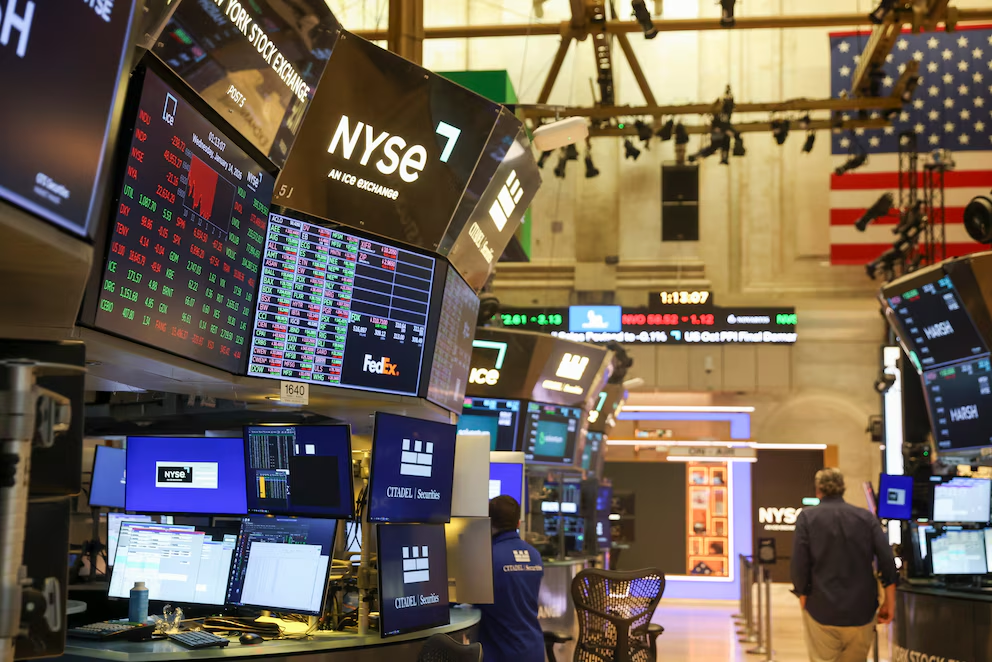
Energy prices now speak louder than diplomacy.
London, April 2026. Oil has once again crossed the symbolic threshold of $100 per barrel, sending a clear signal that financial markets are losing confidence in a near-term resolution to the Iran conflict. The rebound in crude prices reflects not only supply concerns but a deeper erosion of trust in diplomatic progress between Washington and Tehran. Investors, who had briefly priced in a stabilization scenario, are now recalibrating expectations toward prolonged uncertainty. In global markets, that shift is immediate and unforgiving.
The reaction has been visible across equities. Stock markets retreated as investors reassessed the likelihood of a quick peace agreement and began pricing in a more unstable energy environment. The return of oil above $100 has revived inflation fears, particularly in energy-dependent economies, and raised concerns about the fragility of global growth. The connection is structural rather than temporary. Higher energy costs move through production chains, transportation systems, and consumer prices long before central banks are able to respond.
At the center of the volatility lies the Strait of Hormuz, a strategic chokepoint through which a substantial share of the world’s oil supply still passes. Any disruption, whether physical or perceived, immediately alters expectations across the market. As long as that corridor remains unstable, investors will continue pricing in a geopolitical premium that extends well beyond the Middle East. In this context, oil is no longer simply a commodity. It becomes a live barometer of military risk, diplomatic fragility, and systemic vulnerability.
The instability is intensified by the ambiguity surrounding negotiations. There may be signals that talks could resume, but the absence of visible breakthroughs and the persistence of conflicting actions on the ground have opened a credibility gap that markets do not forgive easily. Financial systems often punish uncertainty more harshly than open confrontation because uncertainty resists modeling. When the political horizon becomes unreadable, capital retreats, volatility expands, and defensive positioning becomes the default logic of investors.
From a structural perspective, the current moment reveals the tight coupling between geopolitics and finance. Energy markets are reacting not only to possible disruptions in supply, but also to perceptions of political intent, negotiation credibility, and escalation risk. This creates a feedback loop in which every diplomatic signal becomes a financial variable and every military development becomes an inflationary threat. When talks stall, prices move. When trust weakens, risk premiums widen.
From a Phoenix24 perspective, the deeper implication is that oil has resumed its role as a geopolitical language. The move above $100 is not merely a price event. It is a message about instability, failed confidence, and the shrinking ability of political actors to contain market anxiety through rhetoric alone. What is unfolding is not just a commodities shock, but a reminder that global power is still negotiated through energy, and that whenever diplomacy loses traction, the barrel begins to speak for the system.
Phoenix24 Editorial Note: analysis, context, and strategic narrative to read power beyond the headline.