

 Phoenix 24
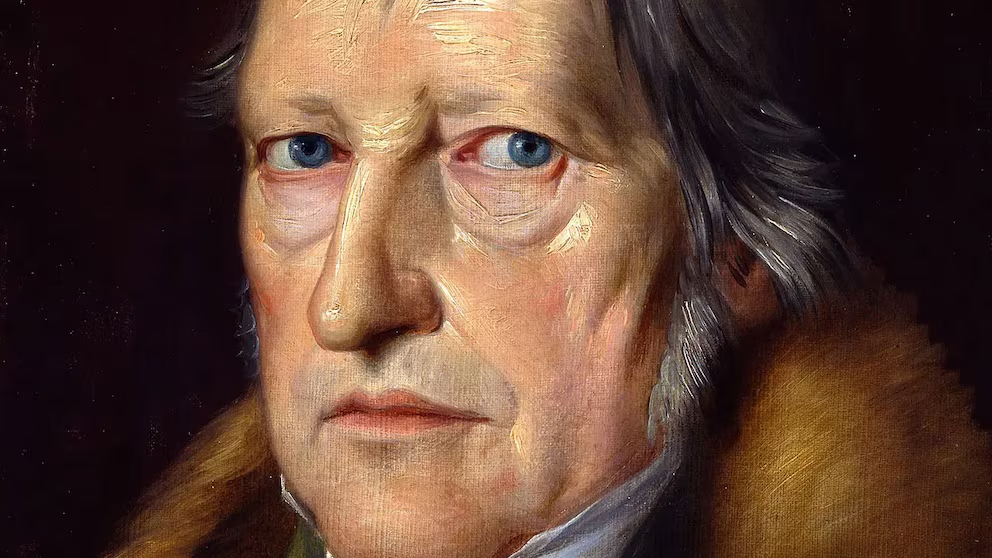
Ideas move because contradiction refuses to sleep.
Berlin, March 2026. Georg Wilhelm Friedrich Hegel is often remembered as the philosopher who turned history into a living structure rather than a passive archive of events. More than a German idealist writing in the shadow of Kant, Hegel built a system in which thought, politics, society, and history were bound together by movement, tension, and internal contradiction. The standard shorthand attached to his name is dialectics, though scholars regularly warn that the simplified formula of thesis, antithesis, and synthesis does not fully capture how Hegel himself actually worked. Even so, the core intuition remains decisive: ideas do not remain stable, institutions do not stay innocent, and historical forms carry contradictions that push them beyond themselves.
What made Hegel revolutionary was not simply that he offered another philosophy of history. It was that he refused to treat history as a random sequence or as a moral tale told after the fact. In his work, history becomes intelligible because it has development, and development becomes intelligible because contradiction is built into reality itself. His method depends less on a neat debate between two fixed positions than on opposition internal to the subject matter. That difference matters. Hegel was not just interested in disagreement. He was interested in how a thing can undermine itself from within and, by doing so, generate a new stage of understanding.
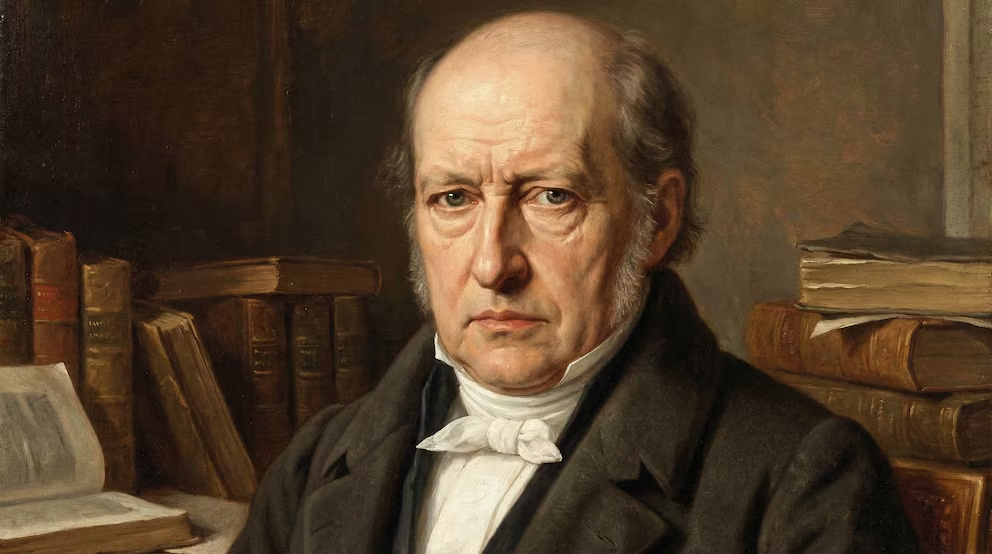
This is why Hegel still feels modern. He did not ask readers to look at politics, law, religion, or culture as isolated compartments. He treated them as expressions of spirit unfolding through time, each carrying tensions that reveal both their power and their incompleteness. That ambition is part of what made him so influential. Hegel did not merely comment on history. He tried to explain why history produces forms of freedom, crisis, and transformation in the first place. His philosophy was not content with describing the world as it appeared. It wanted to grasp the logic of how the world becomes what it is.
His impact reaches well beyond philosophy departments. The idea that historical change emerges through contradiction became one of the central conceptual inheritances of the modern world. Later thinkers, most famously Karl Marx, would adapt that understanding of movement through conflict and rework it within social and material analysis. That migration matters because it shows how Hegel helped establish one of the deepest habits of modern thought: the belief that history is not static, that conflict is productive, and that every social order contains the seeds of its own transformation. Whether one agrees with him or not, the language of contradiction, development, and historical process still bears his imprint.
There is, however, a reason Hegel remains both admired and resisted. His philosophy can sound exhilarating when it clarifies movement, but overreaching when it seems to imply that history unfolds with too much coherence or purpose. Critics have long worried that any system grand enough to explain everything risks justifying too much. Admirers answer that Hegel’s strength lies precisely in his refusal to freeze reality into fixed categories. On that reading, his method does not flatten the world into certainty. It forces thought to remain faithful to tension, instability, and becoming. That is one reason scholars still return to him. He offers not comfort, but a disciplined way of confronting complexity without pretending contradiction can be erased.
The deeper legacy of Hegel may be that he changed what it means to think historically at all. After him, history could no longer be treated merely as a sequence of rulers, wars, or dates. It became a field in which reason, power, and freedom struggle through time, never fully detached from failure, but never fully reducible to it either. In that sense, Hegel did not simply offer a method. He altered the horizon of modern thought. He made contradiction intellectually fertile and taught generations after him to read institutions, ideas, and even civilizations not as finished objects, but as unstable forms in motion.
That is why Hegel continues to matter in the twenty first century. In an age saturated with polarization, technological acceleration, cultural fragmentation, and institutional fatigue, his work remains unsettlingly relevant. He reminds readers that contradiction is not always a flaw in a system. Sometimes it is the engine of its transformation. That insight remains one of the most powerful intellectual inheritances of modern philosophy. Hegel did not teach the world to love conflict. He taught it to understand that history moves through it.
Beyond the news, the pattern. / Beyond the news, the pattern.