

 Phoenix 24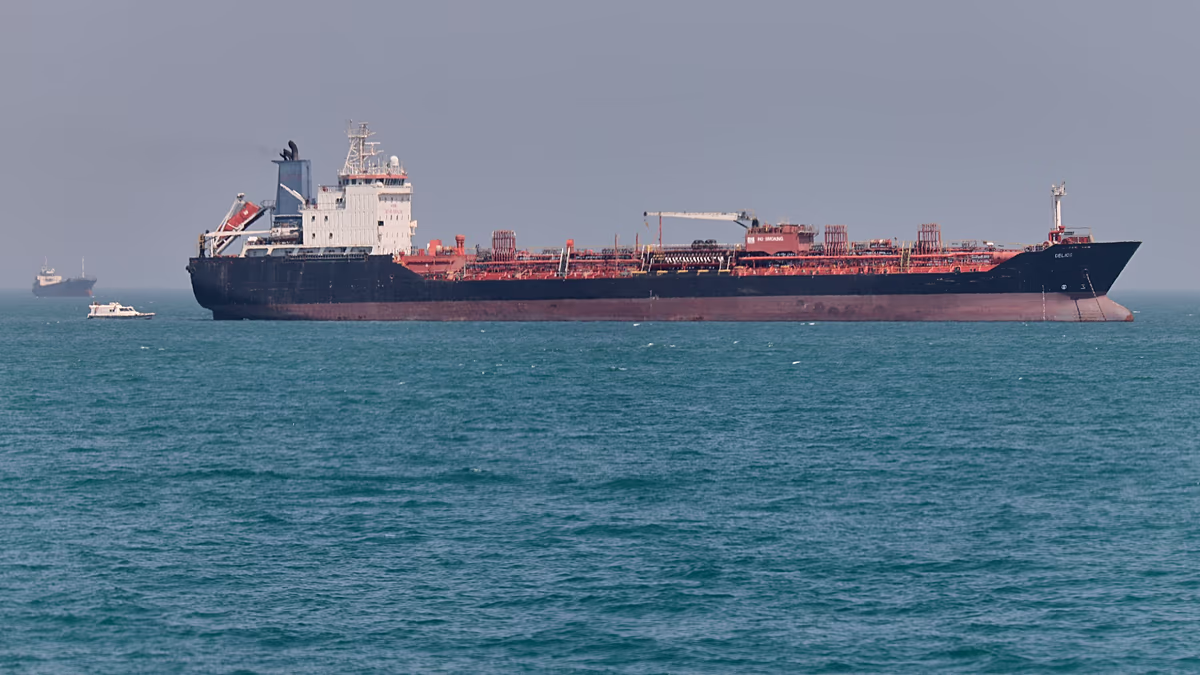
Alternative pipelines are restoring flows, but the regional energy system remains far from normal.
Persian Gulf
Oil exports from the Persian Gulf, excluding Iran, returned in September to levels seen before the current conflict, despite continuing attacks on vessels and severe disruption around the Strait of Hormuz. Maritime tracking data indicate that at least 16.5 million barrels per day left the region between September 1 and 28, matching the prewar average.
The recovery has been driven by a major shift in transport routes. Around 40 percent of current exports now avoid Hormuz, compared with roughly 17 percent before the war. Saudi Arabia and the United Arab Emirates have increasingly relied on pipelines that move crude toward terminals outside the strait, reducing exposure to maritime attacks and restrictions.
Saudi Arabia has benefited from the reopening of its East West pipeline, which connects eastern oil fields with the Red Sea terminal at Yanbu. The line had been closed after attacks launched from Iraq on September 11 but resumed operations on September 22. The United Arab Emirates is also using its pipeline from Abu Dhabi to Fujairah on the Gulf of Oman, allowing exports to bypass Hormuz entirely.
The shift is strategically important because around one fifth of global oil supply moved through the Strait of Hormuz before the conflict. Some crude that still crosses the strait is now transferred between tankers offshore, adding another layer of logistical complexity to regional trade.
Export volumes may have recovered, but prices have not. Brent crude for December delivery was trading above $102 per barrel, compared with roughly $72 before the war. West Texas Intermediate was near $90.50. The difference illustrates how restored physical flows do not automatically eliminate the geopolitical risk premium embedded in energy markets.
Iran continues to claim control over passage through the strait, while vessels traveling without authorization face the possibility of attack. At the same time, a United States blockade of Iranian ports continues to restrict a significant portion of Iran’s own crude exports.
The recovery is therefore highly uneven. Gulf producers outside Iran have rebuilt export capacity through alternative infrastructure, while the broader system remains dependent on emergency routing, elevated security risk and pipelines operating near maximum capacity.
OPEC+ members have meanwhile agreed to keep November production targets unchanged. The decision suggests that supply management is continuing alongside the larger effort to stabilize regional energy flows.
The key change is not that the oil market has returned to normal. It is that producers are learning how to operate around a strategic chokepoint that can no longer be treated as reliably open.
Geopolitics, unmasked.