

 Phoenix 24
Rising fuel costs and foreign competition are pushing coastal fishing communities toward direct action.
Thessaloniki
Greek fishermen have intensified nationwide protests by targeting fish markets and blocking imported seafood from entering domestic distribution channels. The demonstrations, which began on October 1, have expanded from gatherings in the Thermaic Gulf to coordinated actions at major wholesale facilities.
One of the most significant confrontations occurred before dawn at the Nea Michaniona fish market near Thessaloniki. Fishermen blocked access to the facility and prevented four trucks carrying fish from Turkey from unloading their cargo. Three of the vehicles were reportedly headed for Thessaloniki and one for Kavala.
Protesters used pallets to obstruct the entrance and lit a small fire as part of the blockade. The trucks remained immobilized, temporarily interrupting the movement of imported products toward the Greek market.
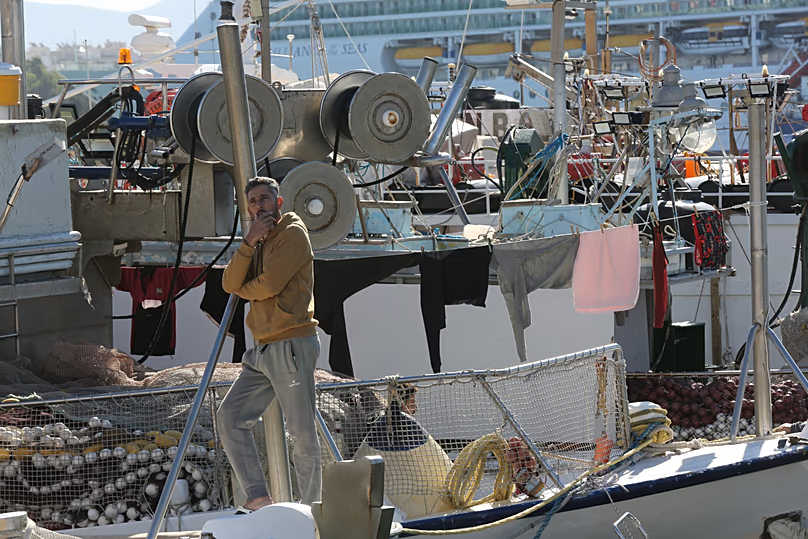
Fishing representatives say the actions will continue because they believe imported seafood has become dominant in some distribution centers. Dimitris Tsipouras, a representative of coastal fishermen, said imports from Turkey and Bulgaria may account for around 90 percent of products moving through Nea Michaniona, according to the sector’s own estimates.
The protests are also spreading geographically. Similar actions have taken place at the Piraeus fish market, while another mobilization was planned for Keratsini. Fishermen from island communities are also expected to participate as the movement expands.
At the center of the dispute is the cost of marine diesel. Fishing organizations argue that fuel prices have substantially increased vessel operating expenses and weakened the economic viability of small scale coastal fishing. They are demanding lower fuel costs and stronger support measures for the sector.
Fishermen are also raising additional concerns, including damage to fishing nets attributed to dolphins and what they describe as problems linked to phytoplankton. Together, these pressures are being presented as evidence that the sector faces a combination of environmental, operational and market challenges.
The blockades place the dispute directly inside the food supply chain. By stopping imported fish before it reaches wholesale distribution, protesters are shifting pressure from public demonstrations to commercial logistics.
The conflict is therefore no longer only about fuel prices. It is becoming a broader struggle over whether local fishing communities can remain economically competitive inside an increasingly integrated regional food market.
Beyond the news, the pattern.