

 Phoenix 24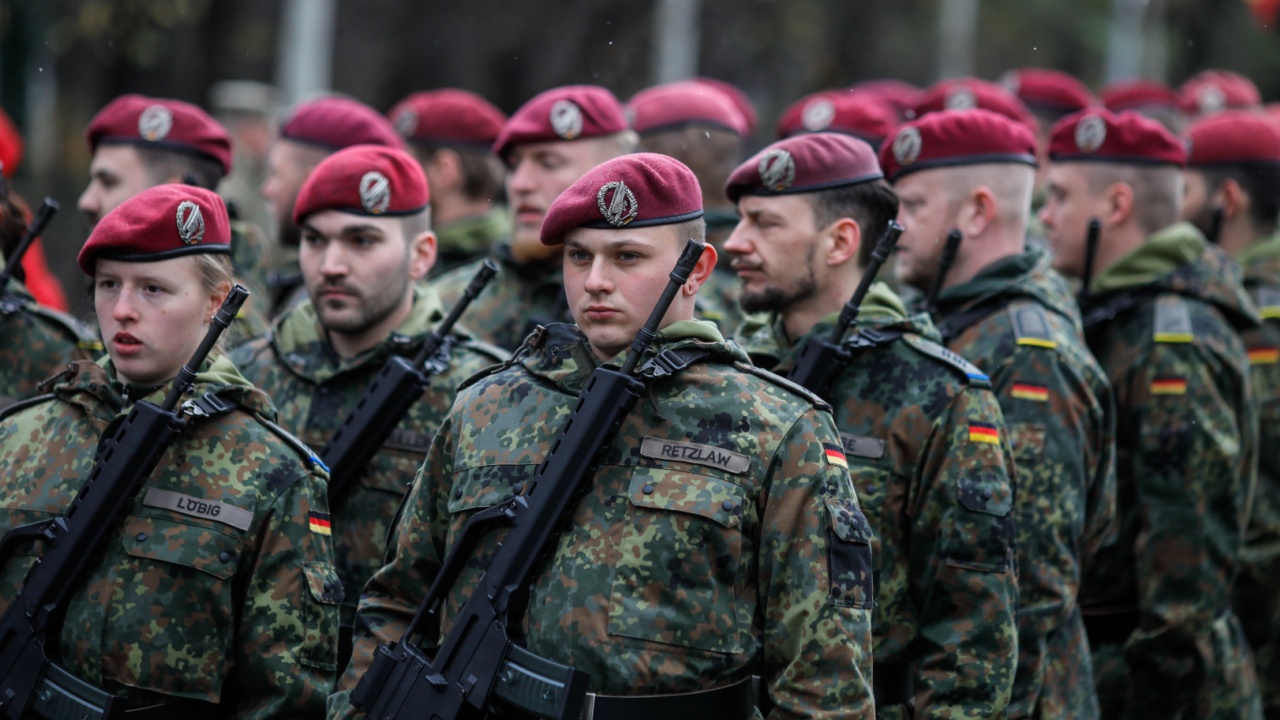
Berlin is turning restraint into deterrence.
Berlin, April 2026. Germany has taken one of the most consequential military decisions in its postwar history by presenting a strategy designed to build the strongest conventional army in Europe. The plan responds directly to the Russian threat, but it also reflects a broader transformation in European security: the continent can no longer assume that economic weight alone is enough to produce strategic protection. Berlin is now moving from hesitation to force planning, and that shift changes the balance inside NATO.
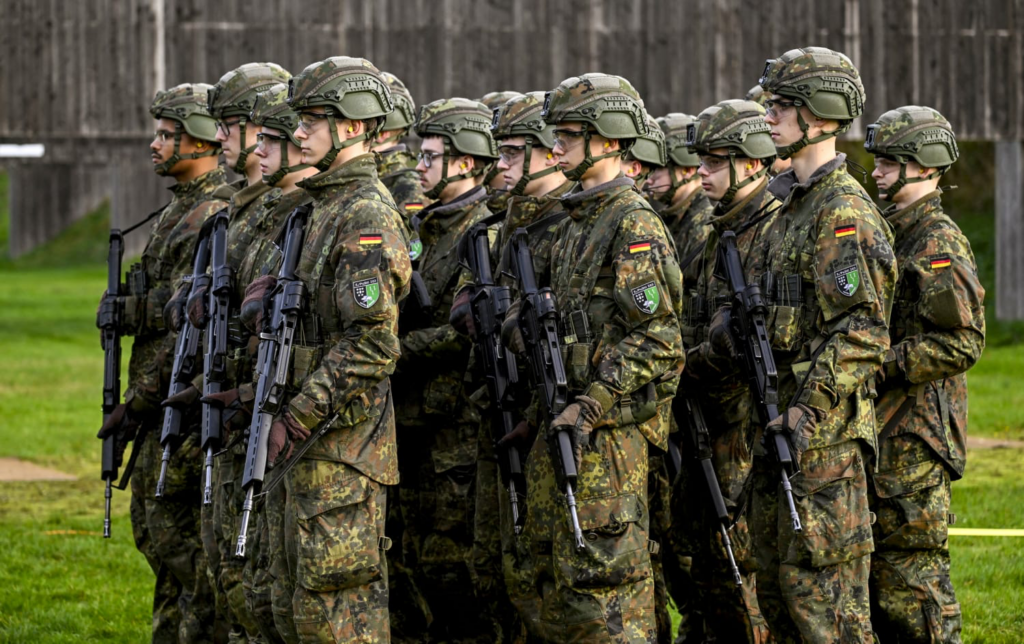
The German strategy aims to expand the Bundeswehr to roughly 260,000 active-duty soldiers and 200,000 reservists by the mid-2030s. That would create a force of about 460,000 personnel, supported by higher defense spending, technological modernization and a stronger role within NATO’s eastern defense architecture. The numbers matter because they signal that Germany is no longer thinking of defense as symbolic contribution, but as structural capacity.
This is a historic rupture. For decades, German power was framed through industry, exports, diplomacy and fiscal discipline rather than military ambition. The memory of the Second World War shaped a political culture of restraint, where rearmament was handled carefully and often defensively. Russia’s war against Ukraine has broken that equilibrium and forced Berlin to accept that restraint without capability can become vulnerability.
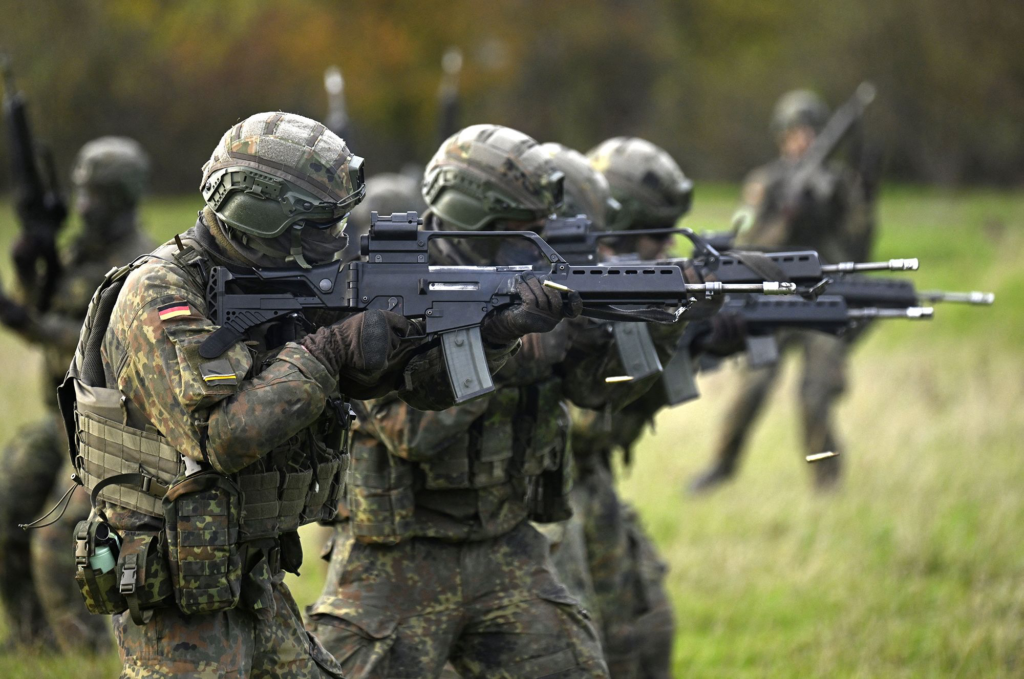
The new plan also reflects a strategic judgment about Moscow. German officials increasingly describe Russia not as a temporary problem, but as the most immediate and durable threat to European security. That assessment includes conventional military risk, cyber operations, disinformation, sabotage, pressure on infrastructure and the possibility of a wider confrontation with NATO. Germany is preparing for a security environment in which peace must be defended before it collapses.
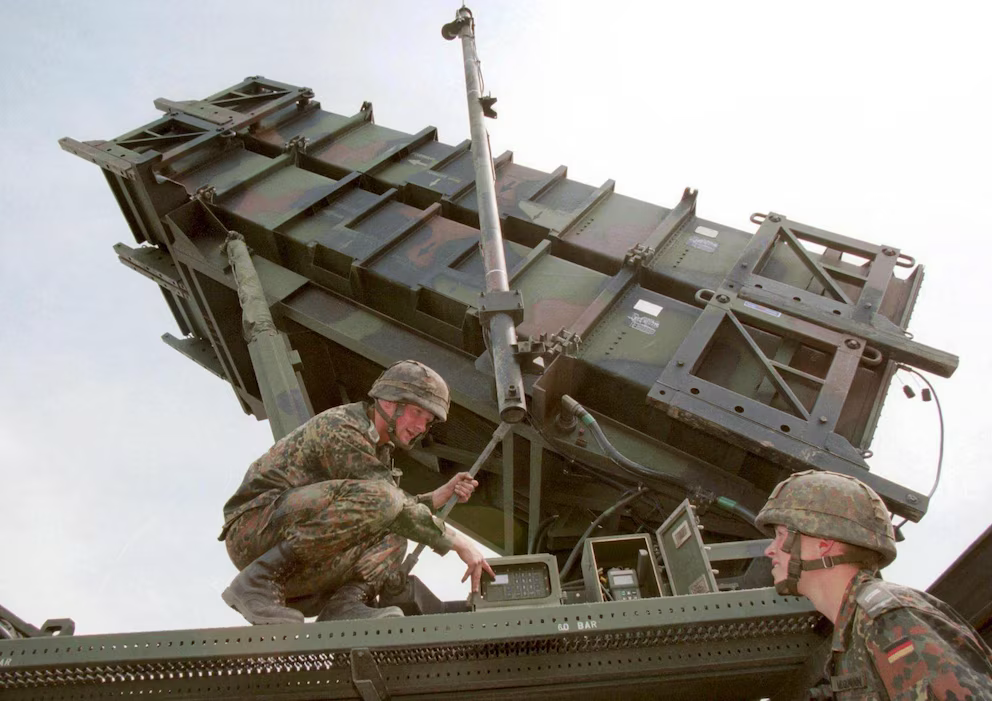
The financial dimension is equally important. Doubling defense investment would not only modernize the Bundeswehr; it would reshape Germany’s industrial base. Tanks, ammunition, air defense, drones, command systems, logistics networks and cyber capabilities all require sustained funding. Rearmament is therefore not only a military decision, but an industrial policy for an era of geopolitical competition.
This transformation will not be simple. Germany’s armed forces have long faced problems of procurement delays, equipment gaps, personnel shortages and bureaucratic fragmentation. Building Europe’s strongest army cannot be achieved through budget announcements alone. It requires recruitment, training, maintenance capacity, ammunition stockpiles, faster contracting and a political system willing to sustain the effort across electoral cycles.
The personnel challenge may prove decisive. Germany has avoided restoring full conscription, but voluntary recruitment may not be enough to reach the scale envisioned by the new strategy. A register of young citizens and stronger reserve structures may help, yet the central problem remains cultural: how to persuade a prosperous society that military readiness is not a relic of the past, but a condition of future stability.
The strategy also repositions Germany inside NATO. For years, Washington pressured European allies to spend more and carry greater responsibility for their own defense. Now Berlin appears to be responding not only to Russian aggression, but to uncertainty about the durability of American guarantees. A stronger Germany becomes a hedge against both Moscow’s pressure and Washington’s unpredictability.
That does not mean Europe can replace the United States quickly. American intelligence, nuclear deterrence, logistics, airlift and strategic command remain central to NATO. But Germany’s rearmament signals that Europe is beginning to prepare for a world in which dependence must be reduced. Strategic autonomy is no longer an abstract French phrase; it is becoming a German budget line.
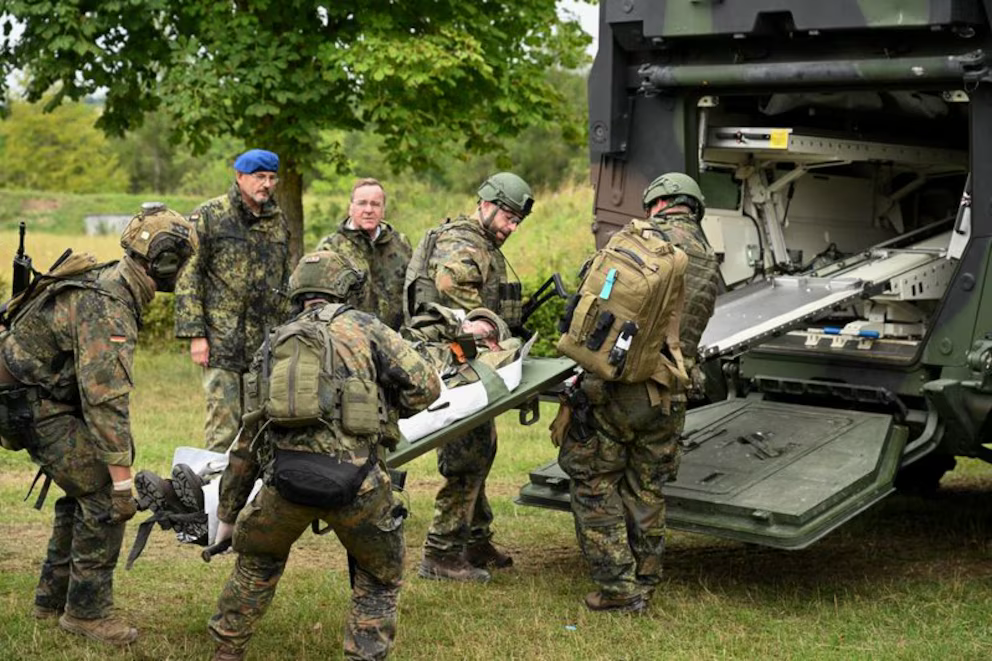
For Eastern Europe, the plan will be welcomed but watched carefully. Poland, the Baltic states and Nordic allies have long warned that Russia must be deterred through credible forward defense. A stronger Bundeswehr could reinforce that posture, especially in air defense, logistics and troop mobility. But Germany must prove that its transformation is operational, not rhetorical.
France will also read the move through a strategic lens. Paris has long seen itself as Europe’s military center of gravity, especially because of its nuclear arsenal and expeditionary tradition. A rearmed Germany does not displace France, but it changes the internal balance of European defense. The future of continental security may depend on whether Berlin and Paris can align industrial ambition, operational planning and political authority.
The defense industry implications are substantial. German rearmament could accelerate demand for European-made systems, strengthen domestic manufacturers and reduce dependence on external suppliers. But it could also intensify competition among European firms and governments if procurement remains fragmented. Europe has money, technology and industrial capacity; what it often lacks is coordination.
The Russian response will likely frame Germany’s plan as escalation. Moscow has historically used European rearmament as propaganda, portraying NATO defense measures as aggression. But the strategic sequence is difficult to ignore: Russia’s invasion of Ukraine, hybrid operations and military mobilization created the conditions for Germany’s turn. Berlin is not rearming in a vacuum; it is reacting to a continent where the cost of weakness has become visible.
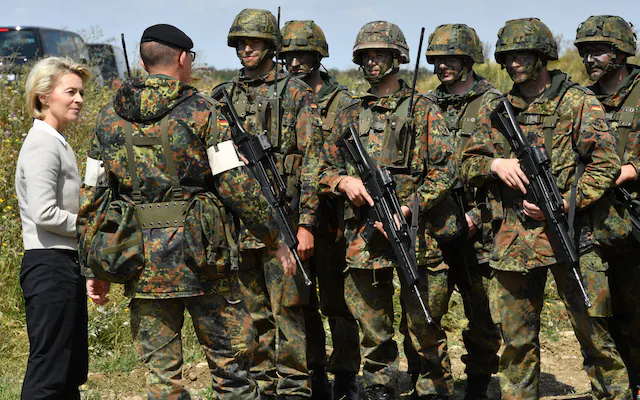
The domestic debate in Germany will remain tense. Some citizens will see the plan as necessary realism; others will fear militarization, social spending trade-offs or the erosion of postwar restraint. The government must manage that debate carefully because democratic legitimacy is essential for long-term defense transformation. A military build-up without public trust would be politically fragile.
The broader European lesson is clear. The peace dividend that shaped the continent after the Cold War has ended. Defense is no longer a secondary policy area protected by American primacy and commercial optimism. It is returning to the center of national planning, industrial strategy and political identity.
Germany’s plan marks the arrival of a new European security era. The country that once preferred to lead through economic gravity is now preparing to lead through military readiness as well. That does not erase its past, but it redefines its present responsibility.
The question is whether Berlin can convert ambition into capability before the threat environment worsens. Russia is already preparing, adapting and testing European cohesion across military and hybrid domains. Germany now understands that deterrence is not built by statements, but by forces that can move, defend, sustain and fight.
If the strategy succeeds, Europe will gain a stronger conventional anchor inside NATO. If it fails, the continent may discover too late that declarations of resolve cannot substitute for readiness. Germany has chosen to rearm because the old security order no longer protects itself. In that choice lies the new reality of European power.
Detrás de cada dato, hay una intención. Detrás de cada silencio, una estructura.