

 Phoenix 24
Fewer races, not weaker demand, drove the decline.
London, August 2026.
Formula 1 revenue fell sharply during the second quarter of 2026 as cancellations and calendar changes reduced the number of races staged during the period. Liberty Media, the championship’s commercial rights holder, reported revenue of $764 million, a 38% decline from the $1.226 billion generated during the same quarter of 2025. Operating income dropped 75% to $73 million, while adjusted operating earnings before depreciation and amortization fell 61% to $139 million. The figures reflect the commercial impact of holding only five races during the quarter, compared with nine a year earlier.
The decline was also visible across the first six months of 2026, although it was less pronounced than the quarterly comparison. Formula 1 generated $1.381 billion during the first half, down 15% from $1.629 billion in the corresponding period of 2025. Operating income decreased from $265 million to $180 million, while adjusted operating earnings fell 30% to $311 million. Eight races were held through June, compared with 11 during the first half of last year.
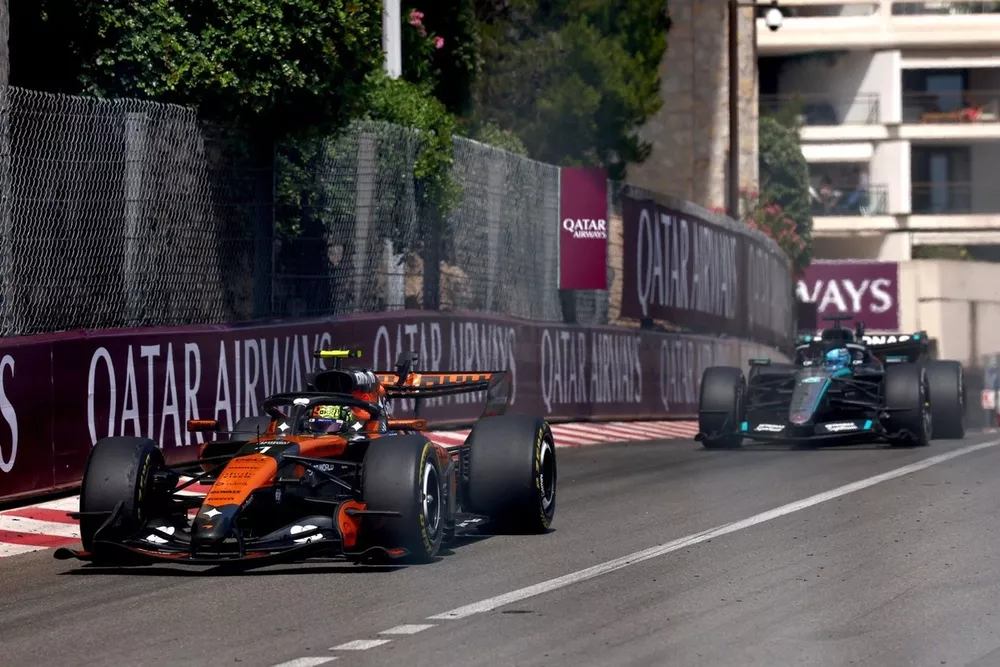
Formula 1 earns most of its primary revenue through race promotion fees, media rights and sponsorship agreements. These sources declined because fewer events meant a smaller proportion of season-based contracts could be recognized during the reporting period. Primary revenue fell 40% in the second quarter, from $1.032 billion to $622 million. Across the first half of the year, it declined 17% to $1.118 billion.
The disruption was linked primarily to changes affecting races in the Middle East following the escalation of regional conflict. The Bahrain and Saudi Arabian Grands Prix were removed from their original April dates, reducing the number of high-value events held during the second quarter. Saudi Arabia is not expected to return to the 2026 calendar, while the Bahrain Grand Prix has been rescheduled for October at Malaysia’s Sepang International Circuit. Formula 1 now expects to hold 23 races this season, one fewer than in 2025.
The financial effect was particularly significant because Bahrain and Saudi Arabia are among the events associated with substantial hosting fees. A race weekend generates income through several channels, including promoter payments, sponsorship visibility, broadcasting, premium hospitality and freight services. When an event disappears from the calendar, Formula 1 loses or delays several of those revenue streams simultaneously. The resulting decline is therefore larger than the loss of ticket-related activity alone.
Other Formula 1 revenue, which includes hospitality, licensing and freight services, declined 27% during the second quarter to $142 million. Across the first six months, that category fell 5% to $263 million. Lower hospitality and freight activity from the reduced number of races weighed on the results, although higher hospitality revenue at recurring events provided a partial offset. Licensing income and business generated by the Grand Prix Plaza in Las Vegas also recorded growth.
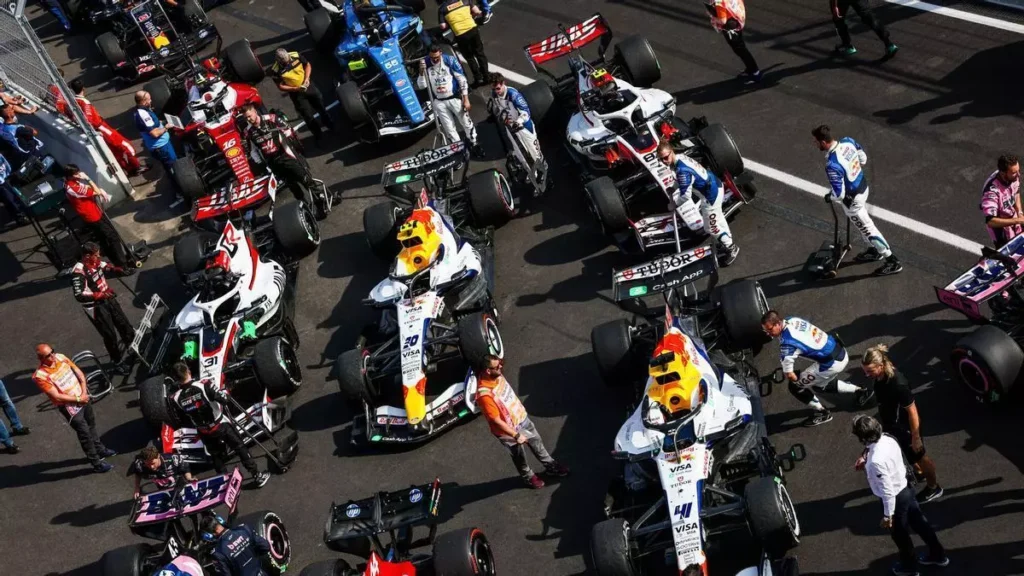
The 2025 comparison was strengthened by revenue connected to the release of the Formula 1 film during the second quarter of that year. No comparable film-related payment was recognized in the same period of 2026, adding another negative factor to the annual comparison. Contractual fee increases and income from new or renewed sponsors partially compensated for the missing races and film revenue. The broader figures consequently reflect an unusual calendar and several one-time effects rather than a uniform decline across every Formula 1 business line.
Reduced activity also lowered some of the championship’s expenses. Payments to the teams fell from $513 million to $316 million during the second quarter because distributions are recognized in proportion to the race calendar. Across the first half, team payments decreased from $627 million to $500 million. Travel, freight and hospitality costs also declined, although selling, general and administrative expenses increased because of higher personnel and information technology spending.
Liberty Media maintained that demand for Formula 1 remains strong despite the revenue contraction. The company reported higher attendance, television audiences and digital engagement during the season to date. Viewing hours through its partnership with Apple increased 13% from the previous year, while recurring races continued to attract strong hospitality demand. Formula 1 also signed a 10-year extension for its Las Vegas event and renewed commercial agreements with broadcast and technical partners.
Formula 1 President and CEO Stefano Domenicali said the championship’s competitive racing and developing storylines continued to strengthen fan engagement. The organization has emphasized its ability to adapt the calendar, with the relocation of the Bahrain event to Malaysia serving as the most visible example. Liberty Media President and CEO Derek Chang similarly described the group’s brands as resilient amid global uncertainty. Both executives presented the decline as a temporary consequence of event scheduling rather than evidence of weakening commercial interest.
The results nevertheless demonstrate how exposed Formula 1’s financial model remains to geopolitical disruption. Hosting fees, media recognition, sponsorship and premium experiences depend on races taking place according to schedule, particularly in markets that pay heavily for their position on the calendar. Liberty Media has acknowledged that additional changes could still be required before the season ends. Any further disruption involving Qatar, Abu Dhabi or other scheduled venues could alter revenue and costs during the second half of 2026.
Hechos que no se doblan. / Facts that do not bend.