

 Phoenix 24
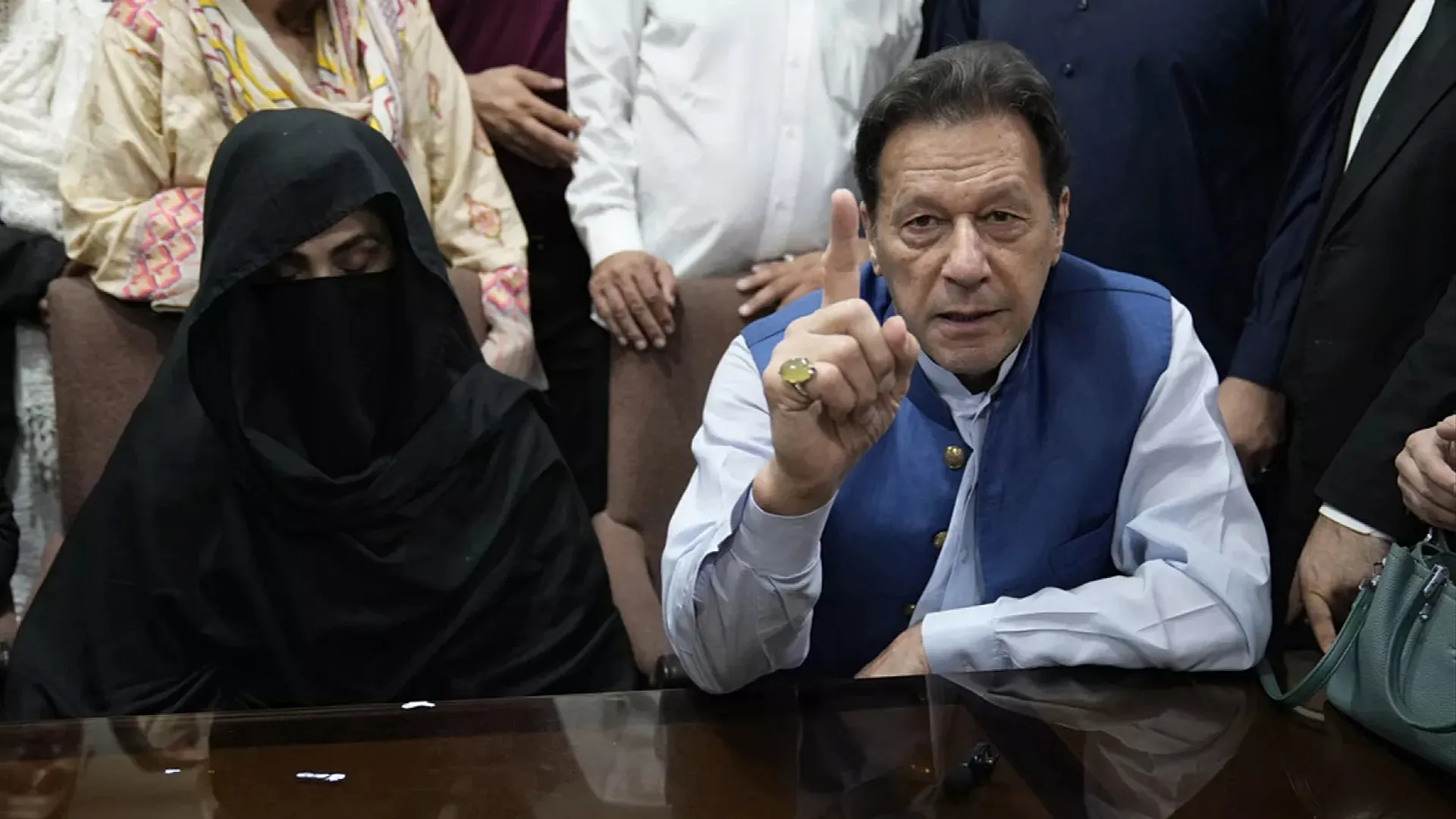
A court ruling delivers a decisive legal blow to one of Pakistan’s most polarizing political figures as national tensions deepen.
Islamabad, December 2025.
A Pakistani court has sentenced former prime minister Imran Khan and his wife, Bushra Bibi, to 17 years in prison each, marking one of the most consequential judicial decisions in the country’s recent political history. The verdict, delivered after months of proceedings, centers on corruption-related offenses tied to the handling of valuable gifts received during Khan’s time in office. The ruling immediately intensified political tensions across Pakistan, where Khan remains a deeply divisive figure with a loyal support base and determined opponents.
According to court findings, the case revolved around allegations that luxury items obtained while Khan served as head of government were improperly declared and later acquired under conditions that violated state regulations. Prosecutors argued that the process resulted in financial loss to the public treasury and breached legal obligations imposed on senior officials. The court accepted these arguments, concluding that both Khan and his wife bore responsibility for the irregularities and deserved substantial custodial sentences.
Imran Khan, a former international cricket star who rose to power in 2018 on an anti corruption platform, has consistently denied the accusations. Throughout the trial, his legal team maintained that the charges were politically motivated and part of a broader effort to marginalize him after his removal from office through a parliamentary no confidence vote in 2022. Bushra Bibi, who had largely remained out of public view before Khan’s political ascent, has also rejected the allegations, asserting that the case was built on selective interpretation of administrative rules.
The sentencing adds to a growing list of legal setbacks for Khan, who has faced multiple convictions and ongoing investigations since his fall from power. Already incarcerated in connection with other cases, the former prime minister now confronts a prolonged period behind bars that could effectively end his immediate political ambitions. His party, Pakistan Tehreek e Insaf, condemned the verdict as unjust and vowed to challenge it in higher courts, calling for supporters to remain mobilized but disciplined in their response.
Government officials defended the ruling as evidence that accountability applies equally to all, regardless of status or popularity. They argued that the judiciary acted independently and in accordance with the law, emphasizing that corruption cases must be adjudicated without political considerations. The administration has repeatedly dismissed claims of persecution, framing the legal actions against Khan as the result of due process rather than political vendetta.
The reaction on the streets and across social platforms was swift and polarized. Supporters of Khan described the sentence as a dark moment for democracy, warning that it could further erode public trust in state institutions. Critics countered that the verdict underscored the necessity of enforcing rules governing public office and state assets, particularly in a country where corruption has long undermined governance and economic stability.
Beyond domestic politics, the ruling has drawn attention from international observers who see the case as emblematic of Pakistan’s turbulent civil military and judicial dynamics. Analysts note that high profile convictions of former leaders have historically reshaped the country’s political landscape, sometimes fueling unrest and sometimes reinforcing institutional authority. The long term impact of this verdict will depend on how appeals unfold and whether political actors choose confrontation or accommodation in its aftermath.
The legal fate of Bushra Bibi has also become a focal point, highlighting how family members of political leaders are increasingly drawn into judicial battles. Her sentence reinforces the court’s determination to treat the case as a joint enterprise rather than an individual failing, a stance that has intensified debate about proportionality and responsibility under Pakistani law.
As Pakistan grapples with economic pressures, security challenges and an increasingly fragmented political environment, the sentencing of Imran Khan and his wife stands as a defining moment. It signals a hardening of legal outcomes in high stakes political cases and sets the stage for further confrontation between institutions and popular political movements. Whether the decision brings closure or deepens instability remains uncertain, but its significance for Pakistan’s political trajectory is unmistakable.
La verdad es estructura, no ruido.
Truth is structure, not noise.