

 Phoenix 24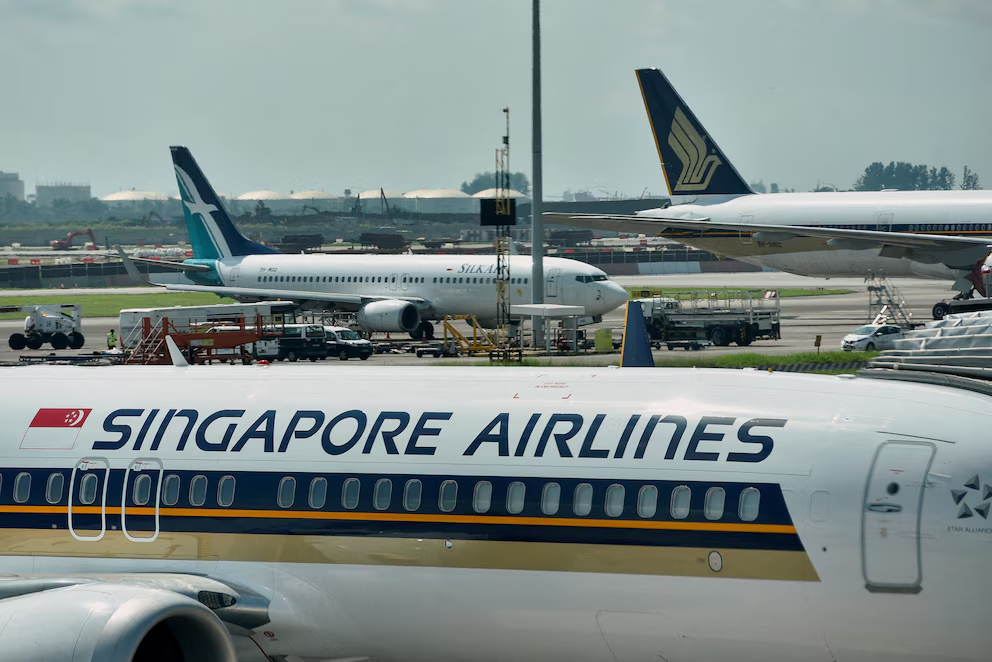
Private suites now combine connectivity, automation and personalized entertainment.
ABU DHABI, United Arab Emirates | June 2026
First-class air travel has evolved from a larger seat and premium dining into a highly personalized technological environment capable of costing more than $30,000 for a one-way journey. Airlines including Etihad Airways, Singapore Airlines and Qatar Airways are competing through private suites, high-speed internet, large screens, automated controls and spaces designed for sleeping, working and socializing. On long-haul flights lasting 14 or 16 hours, passengers are increasingly paying for control over every part of the experience. The aircraft cabin is being transformed into a combination of hotel room, office and private cinema.
The most expensive fares depend on the route, date, demand and specific aircraft assigned to the flight. A premium ticket can rise dramatically when travel involves a private suite, limited cabin capacity or one of the longest international routes. Prices near $30,000 are not standard across every service, but they illustrate the financial ceiling reached by aviation’s most exclusive products. At that level, airlines must offer far more than additional legroom.
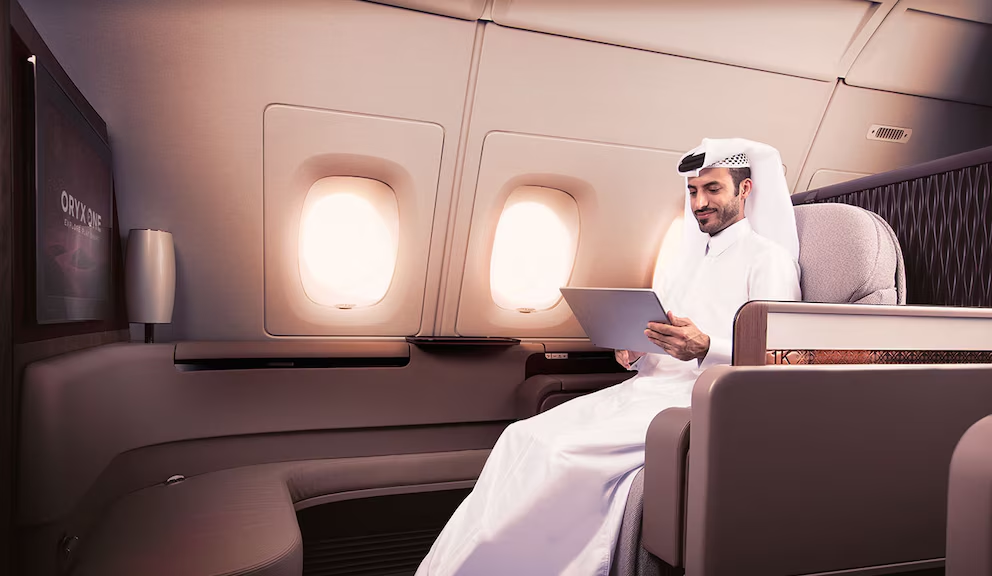
Etihad represents one of the clearest examples of this transformation. Its Airbus A380 includes First Apartments with privacy doors, lie-flat beds, personal storage and dedicated service. The aircraft also offers The Residence, a three-room private space containing a living area, separate bedroom and ensuite shower. This product moves beyond conventional first class and approaches the experience of a private apartment in the sky.
Technology supports nearly every element of the Etihad experience. Passengers can use touch controls to manage seating positions, entertainment and lighting while remaining inside an enclosed personal space. USB ports, electrical outlets and wireless connectivity allow phones, tablets and laptops to remain active throughout the flight. On selected aircraft, large high-definition screens turn the suite into a private viewing room.
Unlimited high-speed internet has become one of the most important premium features. Wealthy leisure travelers may value uninterrupted streaming and communication, while executives increasingly expect to join meetings, respond to messages and access cloud-based documents during the journey. Reliable WiFi reduces the sense that a long flight represents lost working time. Connectivity is now marketed alongside bedding, food and personal service as a fundamental component of luxury.
Singapore Airlines follows a different design philosophy through its A380 Suites. Each passenger receives a private room with a separate leather seat and bed rather than a seat that simply converts into a sleeping surface. The chair can swivel and recline, while electronic blinds and a sliding door increase privacy. Travelers occupying compatible adjoining suites can lower the central divider and create a double bed.
Entertainment is centered around a 32-inch high-definition touchscreen, one of the largest personal monitors offered in commercial aviation. Noise-canceling headphones and the KrisWorld system allow passengers to build a highly individualized media experience. Logged-in customers can preserve playlists and entertainment preferences for later flights. The cabin therefore remembers elements of the traveler’s digital behavior in the same way as a home streaming service.
Automation is deliberately subtle in Singapore’s product. The passenger does not need to understand the machinery controlling the suite, but can adjust the environment through intuitive controls. Lighting, window blinds and entertainment respond without requiring assistance from the crew. The objective is to make complex systems feel effortless rather than visibly technical.
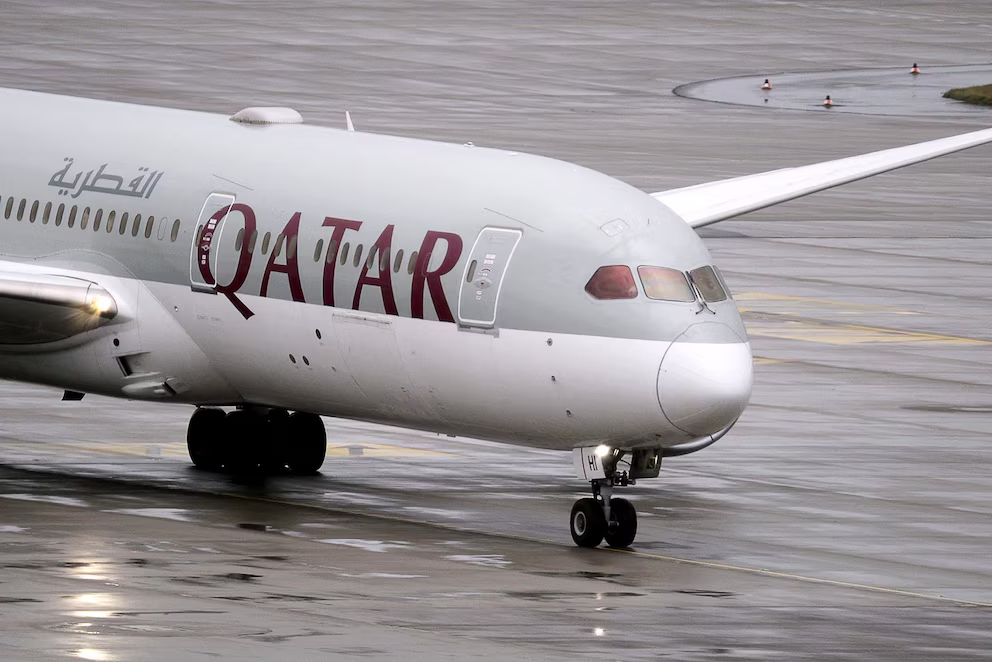
Qatar Airways combines first-class seating on its A380 with a strong emphasis on entertainment and shared space. Its premium passengers receive 26-inch screens, fully flat beds, adjustable lighting and access to the Oryx One platform. The system offers thousands of movies, television programs, music selections, documentaries and games. Bluetooth compatibility allows travelers to use their own wireless headphones on supported services.
The airline’s onboard lounge provides a different form of luxury. First and business-class passengers can leave their seats and enter a social area with sofas, drinks, snacks and dedicated charging stations. The space resembles a hotel bar more than a traditional aircraft galley. It gives travelers the option to meet, relax or change environment during an extended flight.
Starlink connectivity has further strengthened Qatar Airways’ premium offering on equipped aircraft. Low-latency satellite internet can support streaming, gaming and video communication with fewer interruptions than older onboard systems. Free and unlimited access changes the way passengers use flight time. The cabin becomes a continuously connected extension of their personal digital environment.
Large screens and fast internet receive much of the attention, but quieter technologies may have a greater impact on comfort. Modern premium seats use electronic controls for reclining, lumbar support, massage functions and conversion into beds. Cabin lighting can be adjusted by zone, while noise-reduction systems reduce the constant mechanical sound of flight. These improvements are designed to protect sleep and reduce fatigue across multiple time zones.
Privacy has also become increasingly automated. Sliding doors, movable dividers and electronically controlled blinds allow passengers to decide how much contact they want with the surrounding cabin. Couples may open adjoining spaces, while individual travelers can remain almost completely separated from others. The ability to change the layout gives one cabin several possible functions during the same journey.
The growing use of technology reflects changes in the passengers purchasing these tickets. Premium travelers are no longer impressed only by champagne, fine dining and attentive service. They expect charging options for several devices, stable connectivity and immediate control over their surroundings. Airlines must justify five-figure fares by creating an experience unavailable in business class.
Not every first-class passenger pays the full published price. Loyalty points, corporate contracts, promotional fares and upgrades can reduce the direct cost substantially. Even so, the listed price communicates exclusivity and supports the commercial position of the airline. A very small premium cabin can also generate significant revenue from a limited number of passengers.
The future of first class will likely involve even greater personalization. Airlines may use customer profiles to remember preferred lighting, meal times, entertainment and seat settings. Biometric identification could simplify access to lounges and onboard services, while improved satellite networks may make uninterrupted connectivity universal. The main challenge will be delivering these systems without making the passenger feel surrounded by unnecessary complexity.
At 40,000 feet, luxury is increasingly defined by the ability to control time, space and attention. The most expensive cabins allow travelers to work, sleep, watch films or socialize without adapting completely to the limitations of the aircraft. Technology has become the hidden structure supporting that freedom. For passengers paying up to $30,000, the journey is no longer simply transportation, but a private environment designed around them.
Luxury changes when technology makes every hour personally controllable. / El lujo cambia cuando la tecnología permite controlar personalmente cada hora.