

 Phoenix 24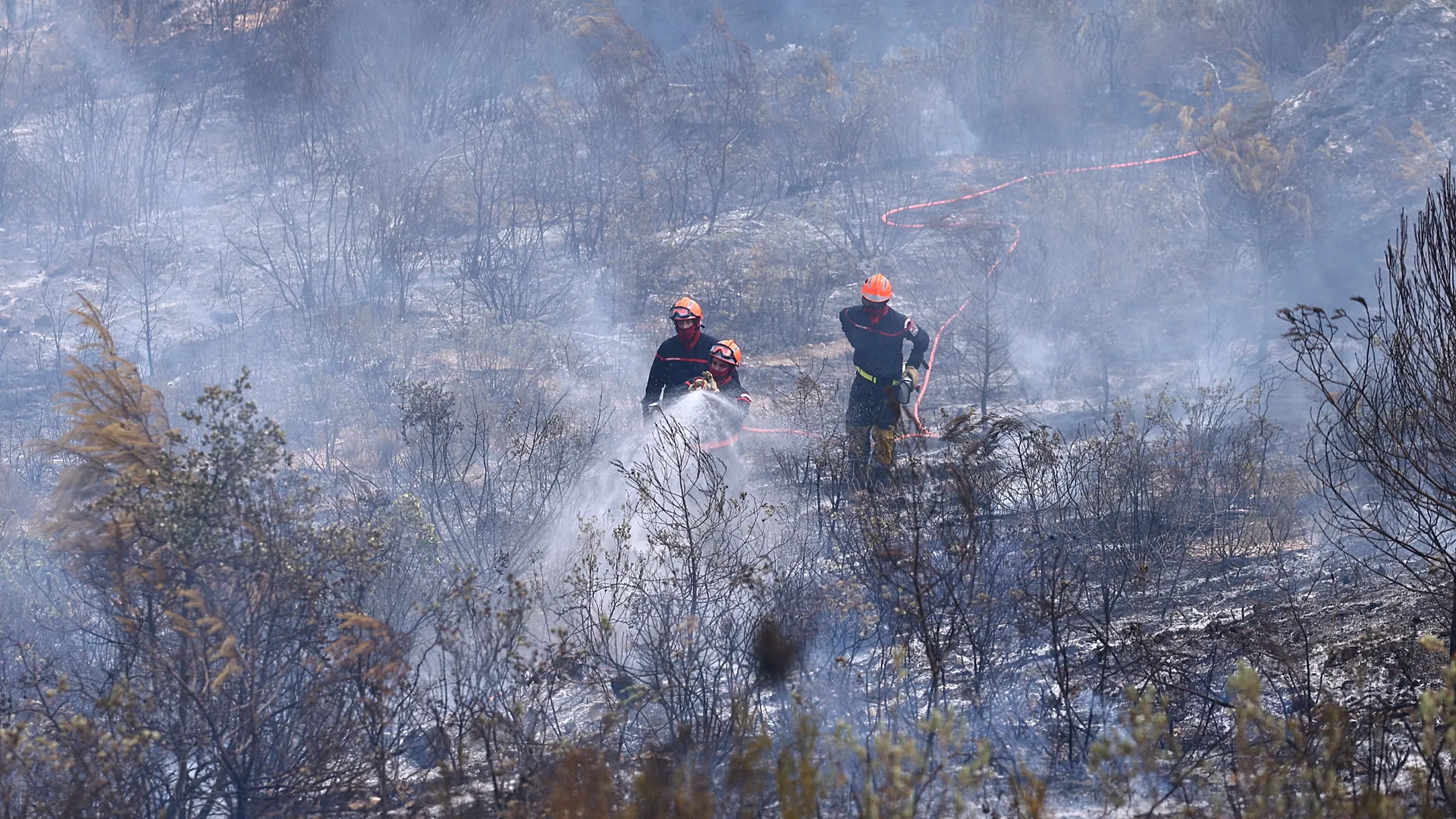
The climate crisis now has an economic balance sheet.
Brussels, August 2026
Extreme heat and wildfires could cost European Union economies approximately €180 billion in 2026, an amount equivalent to nearly 1% of the bloc’s gross domestic product. The estimate, published in a study by Triodos Bank, almost matches the 1.1% economic growth forecast for the EU this year. If the projected losses materialize, Europe’s economy could be left close to stagnation. The heatwave is no longer only an environmental and public health emergency, but a direct threat to the continent’s economic stability.
The analysis identifies four principal channels through which excessive temperatures weaken economic activity. Agriculture suffers lower crop yields, while heat stress reduces dairy production and eventually raises food prices for consumers. These combined effects could cost the European economy around 0.15% of its GDP. The burden moves from farms to food companies and ultimately to households already confronting elevated living costs.
Europe’s energy system represents another vulnerable front. High temperatures can restrict nuclear, hydroelectric and thermal generation, while also reducing the efficiency of some solar installations. Water used to cool power stations may become scarce or too warm for normal operations just as electricity demand rises because of air conditioning. These disruptions could remove another 0.12% to 0.15% from European output and increase wholesale electricity prices.
Transport networks also begin to lose capacity when heat damages roads, affects railway tracks and lowers the water levels of rivers used for freight. Disruptions across road, rail and inland waterways could subtract a further 0.15% from the economy. A localized infrastructure failure can quickly affect industries dependent on synchronized deliveries and tightly managed supply chains. In this way, a weather-related delay can develop into a broader problem involving production, distribution and prices.
The largest and most difficult loss to calculate comes from reduced labour productivity. Employee performance begins to decline when temperatures rise beyond approximately 25 or 30 degrees Celsius, with the greatest impact falling on outdoor and physically demanding occupations. Office workers are also affected because excessive heat disrupts sleep, concentration and cognitive performance. A comparative analysis cited in the study estimates that output per working hour falls by around 3% for every degree above 30 degrees maintained over several days.
France is expected to suffer the largest economic impact, although the study does not simply rank countries according to temperature. Its model considers the composition of each economy, commuting times, air-conditioning coverage, public acclimatization and the number of unusually hot days. France could lose 1.4 percentage points of growth, potentially pushing an already weak economy into a contraction of approximately 0.6%. The Netherlands could lose around 0.8 points, leaving its economy almost flat.
Spain and Italy have highly exposed workforces and have experienced numerous days of intense heat, but decades of adaptation partially reduce the damage caused by each episode. Poland has less air-conditioning coverage and limited structural acclimatization, making it potentially more vulnerable. However, its relatively cooler summer means the country could still record growth of around 2.9%. The comparison shows that economic exposure depends not only on temperature, but also on how cities, companies and institutions prepare for it.
Traditional GDP calculations do not fully capture the human consequences. The study estimates that approximately 20,400 heat-related deaths occurred in France, Germany, Spain and Italy during the June heatwave alone. Across the summer, the economic valuation of roughly 25,000 deaths in terms of years of life lost could range from €1.5 billion to €7 billion. These estimates do not reduce human life to a financial variable, but reveal how much suffering remains invisible within conventional economic measurements.
Wildfires had burned more than 490,000 hectares across the European Union by the end of the previous week. That area vastly exceeds the 20-year average of 197,000 hectares, while France had already broken its national record. The destruction of forests, soils, biodiversity and carbon absorption capacity could add between €100 million and €4.6 billion to the overall losses. Part of this damage will persist for years, even after homes, roads and power networks have been rebuilt.
Adaptation measures could reduce productivity losses by around 40%, but they would not eliminate them. Improving buildings, expanding urban green spaces, adjusting working hours and strengthening health systems could contain part of the impact. The study’s authors argue that Europe must also pursue stronger emissions reductions to prevent every summer from requiring more expensive defensive measures. Adaptation without mitigation would turn climate policy into a permanent race against increasingly severe damage.
Extreme heat is no longer a distant threat or an unusual seasonal event. It is already changing agriculture, energy production, transportation, health and the performance of millions of workers. The projected €180 billion loss does not merely describe the price of one oppressive summer, but the cost of maintaining an economy designed for a climate that is disappearing. Europe can continue calculating the damage after every heatwave, or begin restructuring before the next one arrives.
Truth is structure, not noise. / La verdad es estructura, no ruido.