

 Mario López Ayala, PhD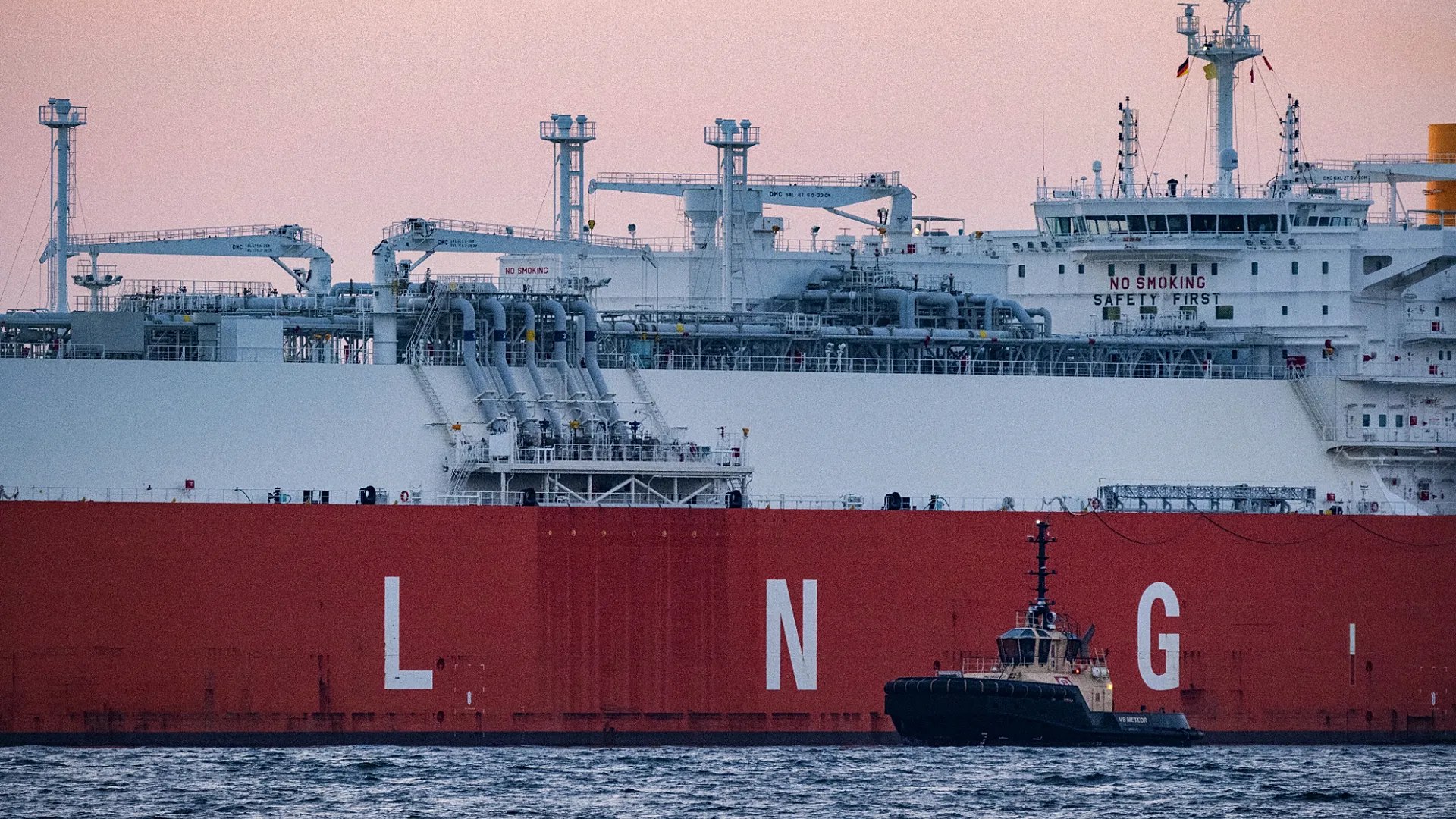
What seemed impossible only a year ago has now become the central riddle of Europe’s energy markets.
Brussels, December 2025
Natural gas prices across Europe continue to decline even as a cold winter grips the continent, defying the traditional logic that low temperatures invariably push demand upward and tighten supply. This counterintuitive trend reflects a structural shift in Europe’s energy architecture, one driven by storage strategy, diversified imports and a recalibrated geopolitical landscape after years of volatility. What once functioned as a predictable seasonal cycle has morphed into a complex interplay of policy, infrastructure and global market behaviour, reshaping the way Europe navigates winter risk.
The foundation of this phenomenon lies in Europe’s unusually high storage levels. Energy regulators across the continent implemented aggressive injection policies months ahead of schedule, filling reserves beyond historical averages. Analysts at the International Energy Agency highlight that storage stability has become Europe’s principal buffer against price pressure, enabling the continent to withstand sudden consumption spikes without triggering speculative surges. In contrast with previous winters when low reserves amplified vulnerability, the current landscape demonstrates how strategic planning can neutralise seasonal volatility that once seemed unavoidable.
Complementing this storage cushion is a diversified import portfolio. Following the disruptions of recent years, Europe intensified its reliance on liquefied natural gas sourced from multiple regions, including the United States and Qatar. Reuters correspondents covering commodity markets note that LNG shipments have flowed steadily toward European terminals, widening supply routes that reduce dependence on any single corridor. In parallel, Asian markets have experienced moderated consumption due to milder weather patterns and industrial slowdowns, freeing additional LNG volumes for Europe. This dynamic has exerted downward pressure on prices even as demand rises domestically.
A third pillar shaping the current trend is the evolution of Europe’s energy transition. Though renewable penetration has not eliminated the continent’s reliance on gas, the combination of expanded wind capacity, improved grid efficiency and refined demand-response mechanisms has softened consumption spikes. The OECD’s economic unit has observed that industrial sectors in Western Europe have adopted more flexible energy-use strategies, adjusting output in response to market signals. Such behavioural shifts help dampen peak demand, creating a smoother consumption curve that further stabilises prices. In practical terms, the system has grown more resilient not because energy needs have diminished, but because the structure for managing them has matured.
Still, geopolitical tensions remain an influential backdrop. While Russian gas flows through pipelines are a fraction of their pre-conflict volumes, European policymakers have adapted to this new reality by locking in long-term LNG contracts and accelerating interconnection projects. Security analysts following the European Commission’s energy framework argue that the continent’s current position reflects not just diversification but an ideological pivot: the political cost of vulnerability has grown too high, and energy independence has become a strategic objective intertwined with security doctrine. This recalibration makes temporary cold spells less capable of shaking market confidence, a factor that traders now price into their expectations.
At the same time, the global commodities environment plays a subtle but powerful role. Financial analysts from Asia’s major market desks have noted that speculative activity in gas futures has cooled markedly compared with previous winters. With storage full and supply routes diversified, the opportunity for rapid price escalation has diminished, reducing volatility in both spot and forward markets. The South China Morning Post recently emphasised that Europe’s strengthened position sends signals across the global supply chain, conditioning seller behaviour and tempering bullish positioning that once fueled dramatic winter surges.
Despite this more stable outlook, risks remain. A prolonged cold wave, unexpected infrastructure disruption or sudden shifts in global LNG competition could reintroduce turbulence. Energy experts across Europe also caution that high storage levels, while reassuring, must be replenished later at market prices that may not remain favourable. The IEA warns that favourable conditions today do not guarantee a repeat next year, particularly if Asian demand rebounds or geopolitical tensions tighten supply margins. Europe’s success this winter therefore provides stability without complacency.
What stands out in the current moment is how Europe transformed its energy vulnerability into a strategic recalibration. The continent entered winter not hoping for mild temperatures but preparing for adverse ones, and this posture has yielded resilience that was unthinkable only a few winters ago. Yet the underlying lesson is more nuanced: gas prices are falling not because Europe needs less energy, but because Europe has built an architecture capable of absorbing shocks. The paradox of low prices in a cold winter is, en esencia, a portrait of a system that has learned from crisis and adapted with surprising agility.
Beyond the technical and economic explanations, the trend underscores the political implications of energy security. With elections approaching in several European countries, leaders are keen to showcase stability in utility costs, framing the energy market’s behaviour as proof of responsible governance. Whether this narrative holds throughout the season will depend on weather patterns, continued LNG availability and the durability of Europe’s infrastructural upgrades. For now, the evidence suggests that the continent’s energy system has entered a new era, one where winter no longer dictates the rhythm of the market to the degree it once did.
Beyond the news, the pattern. / Beyond the news, the pattern.