

 Phoenix 24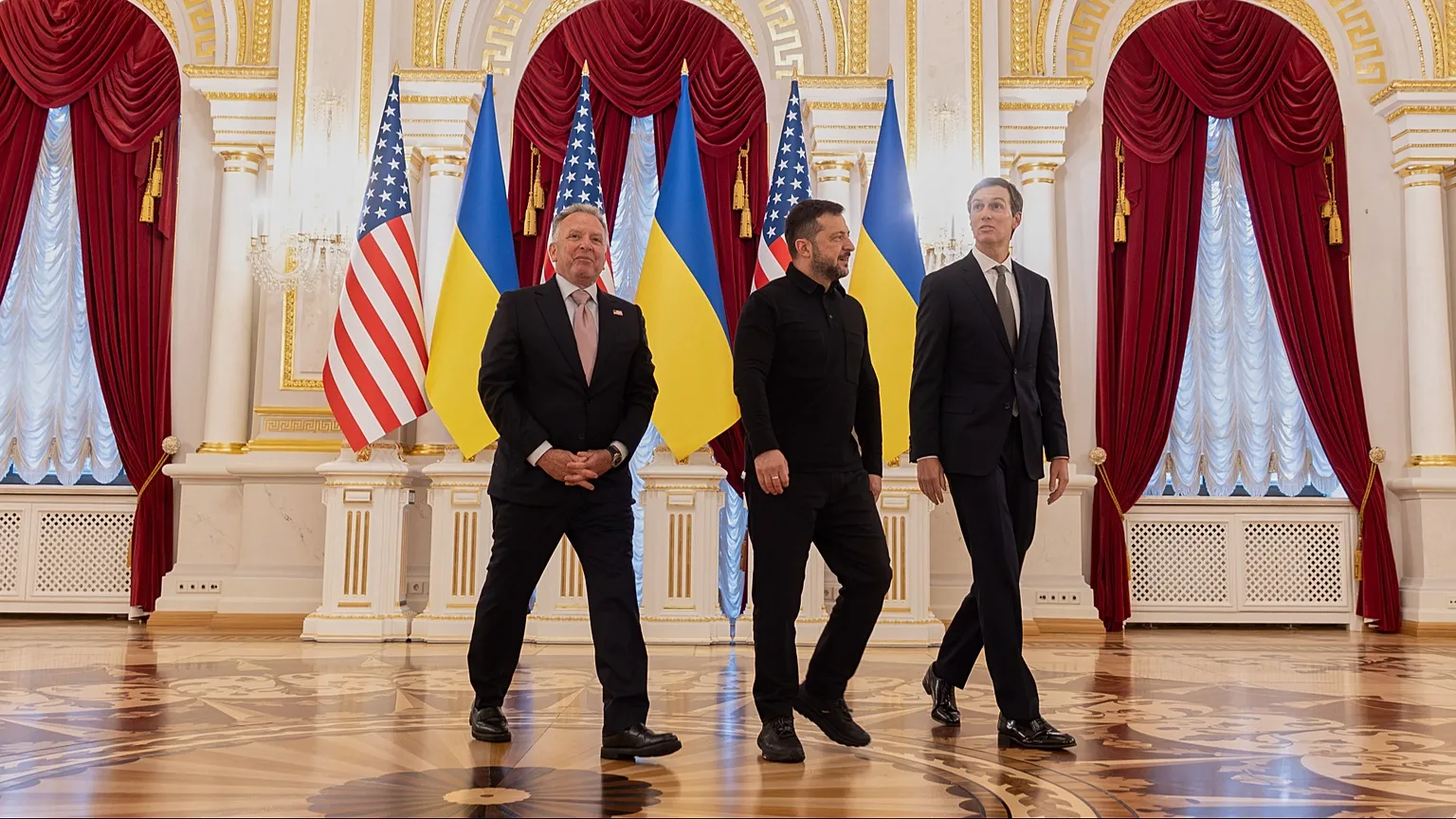
The meeting aims to narrow allied differences before Washington advances another proposal to end the war.
Miami, United States
Senior Ukrainian and European officials are traveling to Miami for a new round of U.S.-led talks focused on possible paths toward ending the war in Ukraine. The discussions are expected to bring together American envoys Steve Witkoff and Jared Kushner with a Ukrainian delegation that includes senior political, intelligence and negotiating figures.
Representatives from the United Kingdom, France, Germany, NATO and the European Union have also been invited, giving the meeting a broader transatlantic dimension. The central objective is to develop a more unified position among Washington, Kyiv and European governments before any new diplomatic approach is presented to Moscow.
The talks come at a difficult moment. Russian strikes have intensified across Ukraine, killing dozens of people in recent days and placing additional pressure on Kyiv to secure stronger security guarantees. At the same time, U.S. Secretary of State Marco Rubio has described the conflict as a dangerous stalemate, while the Kremlin has publicly agreed that the war has reached an impasse that requires diplomacy.
Several issues are expected to dominate the Miami discussions. Security guarantees for Ukraine remain central, particularly the question of what military, financial and political commitments Western governments would provide under any settlement. Post-war reconstruction, energy security and the long-term economic cost of the conflict are also likely to feature prominently.
Washington is reportedly seeking to consolidate ideas previously discussed separately with Russian and Ukrainian representatives into a single framework. That effort is politically sensitive because any proposal acceptable to Moscow may involve terms that Kyiv or European governments consider strategically dangerous, particularly if territorial concessions or limits on Ukraine’s future security arrangements are involved.
European participation therefore matters. Governments across the continent have repeatedly insisted that any settlement must not create conditions for a future Russian attack or weaken the principle that borders cannot be changed by force. At the same time, several European economies continue to bear significant costs from higher energy prices, defense spending and the prolonged instability created by the war.
The Miami talks are not expected to produce an immediate peace agreement. Their importance lies instead in whether the United States, Ukraine and Europe can reduce their own differences before engaging Russia more directly. Without that internal alignment, any broader negotiation risks exposing divisions that Moscow could exploit.
The diplomatic challenge is becoming increasingly clear. Ending the war requires more than persuading Russia and Ukraine to stop fighting; it also requires the Western coalition supporting Kyiv to agree on what an acceptable peace would actually look like.
Before a peace plan can reach Moscow, Washington, Kyiv and Europe must first decide whether they are negotiating for the same peace.