

 Phoenix 24
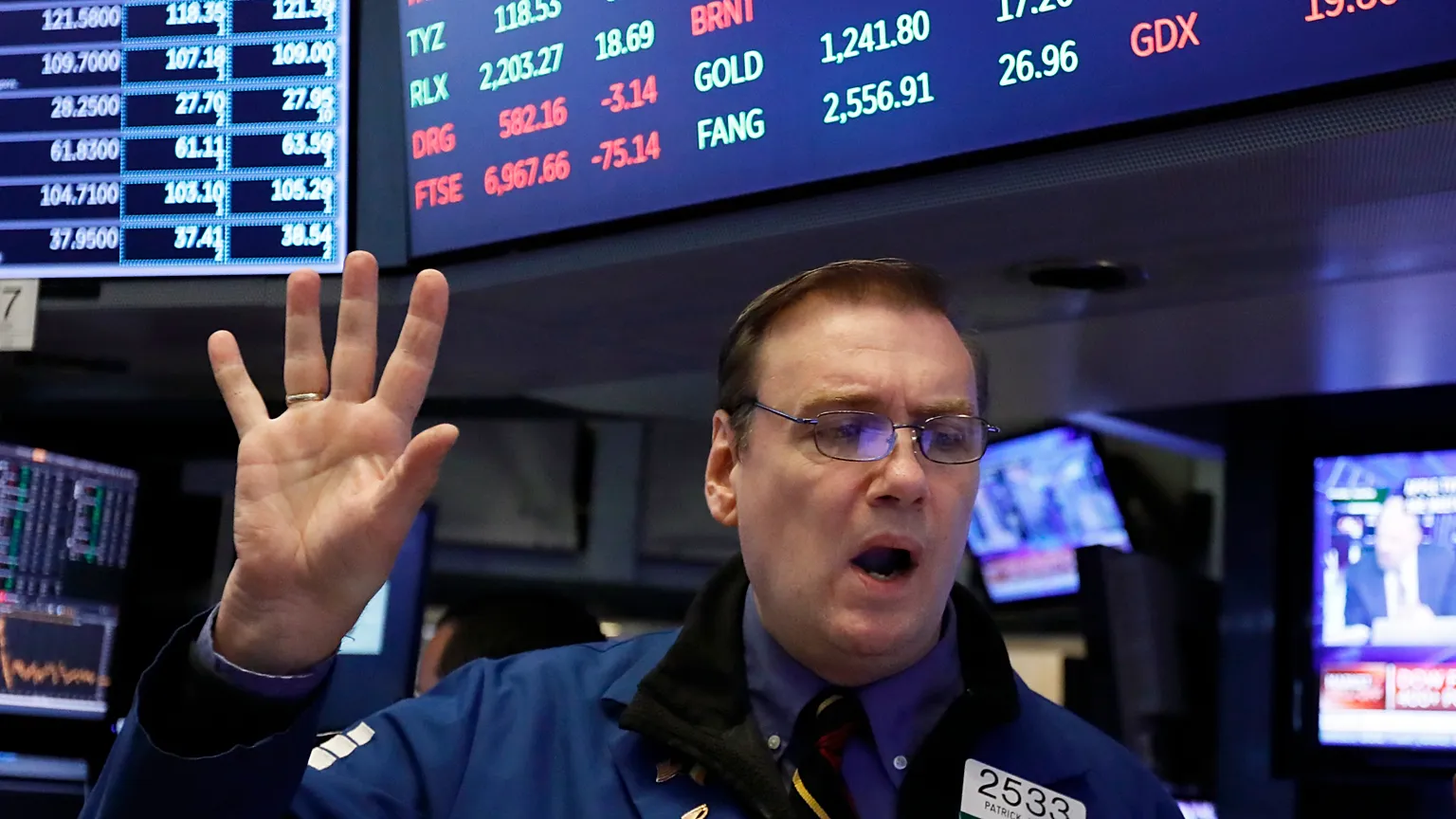
Markets panic in layers before policy responds.
Brussels, March 2026
European equities opened sharply lower on Monday as investors absorbed the weekend escalation around Iran, while key Gulf exchanges remained shut or heavily disrupted, turning what might have been a regional security shock into a synchronized stress test for finance, energy, shipping, and risk sentiment. Euronews reported steep early declines across major European indices alongside rising crude and precious metals, framing the session as a broad flight from risk rather than a sector specific correction.
The market pattern was not random. In Euronews reporting, the Euro Stoxx 50 fell about 2% at the open and the broader Stoxx 600 dropped roughly 1.8%, while Germany, France, Italy, Spain, and the Netherlands all traded in negative territory as investors reacted to expanding conflict and disruption around the Strait of Hormuz. The article also pointed to weaker US futures and losses in Japan, which matters because it confirms a cross regional transmission mechanism: energy corridor risk in the Gulf was being repriced immediately in Europe and Asia before policymakers could impose any coherent narrative on the event.
International financial coverage reinforced that reading by reporting Europe’s biggest one day equity decline in roughly three months, with the STOXX 600 closing down 1.7% after having reached a record high in the prior session. That reversal is strategically important because it shows how quickly geopolitical shocks can erase momentum in markets that had been trading on very different assumptions only days earlier. Reports also noted a spike in European volatility gauges, which suggests this was not just profit taking but a measurable rise in perceived uncertainty.
What makes this episode more than a standard war scare is the Gulf market response. Coverage indicated that regulators in the United Arab Emirates kept the Abu Dhabi and Dubai exchanges closed for two days, an unusually forceful move designed to contain instability after the regional attacks. In parallel, Qatar’s benchmark index fell sharply, with banking and transport names among the hardest hit. When one financial center suspends trading and another reprices violently, the region is no longer signaling confidence, it is buying time.
That distinction matters because markets do not only process facts, they process market access. A closure in major Gulf exchanges changes the information environment for global investors by reducing price discovery right when risk is rising. In practical terms, that forces more of the geopolitical repricing into open venues such as Europe, US futures, commodities, shipping rates, and listed multinational sectors. The result is a distorted but revealing picture: Europe can trade the fear continuously, while parts of the Gulf pause the screen to prevent panic from becoming a self reinforcing liquidation event.
Sector rotation also exposed how conflict risk was being interpreted at a systems level. Financial reporting showed that European banks took some of the heaviest losses, while travel and leisure stocks were hit by airspace closures and suspended Middle East routes. At the same time, energy shares strengthened and some shipping names advanced as higher oil prices and tighter vessel capacity lifted expectations for freight rates. In other words, investors were not simply selling everything. They were reallocating toward firms more likely to benefit from disruption while punishing those most exposed to mobility friction and financing stress.
Energy was the central transmission channel. Euronews highlighted early gains in crude and precious metals as safe haven flows accelerated, while broader coverage described sharp moves in oil and European natural gas amid supply fears. This sequence follows a familiar pattern in crisis finance, but the speed is notable: commodity volatility moved in tandem with equity repricing, rather than after it, suggesting that markets were treating Gulf escalation as an immediate infrastructure risk instead of a distant diplomatic confrontation.
There is also a deeper institutional signal in the Gulf business reaction. International coverage described broader regional disruption affecting logistics, airports, and commercial activity, with analysts warning that elevated oil prices may cushion producers fiscally while still pressuring trade, tourism, and business confidence, especially in highly connected hubs. That split outcome is central to understanding the next phase. Higher hydrocarbons can stabilize public finances in producer states, yet the same shock can simultaneously damage the service and logistics ecosystems that made parts of the Gulf indispensable to global capital and transit.
For Phoenix24, the structural takeaway is clear. This is not only a story of falling European stocks or shuttered Gulf exchanges. It is a live demonstration of how modern conflict spills into markets through corridor risk, trading access, and sector specific exposure long before formal policy responses mature. Europe repriced the shock in public, the Gulf contained it through selective closure, and both reactions together reveal the same underlying truth: when war pressure reaches energy routes and commercial hubs, finance becomes an early warning system, not just a scoreboard.
Más allá de la noticia, el patrón. / Beyond the news, the pattern.