

 Phoenix 24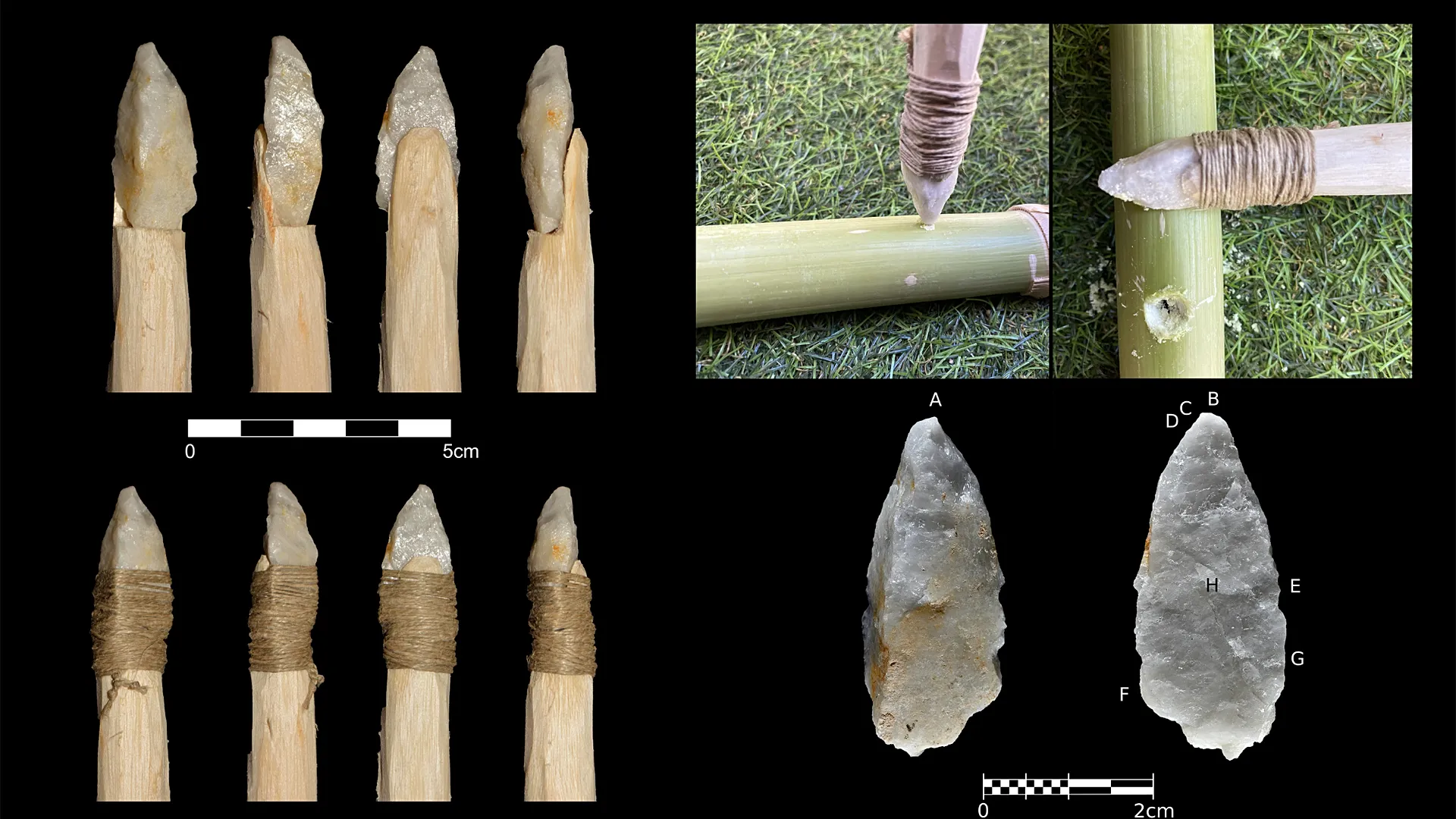
When everyday tools evolve, they reveal deep shifts in human cognition and cultural organization.
Xi’an, January 27, 2026. Archaeological research has revealed that human populations living in what is now central China were producing stone tools fitted with handles tens of thousands of years earlier than previously thought. The findings indicate that these communities manufactured and used hafted tools between approximately 160,000 and 72,000 years ago, challenging long standing assumptions about the pace and geography of technological innovation during the Middle and Late Pleistocene.
The discovery is based on the analysis of thousands of stone artifacts recovered from a site near the Danjiang River. Researchers identified microscopic wear patterns and residue traces consistent with deliberate attachment of stone implements to organic handles made from wood, plant fibers or animal materials. In some cases, evidence suggests the use of natural adhesives, indicating a sophisticated understanding of material properties and tool performance.
Unlike simple stone flakes, these tools show signs of planning and standardization. The assemblage includes scrapers, pointed implements and notched tools, each adapted for specific tasks such as cutting, piercing and processing plant matter. This diversity suggests that tool use was integrated into daily life rather than restricted to occasional or specialized activities, reflecting a broad technological repertoire.
The long chronological span of the site indicates that hafting techniques were not isolated experiments but part of a sustained cultural tradition. Knowledge of how to manufacture and maintain these tools appears to have been transmitted across generations, implying social learning systems capable of preserving complex skills over long periods of time. This continuity places central China firmly within broader narratives of cumulative cultural evolution.
Hafted tools represent a major step in technological development because they improve efficiency, leverage and control. Attaching a stone edge to a handle requires foresight, as the tool must be conceived as a composite object rather than a single piece. The presence of multiple attachment methods further suggests experimentation and adaptation, hallmarks of advanced problem solving behavior.
These findings also contribute to ongoing debates about the global distribution of early technological complexity. While hafted tools have been documented in parts of Africa and Europe, evidence from East Asia has been more limited. The new data from central China demonstrate that similar levels of innovation emerged independently or in parallel, underscoring the diversity of pathways through which human technology evolved.
Environmental context adds another layer to the interpretation. The period during which these tools were produced coincided with significant climatic fluctuations, requiring flexible subsistence strategies. The durability and versatility of hafted tools would have provided clear advantages in adapting to changing landscapes and resource availability, supporting long term occupation of the region.
The choice of raw materials also reflects technical skill. Many of the tools were made from quartz, a material that fractures unpredictably and is difficult to shape. Successfully producing standardized implements from such stone indicates careful control of knapping techniques and a deep familiarity with local resources.
Beyond their practical function, the tools offer insight into cognitive development. Designing composite tools involves abstract thinking, planning for future use and integrating multiple components into a coherent system. These abilities are central to discussions about when modern human behavior emerged and how it manifested across different populations.
The discoveries in central China therefore reshape understandings of prehistoric innovation, highlighting the role of Asian populations in the broader story of human technological evolution. Rather than lagging behind other regions, these communities demonstrate comparable ingenuity and adaptability.
As further excavations and comparative studies continue, researchers expect to refine timelines and explore connections between regions. Each new piece of evidence adds depth to the picture of early human life, showing that technological creativity was widespread and deeply rooted in everyday survival.
Behind every data point, there is an intention. Behind every silence, a structure.
Detrás de cada dato, hay una intención. Detrás de cada silencio, una estructura.