

 Mario López Ayala, PhD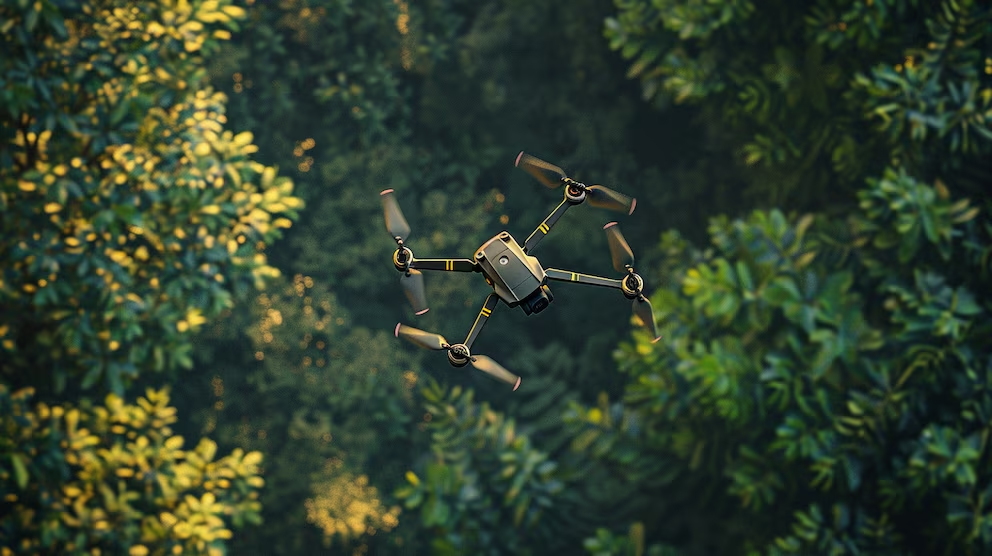
A quiet aerial revolution is unfolding over cities and suburbs, and it is redefining logistics, speed, and the future of last-mile delivery.
San Francisco, October 2025
The rise of drone delivery is no longer a futuristic concept confined to tech showcases or speculative headlines. It is now a rapidly evolving reality that is beginning to transform how goods are moved, how logistics networks operate, and how consumers experience delivery. Across North America, Europe, Asia, and increasingly Latin America, autonomous aerial vehicles are emerging as a critical link in the supply chain. They promise faster service, lower costs, reduced emissions, and access to areas where traditional delivery methods struggle to reach.

At its core, drone delivery is an elegant solution to a persistent logistical problem: the inefficiency of the last mile. The final leg of a product’s journey, from distribution center to doorstep, often accounts for more than half of total shipping costs. It is also the most complex segment, plagued by traffic congestion, human error, and unpredictable demand patterns. Drones offer a fundamentally different approach. Capable of bypassing ground traffic, they deliver small packages directly to customers in minutes, slashing delivery times and operating costs.
Major technology companies and logistics giants have invested heavily in the field. Amazon’s Prime Air program, Google’s Wing, and startups such as Zipline and Matternet have been testing and deploying autonomous drone fleets for years. These platforms are increasingly capable of autonomous navigation, collision avoidance, and dynamic routing, enabling them to operate safely in urban environments. In the United States, commercial drone deliveries have already surpassed one million successful flights, with regulatory frameworks slowly expanding to accommodate more operators.

The economic implications are significant. Industry analysts estimate that the global drone delivery market will exceed 40 billion dollars by 2030, with an annual growth rate of more than 20 percent. For logistics companies, drones represent an opportunity to reduce operational costs by up to 70 percent for certain types of deliveries. For retailers, they offer a competitive edge in an increasingly demanding market where customers expect rapid, on-demand service. And for consumers, they promise unprecedented convenience, delivering everything from groceries to prescription medications in less time than it takes to order a meal.
Latin America is now entering this aerial revolution. Pilot programs in Mexico, Brazil, and Colombia are using drones to deliver pharmaceuticals, e-commerce packages, and food orders in urban and rural areas. In regions with poor road infrastructure or heavy congestion, drones have proven particularly effective. They are not only faster but also more environmentally sustainable, producing significantly lower carbon emissions per delivery compared to motorcycles or vans.
Yet the path to mainstream adoption is not without challenges. Regulatory frameworks remain one of the biggest obstacles. Airspace is a heavily controlled environment, and integrating drones into existing aviation systems requires new rules, safety protocols, and coordination mechanisms. Many countries are still drafting comprehensive regulations to govern autonomous flight, privacy concerns, noise pollution, and liability in the event of accidents. Without clear policies, large-scale deployment remains limited.
Technical limitations also persist. Most commercial drones have a payload capacity of under five kilograms and a flight range of less than 30 kilometers. Weather conditions such as heavy rain, strong winds, or extreme heat can disrupt operations. Additionally, the infrastructure required for widespread drone delivery — including landing pads, charging stations, and secure drop-off points — is still under development. Overcoming these barriers will be essential for scaling operations beyond pilot programs and niche use cases.
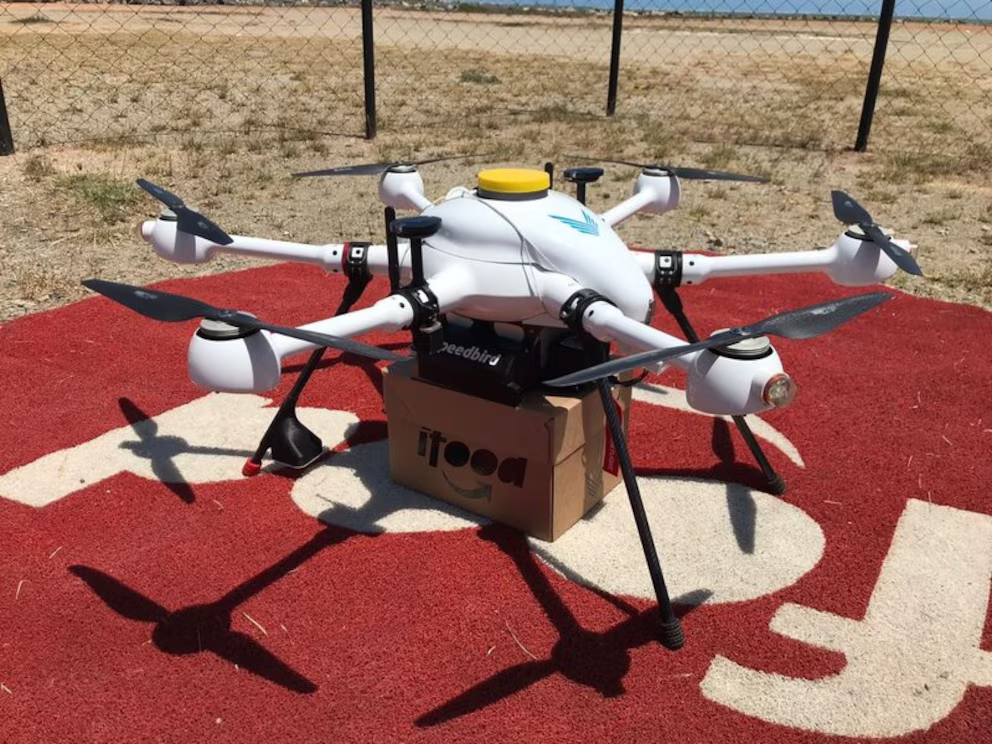
Despite these challenges, innovation continues at a rapid pace. Advances in battery technology are extending flight times, while improvements in lightweight materials are increasing payload capacity. New generations of drones are being designed with modular components that allow them to perform multiple types of deliveries. Meanwhile, artificial intelligence is enhancing route optimization, predictive maintenance, and fleet management, further increasing reliability and efficiency.
The social and economic implications of widespread drone delivery are profound. In remote or underserved areas, drones can deliver critical medical supplies, vaccines, and emergency aid where traditional infrastructure is inadequate. In densely populated cities, they can help reduce traffic congestion and pollution. For businesses, they can enable new service models such as ultra-fast grocery delivery, on-demand repair parts, and personalized logistics solutions. And for consumers, they may soon make near-instant delivery an everyday reality rather than a premium service.
The future of drone delivery will likely unfold in stages. In the short term, adoption will continue to expand in sectors where speed and precision are paramount, such as healthcare, e-commerce, and food delivery. In the medium term, integration with autonomous ground vehicles and smart city infrastructure will create seamless multimodal logistics networks. And in the long term, swarms of coordinated drones could handle a significant portion of last-mile logistics, transforming the economics of delivery on a global scale.
For now, the sight of small autonomous aircraft hovering over cityscapes remains novel. But just as smartphones transformed communication and cloud computing redefined data, drone delivery is poised to fundamentally reshape how goods move through the world. It represents not just a technological innovation but a paradigm shift in logistics — one that will make delivery faster, cleaner, and more accessible for billions of people.
Analysis that transcends power. / Análisis que trasciende al poder.