

 Phoenix 24

Optimism is fragile without real productivity.
Santo Domingo, February 2026.
Projections that place the Dominican Republic among the region’s strongest growth cases are not just a compliment, they are a structural signal. When a Harvard-affiliated analytical framework suggests a country could sustain above-average expansion over multiple years, the real question is not how flattering the headline sounds. The real question is what mechanisms could plausibly make that trajectory durable. In Latin America, where growth often arrives in bursts and then fades, any claim of sustained leadership is a credibility event as much as an economic one.
The figure circulating in regional coverage is an average real GDP growth rate near 3.82 percent per year across the 2024 to 2034 horizon, attributed to Harvard Growth Lab style projections grounded in economic complexity methods. That methodology treats growth potential as a function of capabilities embedded in the productive structure, especially what the economy can competitively export and how transferable those capabilities are into adjacent activities. In simple terms, it is not only about how much an economy produces today, but about what it knows how to produce and how easily it can climb into more sophisticated products and services tomorrow.
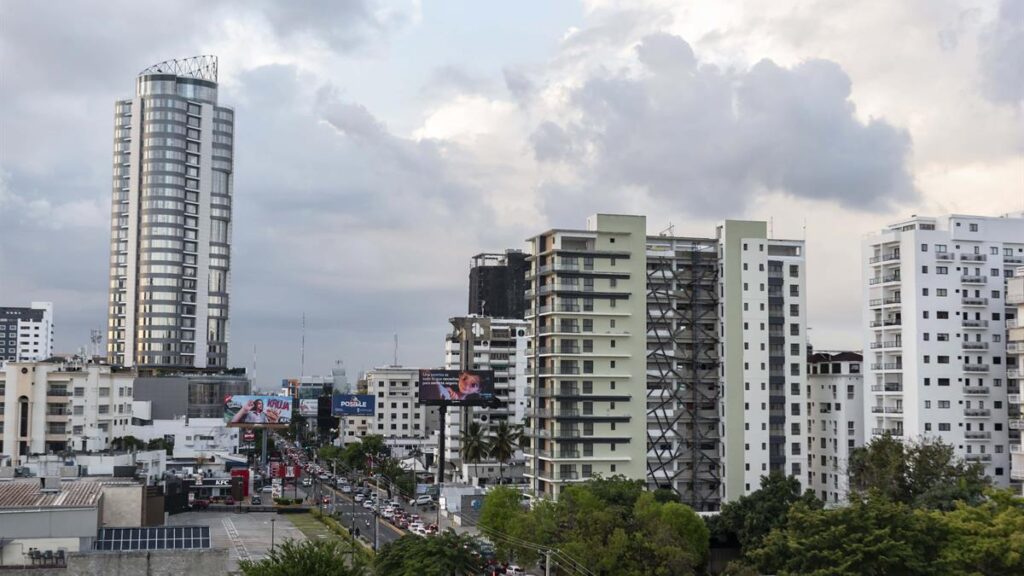
That framing matters because it changes the story from a tourism narrative to a capacity narrative. Tourism can boost growth, but it can also be volatile, sensitive to external shocks, and limited in its ability to raise economy-wide productivity unless it pulls a wider set of domestic suppliers into higher-quality standards. Economic complexity approaches, by contrast, implicitly reward diversification and learning. They suggest that countries with a broader and more sophisticated export base have better odds of sustaining growth even when global demand cools, because they can adjust what they sell and where they sell it.
There is also a power dimension that often goes unspoken. A strong medium-term forecast functions as reputational capital. It helps attract investment, lowers perceived risk, and can improve financing conditions. But it also creates a governance trap if leaders treat the forecast as proof that policy choices no longer matter. Markets and investors tend to tolerate optimistic narratives only while the underlying indicators remain consistent: productivity, employment quality, fiscal discipline, and a credible external position. If the story becomes propaganda, the same forecast that was meant to build confidence can later become a benchmark used to measure failure.
A second structural point is that medium-term projections and short-term forecasts are not the same instrument. Separate coverage from multilateral institutions has described the Dominican Republic as one of the faster-growing economies in the region in the near term as well, often citing rates in the mid-4 percent range in certain scenarios. Those estimates are cyclical and can be influenced by monetary conditions, tourism flows, and domestic demand. The 2024 to 2034 projection is a different claim entirely: it implies that the productive base can keep generating growth even as the cycle turns. Mixing the two is how policy debates become performative instead of diagnostic.
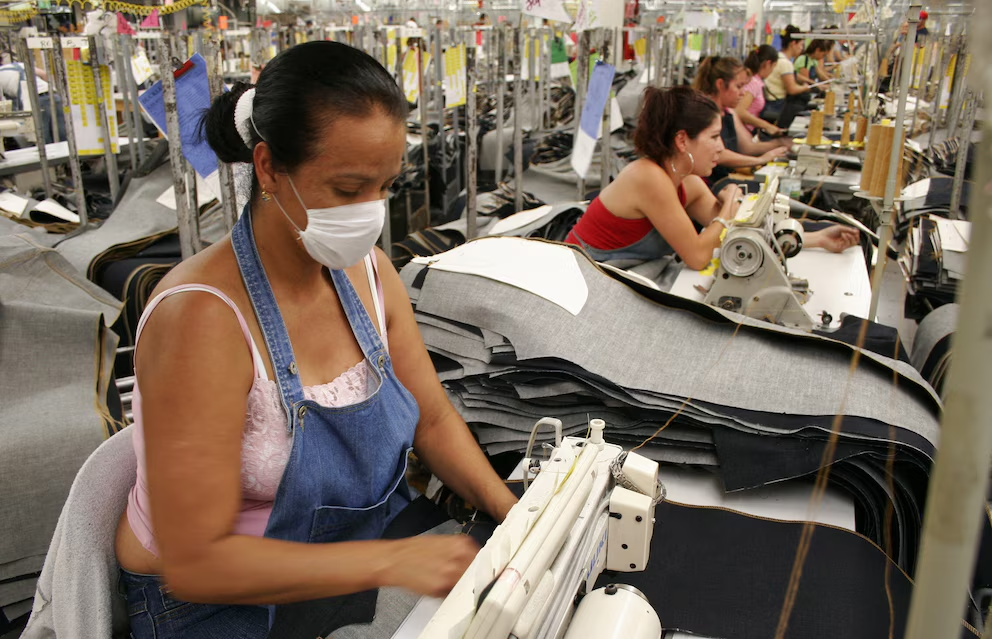
The “silence” inside these optimistic projections is usually where the real constraints live. Sustained growth requires energy reliability, logistics that reduce trade costs, education systems that produce relevant skills, and institutions capable of enforcing quality and predictability for investors. It also requires productivity gains that are broad-based rather than concentrated in a few enclaves. If wages rise without productivity, competitiveness weakens. If growth is concentrated geographically or sectorally, social tension rises and political continuity becomes harder. These are not ideological risks. They are operational risks that determine whether growth compounds or stalls.
There is also a geopolitical layer that makes capability-based growth more valuable in 2026 than it was a decade ago. Global trade is fragmenting, supply chains are being redesigned, and standards are tightening, from rules of origin to environmental compliance and digital traceability. A country that can expand its complexity can position itself as a reliable node in regional value chains. A country that grows only through consumption or a narrow services base may find itself more exposed when external conditions shift. In this environment, the Dominican Republic’s opportunity is not only to grow, but to transform what that growth is made of.
The core interpretation is therefore simple: the projection is best read as a window of opportunity, not as a guaranteed destination. If growth potential is anchored in capabilities, then the policy agenda becomes practical and measurable: strengthen human capital, cut logistics friction, stabilize energy inputs, maintain macro discipline, and deliberately upgrade the export basket. If those levers move in the right direction, the projection can translate into visible outcomes. If they do not, the projection remains an optimistic curve on paper.
La verdad es estructura, no ruido. / Truth is structure, not noise.