

 Phoenix 24
One death reshaped Genovia’s emotional center.
Los Angeles, July 2026
Disney imposed an unexpected condition before filming The Princess Diaries: Mia Thermopolis’ father had to die. In Meg Cabot’s original novels, the former prince of Genovia remains alive and plays an important role in his daughter’s discovery of her royal identity. The studio changed that structure to expand Queen Clarisse’s presence after Julie Andrews joined the production. The decision transferred much of the father’s narrative function to Mia’s grandmother.
Cabot recalled that Disney informed her directly that the character would be removed from the adaptation. Her initial reaction was confusion because Mia’s father remained important throughout the literary series. The studio then explained that the change would provide more dialogue and screen time for a renowned actress returning to the screen. Once Cabot learned that the performer was Julie Andrews, she accepted the alteration with humor.

The modification transformed Queen Clarisse from a secondary royal figure into one of the film’s central characters. With her son already dead, Clarisse becomes responsible for reconnecting Mia with Genovia and preparing her for the possibility of becoming queen. The etiquette lessons, diplomatic responsibilities and personal conflicts between grandmother and granddaughter gained narrative space. What appeared to be a single character elimination ultimately reorganized the emotional architecture of the film.
Julie Andrews brought exceptional symbolic value to the project because of her history with Disney and her international reputation. Her casting connected the production with the studio’s classical cinematic tradition while introducing her to a younger audience. Disney understood that her presence offered authority, elegance and emotional recognition beyond the written character. Expanding Clarisse’s role therefore represented both a creative decision and a strategic investment.
The change also altered Mia’s personal journey. In the film, she learns that she is the only heir to Genovia after her father’s death, turning royal succession into an inheritance connected with grief. Her relationship with Clarisse becomes the bridge between her ordinary adolescence in San Francisco and the obligations awaiting her in Europe. The grandmother is no longer simply a strict royal instructor, but the surviving connection to the paternal family Mia barely knew.

Anne Hathaway made her feature film debut as Mia and built a strong on-screen relationship with Andrews. Their chemistry helped the story balance comedy, family tension and emotional growth. The film’s appeal depended not only on the transformation of an insecure teenager into a princess, but also on the gradual trust established between the two women. Removing the father allowed that intergenerational bond to occupy the center of the adaptation.
The decision demonstrates how cinema frequently modifies literary stories to concentrate characters and emotional functions. A book series can develop numerous relationships across several volumes, while a film must establish its central conflict within a limited running time. Disney combined the father’s responsibilities with Clarisse’s role, producing a more direct narrative structure. The result differed from Cabot’s original universe but proved effective on screen.
The Princess Diaries premiered in 2001 and became a commercial success, helping establish Hathaway as a major Hollywood actress. It also introduced Andrews to a new generation and returned her to a prominent acting role after a period of limited screen appearances. A sequel followed in 2004, expanding the fictional kingdom of Genovia and reinforcing the relationship between Mia and Clarisse. Many viewers never realized that Mia’s father remained alive in the books.
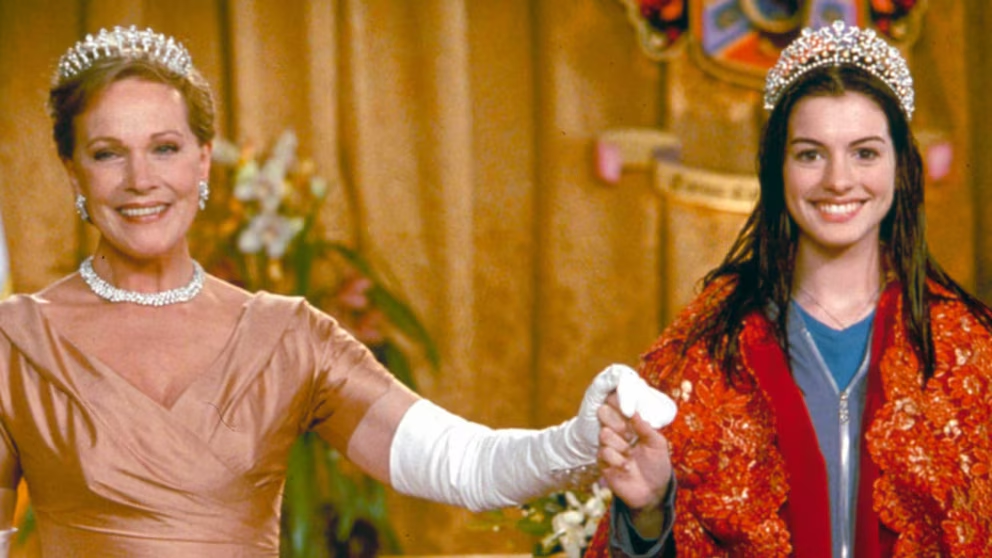
Interest in the creative decision has returned as plans continue for a third installment. Anne Hathaway has confirmed her involvement, while the possible participation of other original performers remains under discussion. The new production must now continue a cinematic universe shaped by decisions made more than two decades ago. Among those choices, the removal of Mia’s father remains one of the most consequential.
Disney did not eliminate the character merely to simplify the plot. His death created the space needed for Julie Andrews to become the film’s emotional and institutional authority. Clarisse gained greater depth, while Mia acquired a mentor whose affection developed gradually beneath royal discipline. One character disappeared before filming began, but the decision helped create the relationship that ultimately defined the franchise.
La narrativa también es poder. / Narrative is power too.