

 Phoenix 24
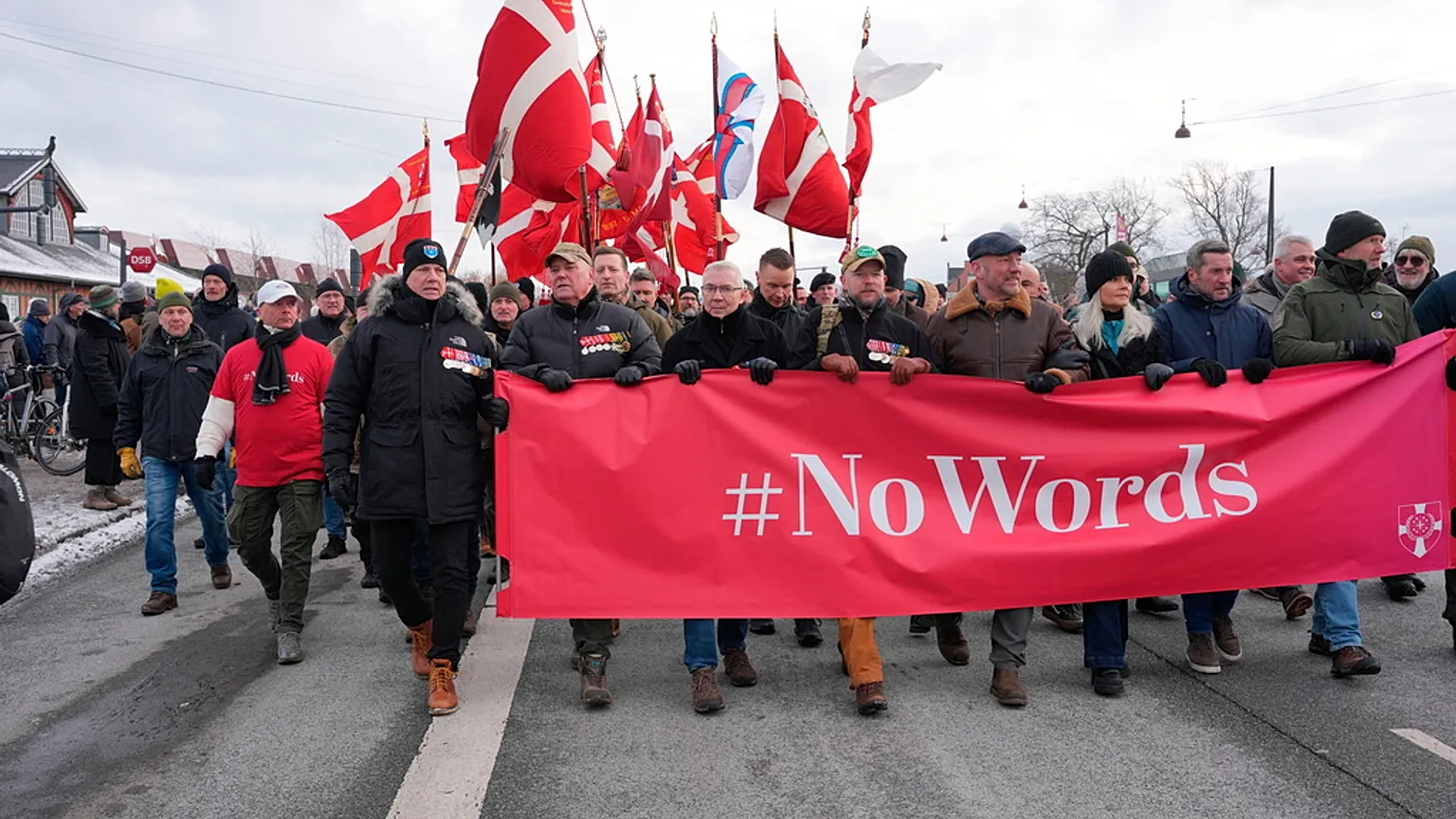
Demonstrations across Europe reflect public concern over Washington’s latest decisions on immigration and security.
Copenhagen, February 1, 2026. Thousands of protesters took to the streets in Denmark and Italy to oppose recent policy measures issued by the United States government, demonstrating growing unease among European citizens about how American decisions reverberate beyond U.S. borders. The demonstrations, organised by civil rights groups and political activists, focused on issues including immigration enforcement, border security, and alleged human rights concerns linked to Washington’s domestic and foreign policy directives.
In Copenhagen, demonstrators gathered outside government buildings holding signs denouncing what they described as “external interference” and “policies that undermine human dignity,” as speakers condemned recent executive orders and legislative measures passed in the United States. Protest leaders emphasised that their grievances were not directed at the American people, but at political decisions perceived to have negative effects on international norms and on vulnerable populations, particularly migrants and refugees seeking safety in Europe.
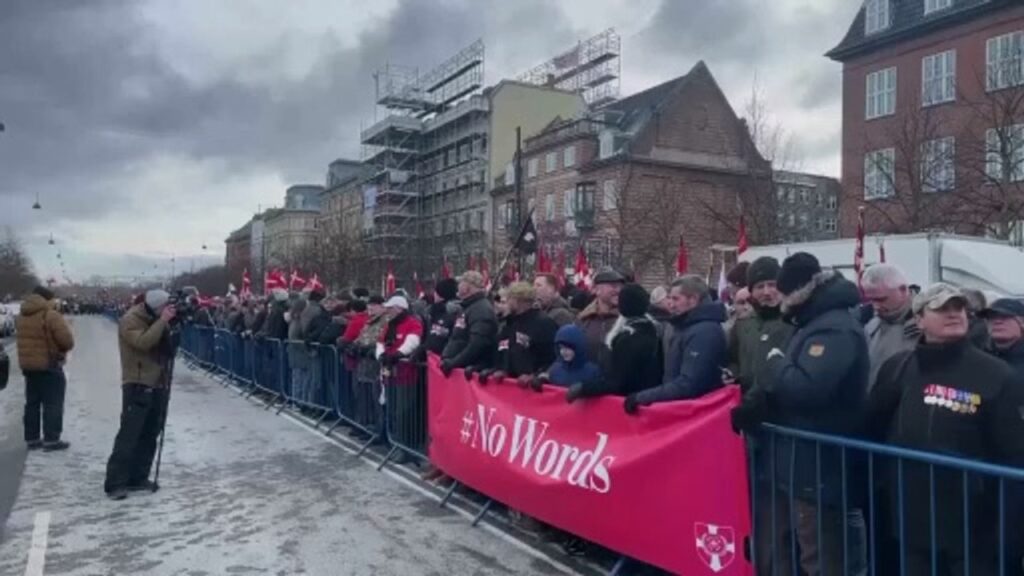
Meanwhile in Rome, crowds assembled in public squares to express solidarity with groups affected by restrictive policies and to urge local and national governments to adopt more humane approaches to asylum and migration. Organisers framed the protests as part of a broader struggle for social justice, connecting developments in U.S. policy with wider debates in Europe about human rights, economic inequality, and the treatment of displaced persons. Many demonstrators carried banners calling for cooperation between states to protect fundamental rights rather than adopting exclusionary measures that they say perpetuate suffering and insecurity.
Analysts note that these protests reflect an increasingly interconnected political landscape in which decisions made by powerful governments can trigger reactions in distant capitals. European civil society groups have historically mobilised around issues such as climate change and global security, but recent demonstrations signal a heightened sensitivity to policies perceived as affecting human mobility, civil liberties and international cooperation. Organisers argue that U.S. policy changes on border enforcement and security have moral and practical implications that extend far beyond national borders, particularly in an era of global migration flows and complex geopolitical tensions.
Government responses in both Denmark and Italy have so far emphasised the importance of maintaining diplomatic channels with the United States while respecting the right to peaceful protest. Danish officials acknowledged the concerns raised by demonstrators, noting that discussions about immigration policy are ongoing at both national and European Union levels, and stressing the need to balance security priorities with respect for human rights. Italian authorities similarly called for constructive engagement with international partners and reiterated that domestic policy must reflect constitutional commitments to human dignity and asylum protections.
The protests also drew attention to broader political shifts within Europe, where debates over migration, security and national sovereignty have shaped electoral politics and public opinion. Critics of restrictive policies argue that punitive approaches to migration and border control fail to address underlying causes of displacement such as conflict, inequality and environmental degradation, and that collaborative international solutions offer more sustainable and humane alternatives.
Proponents of stricter measures, however, maintain that strong enforcement is necessary to manage borders effectively and ensure national security. They argue that states have a responsibility to regulate entry and protect citizens, and that international cooperation must occur within frameworks that respect sovereignty as well as human rights. This tension between security and humanitarian considerations lies at the heart of contemporary policy debates across Europe and beyond.
As demonstrations continued into the evening, organisers called for ongoing public engagement and for European governments to articulate clear stances on international policy developments emanating from the United States and other global actors. The movement’s leaders emphasised that civic mobilisation remains a key mechanism through which citizens can influence policy and shape public discourse, even on issues originating in distant capitals.
The protests in Denmark and Italy illustrate how public sentiment can traverse borders, reflecting shared values and collective concerns in a world marked by interdependence and global challenge.
Detrás de cada dato, hay una intención. Detrás de cada silencio, una estructura.