

 Phoenix 24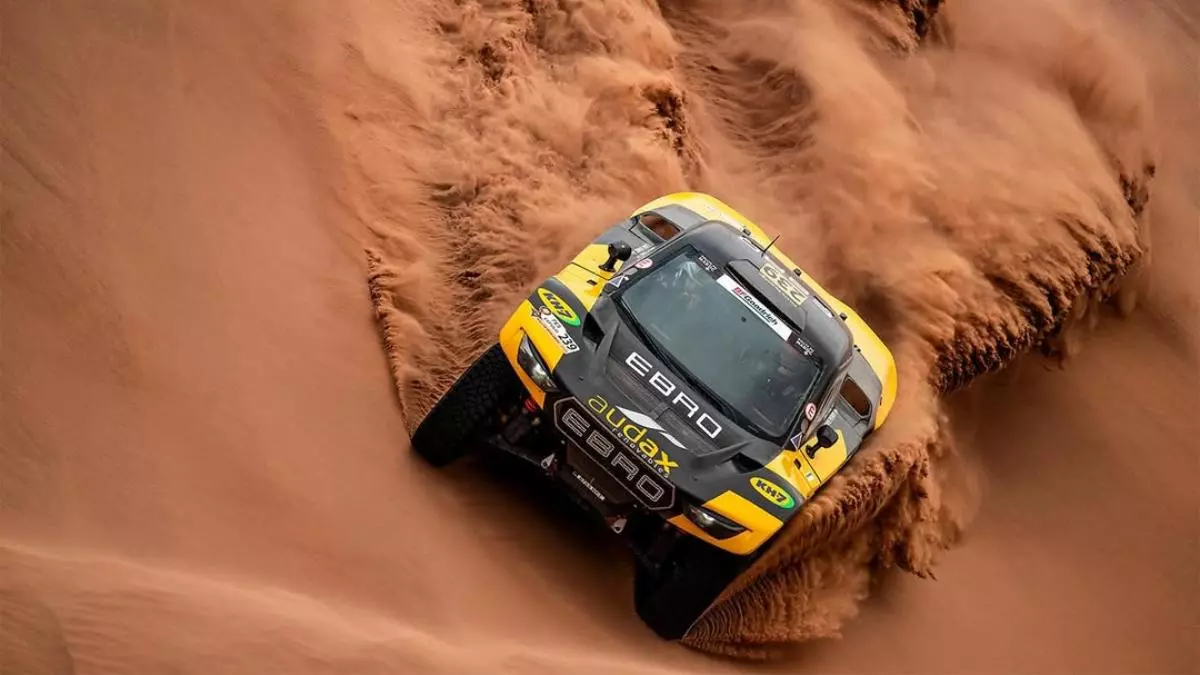
The world’s toughest rally once again turns the Saudi desert into a laboratory of resistance, navigation and mechanical survival.
Yanbu, Saudi Arabia.
The Dakar Rally will return in January 2026 with an itinerary designed to reinforce its identity as the most demanding test in rally-raid motorsport. Scheduled from January 3 to January 17, the 48th edition will unfold entirely within Saudi Arabia, following a large loop that begins and ends on the Red Sea coast and crosses some of the kingdom’s most varied and unforgiving terrain. Organisers have emphasized balance, endurance and navigational complexity over pure speed, shaping a route that rewards consistency as much as raw performance.
The 2026 rally will open with a prologue on January 3, followed by thirteen competitive stages spread across two demanding weeks. A strategically placed rest day in Riyadh will divide the event into two distinct phases, offering crews a brief window to recover physically and assess accumulated mechanical fatigue before re-entering the desert. As in recent editions, the cumulative toll rather than any single stage is expected to define the overall classification.
The total distance approaches eight thousand kilometres, with roughly five thousand kilometres against the clock in special stages. This scale alone places extreme stress on riders, drivers and machines, but the true challenge lies in the terrain mix. Competitors will face fast gravel sections, rocky plateaus, technical navigation zones and extensive dune fields that demand precision rather than aggression. The route deliberately alternates rhythm, preventing teams from settling into predictable patterns.
Two marathon stages stand out as structural pillars of the 2026 edition. During these stages, competitors will be isolated from full team assistance and required to manage repairs and strategy with minimal external support. These days traditionally reshape the race hierarchy, exposing weaknesses in preparation and rewarding those who balance speed with mechanical sympathy. In Dakar terms, survival often matters more than brilliance.
Navigation is again positioned as a decisive factor. Organisers have continued refining roadbook design to test cognitive endurance as much as physical stamina. In a rally increasingly shaped by marginal gains, small navigational errors can cascade into significant time losses, especially in dune sectors where visual references are scarce and fatigue blurs judgment.
The Saudi setting remains central to the Dakar’s modern identity. Since relocating to the kingdom, the rally has gained access to vast, contiguous desert spaces that allow for long stages and logistical flexibility. The 2026 route revisits familiar regions while introducing new combinations of terrain, ensuring that experience offers an advantage without guaranteeing security. Familiarity, in Dakar terms, can be as dangerous as ignorance.
All major categories will again be represented, including motorcycles, cars, trucks, SSVs and the Dakar Classic field. For motorcycles in particular, the extended distances and navigation-heavy profile amplify physical exposure, making pacing and risk management critical from the opening days. In the car and truck categories, reliability and teamwork remain decisive, especially as cumulative wear begins to surface in the second week.
The rally will once again serve as a cornerstone event of the World Rally-Raid Championship calendar, shaping competitive momentum for the season ahead. Early success or failure in Dakar often defines narratives that extend far beyond January, influencing development paths, sponsorship confidence and driver line-ups.
From a sporting perspective, Dakar 2026 reflects a deliberate design philosophy. Rather than escalating danger through extremes, organisers have refined complexity through sequencing, distance and mental load. The objective is not spectacle alone, but sustained decision-making under pressure, day after day, in environments that punish complacency.
As the rally returns to Yanbu for its conclusion, the overall classification will likely reflect not dominance but discipline. Dakar victories are rarely explosive; they are accumulated quietly through restraint, accuracy and resilience. The 2026 edition appears set to reinforce that tradition, reminding competitors and audiences alike that Dakar is less about conquering the desert than about enduring it.
Behind every route, there is a philosophy. Behind every finish line, a long chain of decisions.