

 Phoenix 24
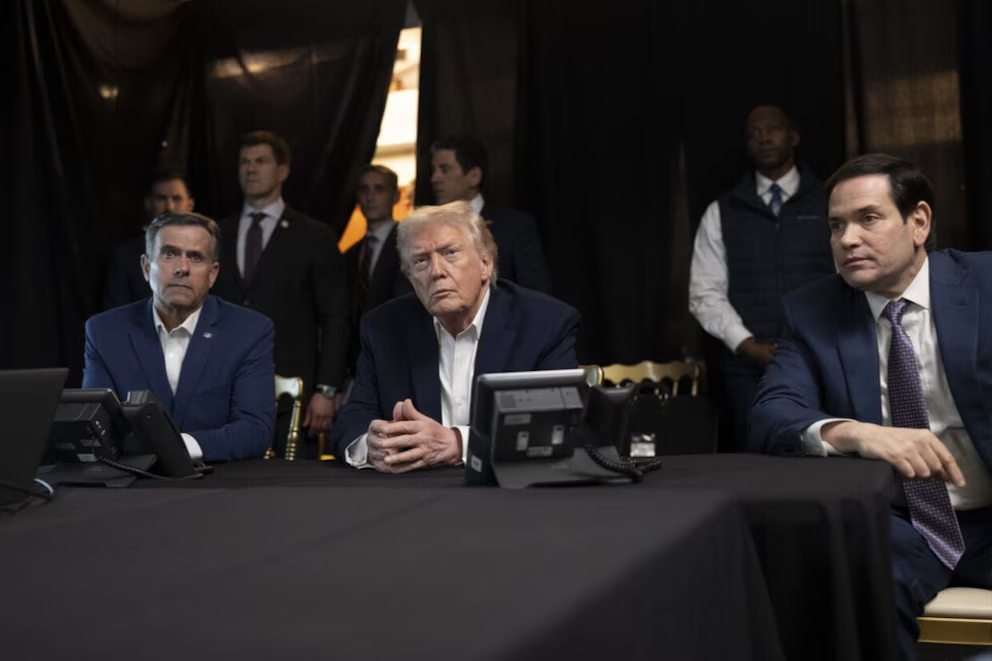
AI is drifting into the realm of secrecy.
Washington, February 2026.
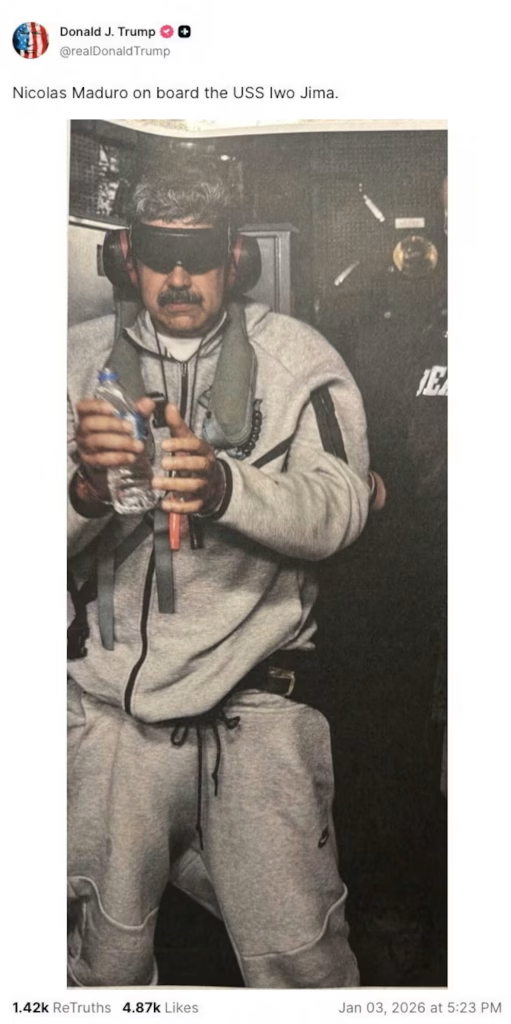
A report moving through Washington has reopened one of the most sensitive fault lines in the AI era: the use of commercial language models inside classified military operations. According to reporting attributed to The Wall Street Journal and echoed by Reuters, the US Department of Defense allegedly used Claude, the AI model developed by Anthropic, in an operation connected to the capture of Nicolás Maduro in Venezuela. The headline implication is not simply that “AI was used,” because AI already touches defense workflows in many ways. The destabilizing element is context: a covert mission, a politically explosive target, and a model governed by corporate policies that publicly restrict facilitation of violence and certain forms of surveillance. In power terms, this is less a technology story than a sovereignty story about who sets the limits when state operations intersect with private infrastructure.
The first discipline here is separating what is verifiable from what is not. Reuters reported it could not independently confirm the details described by the Journal, and that the Pentagon, the White House, Anthropic, and Palantir either declined comment or did not respond. That is a standard posture in anything plausibly classified. Yet in the current information environment, official silence performs a second function: it leaves a vacuum that can be filled by speculation, partisan framing, and adversarial amplification. Even if parts of the story later prove incomplete or inaccurate, the fact that it is widely perceived as plausible is itself a signal of the moment. The boundary between AI assisted analysis and operational decision making is no longer clear in public imagination, and ambiguity is an accelerant.
One technical detail in the reporting matters more than the sensational framing: the idea of intermediation. Reuters described a scenario in which Claude was accessed through an integration associated with Palantir, a firm long embedded in defense and intelligence data platforms. If that is correct, the story is not “a model vendor directly ran a mission,” but “a model’s capability entered a classified environment through an integrator.” That distinction shifts the accountability debate without resolving it. Intermediation can reduce a model developer’s visibility into end use, but it does not automatically reduce reputational exposure when the alleged end use becomes controversial. It also reflects how defense procurement increasingly works: governments often buy integration, orchestration, and scaling inside existing operational systems, not a single model as a standalone product.
That procurement reality collides with a second reality: the governance promises AI firms have been making to earn trust. Anthropic has publicly positioned itself as a safety oriented developer with explicit use restrictions. It has also publicly acknowledged relationships with government customers focused on “responsible AI” in defense contexts. The strategic wager is that a company can engage sovereign clients while maintaining credible guardrails. The risk is that a single high profile allegation, even one that remains unverified in key details, can make those guardrails look porous. In the trust economy of AI, perception is not a side effect. It is an asset class.
The United States government, meanwhile, operates under a different logic. In national security, the central concern is capability and advantage, bounded by law and oversight rather than by corporate preference. That creates an inevitable tension: a private company’s policy language is designed to protect the company and shape public legitimacy, while a state’s operational language is designed to preserve options under uncertainty. When those two systems touch, the question becomes who owns the definition of “appropriate use.” If a model is deployed inside a classified architecture, the state can argue it is using a tool as part of a larger system. The company can argue that certain uses violate the spirit of its restrictions. Both can be true, and that is exactly why the collision is politically combustible.

There is also a third layer that is often missed: information warfare. Claims about AI assisted operations change perceptions even when the operational details are unknowable. If the report is true, the narrative suggests a state with expanded analytic reach and acceleration capacity. If the report is false or exaggerated, the narrative still has utility for actors seeking to portray the United States as technologically omnipresent or ethically unbound. In hybrid conflict, a story can be valuable even when it cannot be confirmed, because it shapes expectations, fear, and legitimacy. The real contest is not only what happened, but what audiences are prepared to believe could happen.
Internationally, the reputational shockwave travels differently by region. In Europe, where AI regulation is increasingly framed around high risk systems, traceability, and compliance, stories that imply commercial models touching covert operations reinforce arguments for stricter controls and auditability. In parts of Asia, where several states pursue strategic advantage through rapid tech integration, the lesson can be interpreted less as caution and more as confirmation that AI capability is becoming national infrastructure. In the Middle East, where security competition often mixes conventional deterrence with intelligence signaling, the mere suggestion of AI assisted operations can be read as escalation in the invisible domain, even when public proof is absent. The same allegation generates different policy instincts, and that divergence is part of the geopolitical significance.

Venezuela’s dimension adds a final charge. Any claim tied to Maduro is immediately entangled with sovereignty, legitimacy, and regional polarization. For Washington, operational credibility and deniability are both strategic instruments. For Caracas and its allies, the allegation can be used to justify internal securitization, claim external aggression, or rally diplomatic sympathy. For opposition networks, it can be interpreted as proof of momentum or as a dangerous provocation. The story, in other words, is primed to be weaponized by multiple actors regardless of whether the underlying operational detail is ever clarified.
The deeper pattern is difficult to avoid: AI models are becoming infrastructure of power, and power infrastructures inevitably become political targets. When that happens, governance cannot remain a purely corporate exercise, and it cannot remain a purely state exercise either. It becomes an arena of contested legitimacy, where silence, denial, and carefully worded non answers are not empty. They are part of the operational environment. If the report is accurate, the debate will turn on boundaries, accountability, and the distribution of responsibility across model developer, integrator, and state user. If it is not, the debate will still matter because it reveals how quickly the unverified can become operationally consequential in the public sphere. In both cases, the signal is the same: the age of “civilian AI” and “military AI” as separate categories is eroding, and the politics of that erosion will not wait for perfect evidence.
Más allá de la noticia, el patrón. / Beyond the news, the pattern.